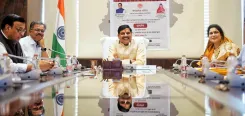
Giriraj Singh flags 10% retail sales surge as festive season nears
Synopsis
Union Textiles Minister Giriraj Singh highlighted August 2026 retail sales data showing 10% overall growth, with Apparel up 10%, Food & Grocery up 12%, and QSR up 15%, calling it a positive signal of rising consumer confidence ahead of India's festive season.
Key Takeaways
India's overall retail sales grew 10% year-on-year in August 2026 , according to data cited by Union Textiles Minister Giriraj Singh .
The Quick-Service Restaurant (QSR) segment led all categories with 15% growth , signalling rising aspirational spending.
Food & Grocery posted 12% growth , while the Apparel category recorded 10% growth — a direct indicator for India's textiles sector.
Singh linked the broad-based retail growth to strengthening consumer confidence and rising household spending capacity ahead of the festive season.
September retail figures will be the next key data point, capturing early Navratri and Diwali purchasing momentum.
India's retail sector is heading into the festive season with a tailwind: Union Textiles Minister Giriraj Singh on Thursday, 24 September 2026, pointed to August 2026 retail sales data showing a 10% year-on-year growth — citing it as a signal of strengthening consumer confidence and rising household spending power.
Posting on X, Minister Singh noted that the headline retail figure was backed by category-level momentum: 'Apparel mein 10%, Food & Grocery mein 12% aur QSR mein 15% ki growth' — Apparel up 10%, Food & Grocery up 12%, and Quick-Service Restaurants up 15%. Together, he said, these numbers have 'created a positive atmosphere for the festive season' and reflect India's 'strengthening economy and the rising spending capacity of its people.'
Why apparel and QSR numbers matter to a Textiles Minister
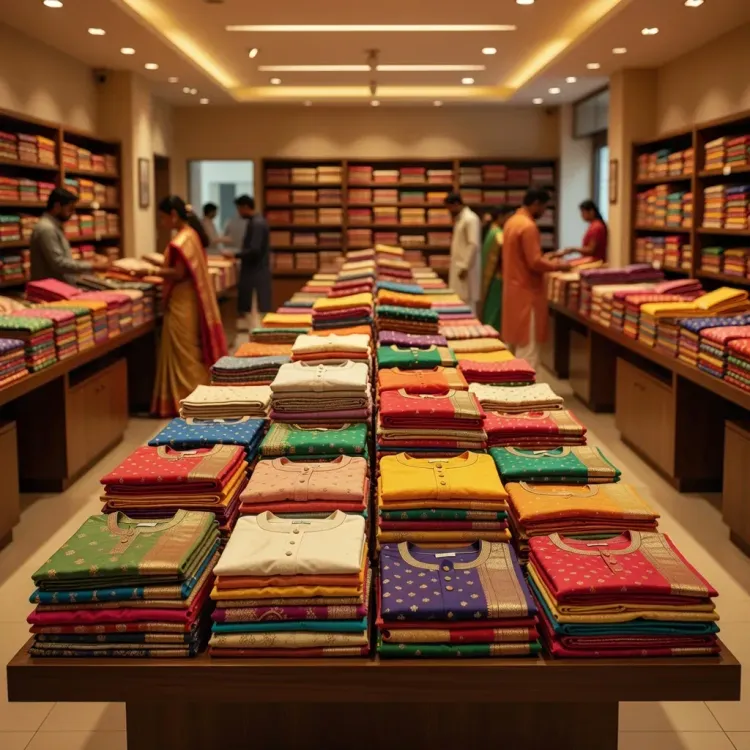
Giriraj Singh's interest in retail data runs deeper than macroeconomic cheerleading. As the Union Minister overseeing India's textiles sector — one of the country's largest employers — he has a direct stake in apparel consumption figures. An apparel growth rate of 10% in August, a month that typically builds toward Navratri and Diwali purchases, is a forward-looking indicator for mill output, garment exports, and factory-floor employment across states like Gujarat, Tamil Nadu, and Maharashtra.
The QSR surge — the sharpest of the three at 15% — points to a different story: the rapid expansion of the aspirational middle-class consumer who is spending more on convenience and eating out. Food and grocery at 12% suggests the volume-driven organised retail chains are also capturing household wallet share, not just the discretionary end of the market.
Festive-season demand: a recurring but now keener signal
India's retail calendar follows a well-worn pattern — spending accelerates from August through November, peaking around Dussehra and Diwali. What makes the August 2026 print notable, in the minister's reading, is that the momentum appears to be broad-based rather than confined to one category. When apparel, food, and quick-service restaurants all log double-digit growth in the same month, the thesis of a narrowing consumer recovery weakens.
Private consumption has consistently been a load-bearing pillar of India's GDP growth in recent years, and retail sales figures — tracked closely by government economists since the post-liberalisation era — serve as one of the most timely proxies for how household balance sheets are holding up. A strong August reading, if confirmed by September data, would give the government a powerful data point heading into the budget cycle and the policy calendar for 2027.
The next test will come swiftly: September sales figures, which will capture early festive buying in earnest, will either validate or complicate this optimistic read. Retailers, garment manufacturers, and policymakers will all be watching the same scoreboard.
Point of View
Spanning apparel, food, and QSR, makes the 'rising spending capacity' narrative harder to contest on sectoral grounds. However, the sustainability of this momentum will be tested by September data: a festive-season print that fails to match or exceed August would quickly shift the conversation toward urban-rural consumption gaps and the durability of post-pandemic purchasing recovery.
NationPress
24 Sept 2026
Frequently Asked Questions
What were India's retail sales growth figures for August 2026?
According to data cited by Union Textiles Minister Giriraj Singh, overall retail sales grew 10% year-on-year in August 2026, with Apparel up 10%, Food & Grocery up 12%, and QSR (Quick-Service Restaurants) up 15%.
Why did Giriraj Singh comment on retail sales data?
As Union Textiles Minister, Singh has a direct policy interest in apparel consumption trends. He cited the figures as evidence of rising consumer confidence and stronger household spending power heading into India's festive season.
What is the significance of QSR growing 15% in August 2026?
A 15% rise in Quick-Service Restaurant sales is broadly seen as a proxy for aspirational middle-class spending, suggesting consumers are increasingly comfortable spending on convenience and eating out — a positive signal for urban consumption sentiment.
How does August retail data relate to the festive season in India?
August typically marks the beginning of pre-festive purchasing in India, with spending accelerating through Navratri and Diwali. Strong August figures are considered an early indicator of how robust the peak festive-season consumption period will be.
What should we watch next for India's retail outlook?
September 2026 retail sales figures will be the critical next data point, as they will capture early festive buying. Any official government commentary on festive-season performance will also shape expectations for the broader consumption outlook.