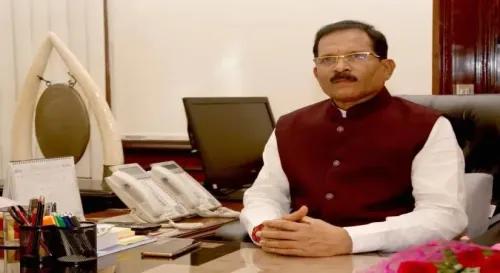
Giriraj Singh shares CEEW report on rooftop solar savings
Synopsis
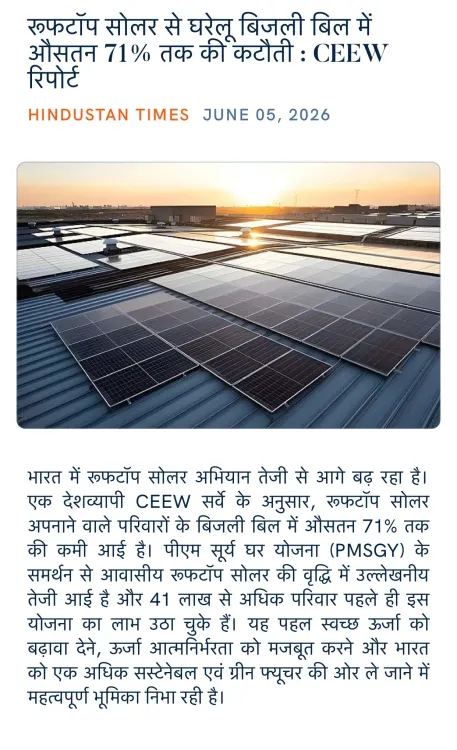
Union Textiles Minister Giriraj Singh shared a CEEW report on World Environment Day 2026 stating rooftop solar installations cut Indian household electricity bills by an average of 71 per cent, amplifying the government's renewable-energy messaging through the NaMo App.
Key Takeaways
Union Textiles Minister Giriraj Singh shared the CEEW finding on June 5, 2026 — World Environment Day — via the NaMo App.
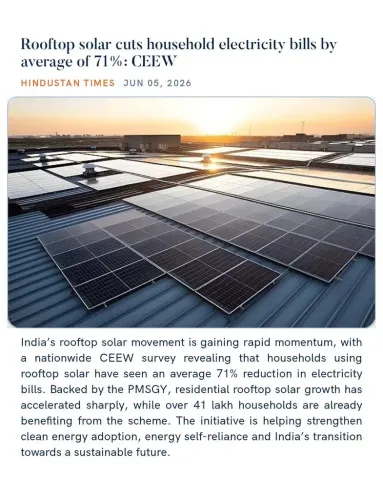
The CEEW report cited in the post states rooftop solar reduces household electricity bills by an average of 71 per cent .
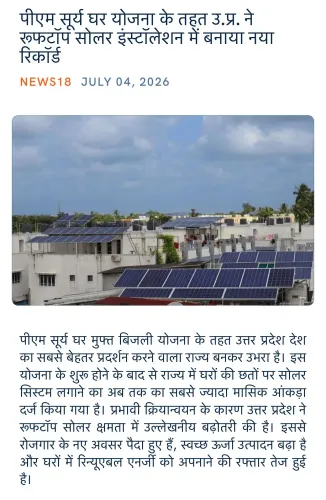
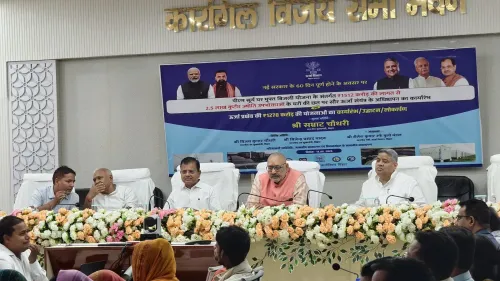
India's PM Surya Ghar Muft Bijli Yojana targets rooftop installations on 1 crore households with up to 300 units of free monthly electricity.
India aims to achieve 500 GW of non-fossil fuel power capacity by 2030 , with rooftop solar a key component.
State DISCOM net-metering policies remain a critical variable in whether projected consumer savings are realised at scale.
The post illustrates cross-ministerial amplification of renewable-energy data beyond the dedicated energy portfolio.
Union Textiles Minister Giriraj Singh on Friday, June 5, 2026 shared a report by the Council on Energy, Environment and Water (CEEW) citing that rooftop solar installations reduce household electricity bills by an average of 71 per cent, amplifying the finding through the NaMo App.
Context
The post, shared on the occasion of World Environment Day, highlights a CEEW finding on consumer-level savings from rooftop solar adoption. The Hindi caption translates as: 'Rooftop solar se gharelu bijli bill mein ausat 71% tak ki katoti' — 'Rooftop solar cuts household electricity bills by an average of up to 71 per cent.' The cross-ministerial amplification underscores the BJP-led government's effort to mainstream renewable-energy messaging beyond dedicated energy portfolios.
The CEEW, a New Delhi-based independent think tank focused on energy, environment and water policy, is among the most cited research bodies in Indian energy-policy discourse. Its consumer-savings data are routinely referenced by government officials to build public appetite for solar adoption.
Policy Backdrop
India's rooftop solar push has evolved through successive policy layers. The Jawaharlal Nehru National Solar Mission, launched in 2010, first set structured targets for grid-connected and rooftop solar capacity. Net-metering regulations subsequently allowed households to sell surplus power back to state distribution companies, improving the financial case for installation.
The most recent and ambitious vehicle is the PM Surya Ghar Muft Bijli Yojana, a central subsidy scheme designed to install rooftop panels on 1 crore households and provide up to 300 units of free electricity per month to eligible beneficiaries. The scheme sits within India's broader commitment to reach 500 GW of non-fossil fuel power capacity by 2030.
Stakeholders and Impact
Urban and peri-urban households stand to gain the most directly from rooftop solar, with the CEEW figure suggesting a near-three-quarter reduction in monthly electricity expenditure for adopting families. For lower-middle-income households where electricity bills represent a meaningful share of monthly outgoings, such savings carry tangible welfare implications.
State electricity distribution companies (DISCOMs) face a more complex calculus: widespread net-metering adoption reduces revenue from higher-consumption domestic consumers even as it eases peak-load pressure. Tariff orders and net-metering policy revisions at the state level will therefore shape how quickly the CEEW-projected savings materialise at scale.
What's Next
Attention will now turn to state-level implementation of the PM Surya Ghar Muft Bijli Yojana, where subsidy disbursement timelines and DISCOM cooperation remain key variables. Independent assessments of actual bill reductions — as against projected figures — will be critical in gauging whether the 71 per cent average cited in the CEEW report translates into lived experience for the scheme's target beneficiaries. Wider ministerial amplification of such data, as seen in Giriraj Singh's post, signals that rooftop solar messaging will remain a prominent plank of the government's public communication ahead of state elections.
Point of View
Not merely the Ministry of New and Renewable Energy's brief. The timing on World Environment Day maximises symbolic resonance and media pick-up. The CEEW's 71 per cent bill-reduction figure, if it enters mainstream public discourse, could accelerate demand for the PM Surya Ghar scheme at a moment when subsidy uptake and DISCOM cooperation are still patchy across states. Ultimately, the post reflects the BJP's broader effort to frame clean energy not as an environmental obligation but as a household economics proposition — a framing with wider electoral appeal.
NationPress
20 Oct 2026
Frequently Asked Questions
How much can rooftop solar reduce my electricity bill in India?
According to a CEEW report shared by Union Textiles Minister Giriraj Singh in June 2026, rooftop solar can reduce household electricity bills by an average of 71 per cent. Actual savings depend on system size, local tariffs, and net-metering rules in your state.
What is the PM Surya Ghar Muft Bijli Yojana?
PM Surya Ghar Muft Bijli Yojana is a central government subsidy scheme aimed at installing rooftop solar panels on 1 crore Indian households and providing eligible beneficiaries up to 300 units of free electricity per month.
What is CEEW and why is its rooftop solar report significant?
CEEW, the Council on Energy, Environment and Water, is a New Delhi-based independent think tank. Its research on energy and environment policy is widely cited by government officials and policymakers; its rooftop solar savings data is used to build public support for adoption schemes.
Why is the Textiles Minister posting about solar energy?
Giriraj Singh shared the CEEW report via the NaMo App as part of broader cross-ministerial amplification of the government's renewable-energy messaging. Such posts signal that clean energy is a whole-of-government priority, not limited to the energy ministry.
What is India's renewable energy target by 2030?
India has committed to achieving 500 GW of non-fossil fuel power capacity by 2030. Rooftop solar, promoted through schemes like PM Surya Ghar and net-metering regulations, is a key component of reaching that target.