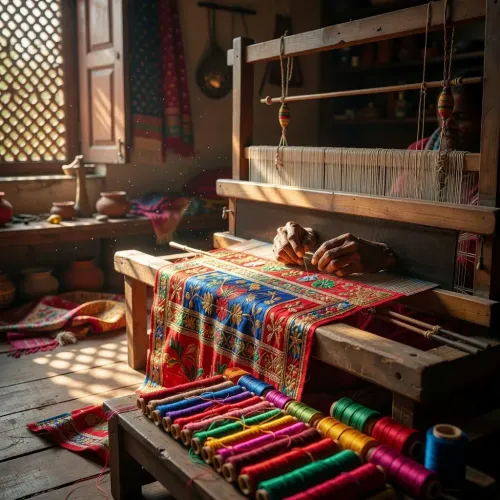
Giriraj Singh flags India's craft heritage at BRICS Delhi expo
Synopsis
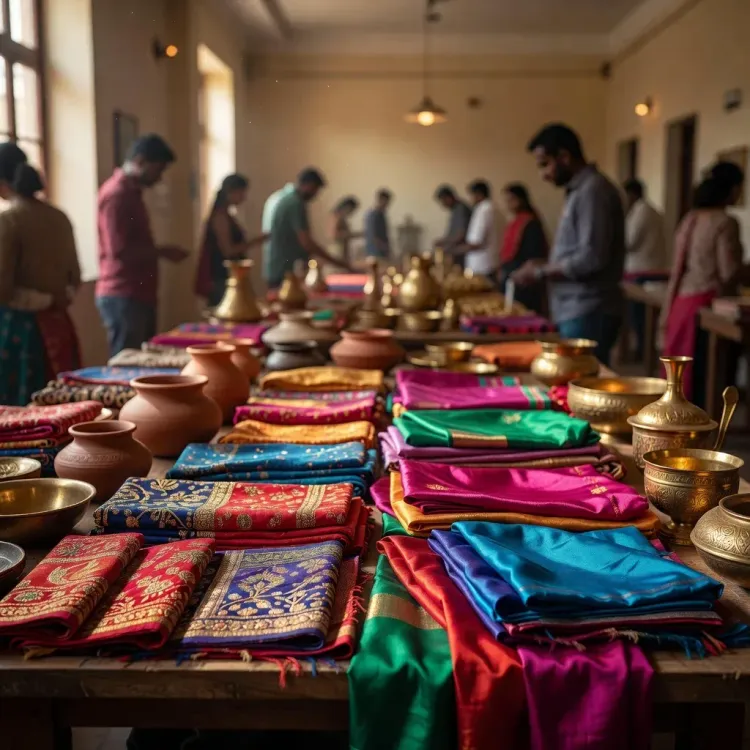
Union Textiles Minister Giriraj Singh highlighted a handicraft and art exhibition at the BRICS Summit in Delhi, framing India's handloom and craft traditions as a mark of global cultural identity and generations of artisan skill.
Key Takeaways
Union Textiles Minister Giriraj Singh highlighted a handicraft and art exhibition held in Delhi during the BRICS Summit on 27 October 2026 .
The Minister described the exhibition as underlining the global recognition of India's cultural heritage, traditional craftsmanship and handloom tradition.
India has a consistent pattern of using BRICS and similar multilateral summits as platforms for craft-sector cultural diplomacy, dating at least to the 2016 BRICS Summit in Goa .
The Ministry of Textiles links such exhibitions to broader goals of GI-tagged craft exports and integrating artisans into global value chains.
The National Handloom Development Programme (2015) provides the institutional foundation — financial support, skill upgradation and market linkages — underpinning these visibility efforts.
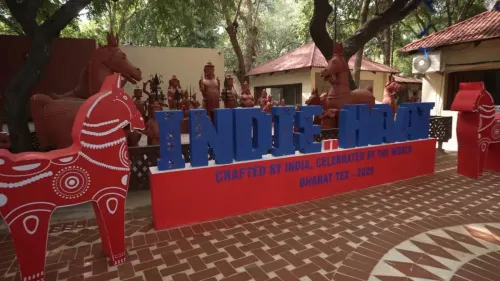
At the intersection of global diplomacy and indigenous artistry, a handicraft and art exhibition held in Delhi on the sidelines of the BRICS Summit is putting India's weaving traditions and craft heritage in front of the world's most consequential emerging economies. Union Textiles Minister Giriraj Singh took to X on Tuesday, 27 October 2026, to underline what such a platform means — not just culturally, but as a statement of national identity.
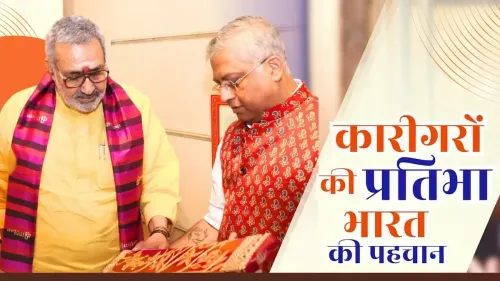
Posting in Hindi, the Minister wrote: 'BRICS शिखर सम्मेलन के दौरान दिल्ली में आयोजित हस्तशिल्प एवं कला प्रदर्शनी भारत की समृद्ध सांस्कृतिक विरासत, पारंपरिक शिल्पकला और हथकरघा की वैश्विक पहचान को रेखांकित करती है।' — 'The handicraft and art exhibition organised in Delhi during the BRICS Summit underscores the global recognition of India's rich cultural heritage, traditional craftsmanship, and handloom.' He added that the skill of India's artisans is 'the pride of India's creativity and a centuries-old artistic tradition passed down through generations.'Handloom at the high table: craft as soft power
India has long used multilateral summits as a stage for cultural diplomacy, and the logic is deliberate. When heads of state and trade delegations from the expanded BRICS bloc walk past displays of hand-woven textiles and traditional craft, the message is economic as much as it is aesthetic. The Ministry of Textiles sits at the centre of this strategy, tasked with converting heritage into export value — particularly for GI-tagged crafts that carry a geographic authenticity no factory can replicate.
The ministry's mandate encompasses handloom, handicrafts and broader textile-sector promotion, linking artisan welfare with market access and global value chains. Giriraj Singh, a senior BJP leader and Lok Sabha MP from Begusarai, Bihar, has positioned the sector as both a livelihood engine and a carrier of civilisational identity — two arguments that reinforce each other on a summit stage.
A pattern older than any single summit
This is not the first time India has woven handicrafts into a BRICS moment. The 2016 BRICS Summit in Goa similarly featured side events spotlighting traditional arts and crafts, establishing a template that successive governments have continued. The National Handloom Development Programme, launched in 2015, built the institutional scaffolding — financial assistance, skill upgradation, and market linkages — that makes these exhibitions more than showpieces.
The real test of any such exhibition is what follows it. Trade inquiries, export deals, or policy announcements tying the visibility gained at BRICS to concrete artisan welfare measures are the metrics that will determine whether the Delhi showcase translates into livelihoods — not just laureates.
Point of View
Dispersed, and electorally significant constituency — through the prestige of an international summit. Whether the visibility converts into measurable policy gains for weavers and craftsmen remains the harder question.
NationPress
27 Oct 2026
Frequently Asked Questions
What is the handicraft exhibition at the BRICS Summit in Delhi about?
The exhibition showcases India's traditional handloom, handicrafts and art on the sidelines of the BRICS Summit in Delhi, giving international delegates a direct view of India's craft heritage and positioning Indian artisans within a global audience.
What did Giriraj Singh say about India's handloom at BRICS?
Union Textiles Minister Giriraj Singh said the Delhi exhibition underscores the global recognition of India's rich cultural heritage, traditional craftsmanship and handloom, and that the skill of Indian artisans is the pride of a centuries-old artistic tradition.
Why does India promote handicrafts at international summits like BRICS?
India uses multilateral platforms to practise cultural diplomacy, combining heritage preservation with economic goals such as increasing exports of GI-tagged crafts and integrating artisans into global value chains.
What is the National Handloom Development Programme?
Launched in 2015, the National Handloom Development Programme provides financial assistance, skill upgradation and market linkages to weavers and artisans across India, forming the policy backbone for efforts like BRICS-side craft exhibitions.
What is Giriraj Singh's role in India's textiles sector?
Giriraj Singh serves as India's Union Minister of Textiles, heading the Ministry of Textiles which is responsible for policy, development schemes and export promotion for the handloom, handicrafts and broader textiles sector. He is also a senior BJP leader and Lok Sabha MP from Begusarai, Bihar.