Giriraj Singh flags India's energy resilience amid Hormuz crisis
Synopsis
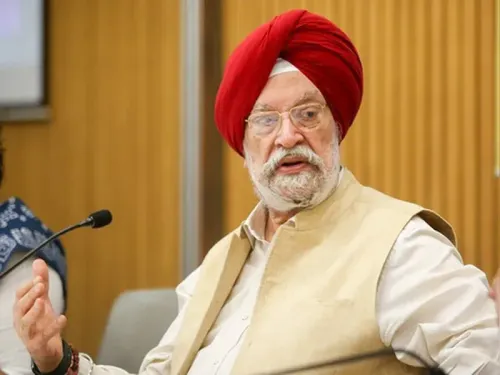
Union Textiles Minister Giriraj Singh on 1 July 2026 used the NaMo App to spotlight how the Strait of Hormuz crisis has validated India's energy sector resilience, pointing to decades of source diversification and strategic reserve-building that have shielded the country from supply shocks.
Key Takeaways
Giriraj Singh , Union Textiles Minister and senior BJP leader, shared content on 1 July 2026 highlighting India's energy resilience amid the Strait of Hormuz crisis.
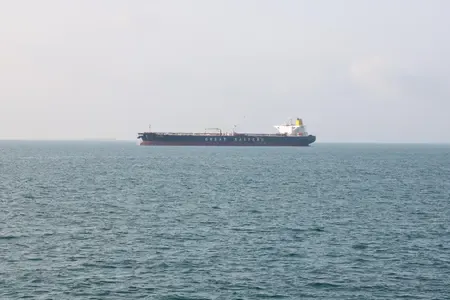
The Strait of Hormuz , between Iran and Oman , is a critical global oil transit chokepoint that directly affects India , the world's third-largest crude importer.
India approved strategic petroleum reserves in 1998 to guard against external supply disruptions.
After the 2019 attacks on Saudi oil facilities, India diversified crude imports by increasing purchases from Russia and the United States .
The post was shared via the NaMo App , reinforcing the ruling party's messaging on energy security as a governance achievement.
Upcoming Union Budget announcements and the monsoon session of Parliament are expected to see scrutiny of India's oil import dependence and reserve adequacy.
Union Textiles Minister Giriraj Singh on Wednesday, 1 July 2026, shared an opinion piece via the NaMo App highlighting how the Strait of Hormuz crisis has underscored the resilience of India's energy sector, drawing attention to the country's ability to withstand supply disruptions from one of the world's most critical oil chokepoints.
Context
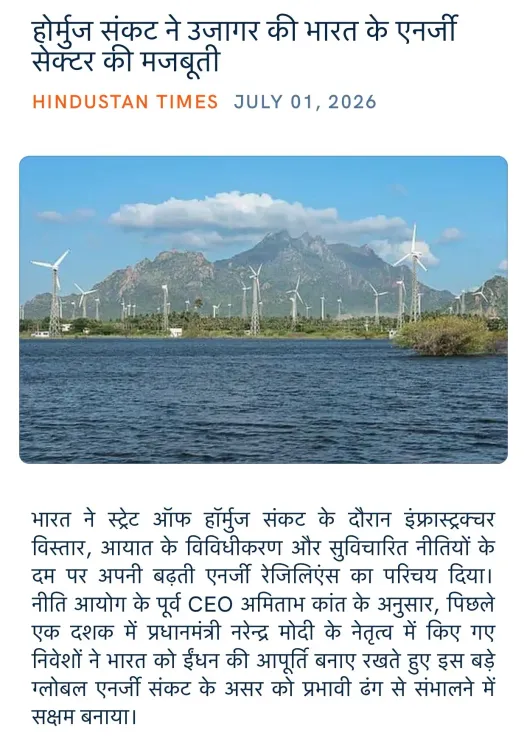
The minister's post, written in Hindi, translates as: 'Hormuz sankat ne ujaagar ki Bharat ke energy sector ki mazbooti' ('The Hormuz crisis has revealed the strength of India's energy sector'). The post linked to an opinion article examining how the latest tensions around the Strait of Hormuz — the narrow waterway between Iran and Oman through which a substantial share of global oil shipments transit — tested and ultimately validated India's energy security architecture.
The Strait of Hormuz is among the most strategically sensitive maritime chokepoints in the world. Any disruption there directly threatens oil supply chains for major Asian importers, with India, the world's third-largest crude oil importer, among the most exposed economies.
Policy Backdrop
India's energy resilience strategy has been decades in the making. In 1998, the government approved the creation of strategic petroleum reserves to cushion the economy against external supply shocks. Following the 2019 attacks on Saudi Arabian oil facilities, India accelerated diversification of its crude import sources, significantly increasing purchases from Russia and the United States.
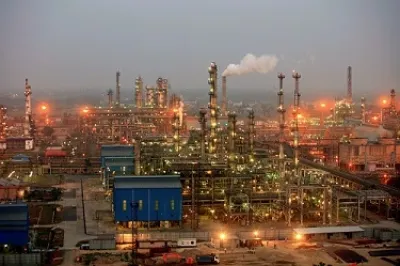
This multi-pronged approach — combining source diversification, expansion of strategic reserves, and growth in domestic refining capacity — has been sustained across successive governments. The policy aim has been to reduce dependence on any single supplier or transit route, particularly chokepoints such as the Strait of Hormuz that are vulnerable to geopolitical flare-ups.
India has simultaneously maintained diplomatic and commercial ties across the Persian Gulf while courting non-regional suppliers, a balancing act that has become a defining feature of its foreign energy policy.
Stakeholders and Impact
The primary stakeholders in any Hormuz disruption scenario are Indian oil importers, downstream refiners, and ultimately Indian energy consumers — from industrial users to households dependent on LPG and transport fuels. A sustained chokepoint crisis would ordinarily translate into higher import costs, fuel price pressures, and inflationary ripple effects across the economy.
The minister's post signals that the government views the current episode as a validation of India's preparedness rather than an acute vulnerability. By amplifying this narrative through the NaMo App — a platform widely used by BJP leaders to share government and policy content — Giriraj Singh is reinforcing the ruling party's messaging around energy security as a governance achievement.
What's Next
Attention will now turn to the upcoming Union Budget announcements on energy infrastructure and any parliamentary questions on oil import dependence during the monsoon session of Parliament. Policymakers are expected to face scrutiny over the adequacy of India's strategic petroleum reserves and the long-term trajectory of crude import diversification.
If Hormuz tensions persist, the government's ability to maintain stable domestic fuel prices without large subsidy outlays will be the real test of the resilience that Giriraj Singh and the broader administration are now highlighting.
Point of View
Which signals that the BJP is mobilising a broad bench of senior leaders to project government competence on economic stability during a period of West Asian instability. The framing — resilience rather than vulnerability — is a deliberate political choice: it converts an external geopolitical risk into a domestic governance success story. This fits a longer arc in which the ruling dispensation has consistently sought to credit policy continuity for India's ability to weather global commodity shocks. The real test, however, will come in parliamentary debate and the Budget, where opposition benches are likely to probe whether strategic reserves and import diversification are truly adequate or whether the resilience narrative is premature.
NationPress
1 Jul 2026
Frequently Asked Questions
What is the Strait of Hormuz and why does it matter for India?
The Strait of Hormuz is a narrow waterway between Iran and Oman through which a large share of global oil shipments pass; as the world's third-largest crude oil importer, India is significantly exposed to any disruption there.
What did Giriraj Singh post about India's energy sector?
On 1 July 2026, Union Textiles Minister Giriraj Singh shared content via the NaMo App stating that the Hormuz crisis has revealed the strength of India's energy sector, pointing to the country's resilience against supply shocks.
How has India built energy resilience against Hormuz disruptions?
India has built resilience through strategic petroleum reserves approved in 1998, diversification of crude import sources — including increased purchases from Russia and the United States after 2019 — and expansion of domestic refining capacity.
Why is a Textiles Minister commenting on India's energy sector?
Giriraj Singh is a senior BJP leader and Lok Sabha MP; BJP leaders across portfolios routinely use platforms like the NaMo App to share government messaging on major policy themes, including energy security.
What should Indians watch next regarding India's energy security policy?
Key developments to watch include Union Budget announcements on energy infrastructure and parliamentary questions on oil import dependence during the monsoon session, which will test the government's resilience claims.