Giriraj Singh flags June GST mop-up at ₹1.95 lakh crore
Synopsis
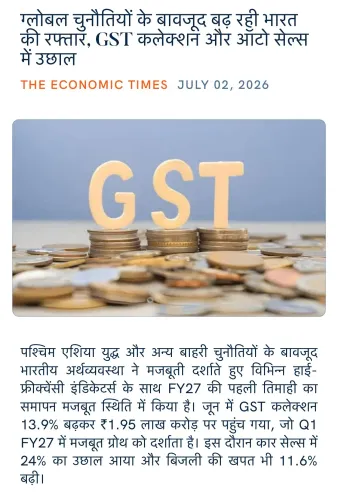
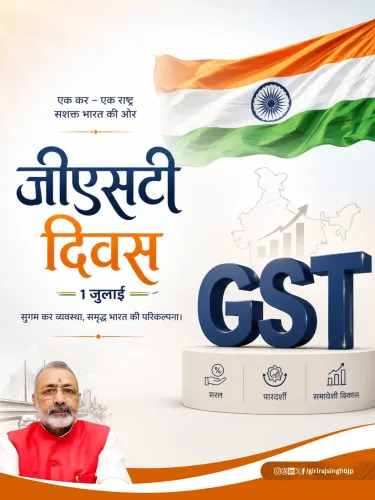
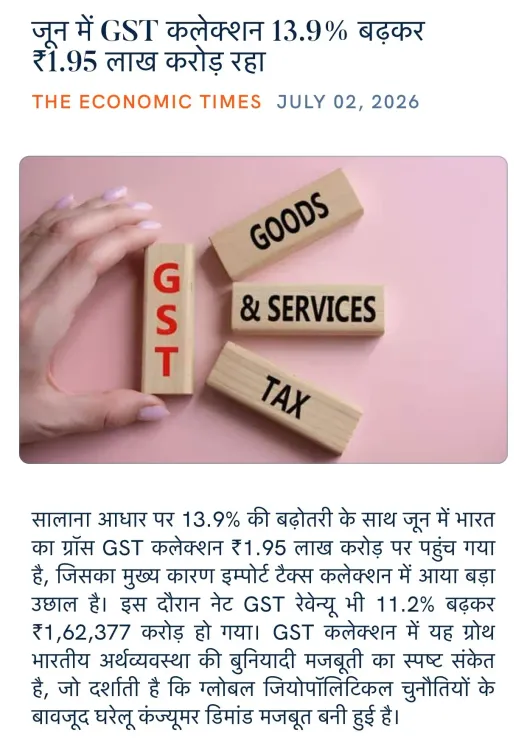
Union Textiles Minister Giriraj Singh on 2 July 2026 highlighted June GST collections rising 13.9 per cent year-on-year to ₹1.95 lakh crore, sharing the data via the NaMo App — underscoring the government's narrative of strong revenue buoyancy and economic formalisation.
Key Takeaways
Giriraj Singh , Union Textiles Minister and senior BJP leader, shared June 2026 GST collection data on 2 July 2026 .
June GST collections reportedly rose 13.9 per cent year-on-year to ₹1.95 lakh crore .
The data was amplified via the NaMo App , the official government digital communication platform.
GST was introduced on 1 July 2017 , replacing multiple central and state indirect taxes with a unified regime.
State governments , businesses, and taxpayers are direct stakeholders in monthly GST collection trends.
The next milestone to watch is the July 2026 collection data and the upcoming GST Council meeting on rate rationalisation.
Union Textiles Minister Giriraj Singh on Thursday, 2 July 2026, highlighted a sharp rise in India's goods and services tax collections for June 2026, sharing data showing receipts climbed 13.9 per cent year-on-year to ₹1.95 lakh crore — one of the stronger monthly readings since the unified tax regime stabilised.
Context
Singh shared the figures via the NaMo App, the official digital platform used for disseminating government and policy updates, amplifying the data on his social-media handle with a brief but pointed note: 'जून में GST कलेक्शन 13.9% बढ़कर ₹1.95 लाख करोड़ रहा' ('June GST collections rose 13.9 per cent to ₹1.95 lakh crore'). The post is consistent with a well-established practice among BJP ministers of using social media to spotlight favourable fiscal indicators in near-real time.
The Goods and Services Tax was rolled out on 1 July 2017, subsuming central excise duty, service tax, and state-level value-added taxes into a single destination-based levy. Monthly collection data, published by the Central Board of Indirect Taxes and Customs (CBIC), has since become a closely watched barometer of consumption, formalisation of the economy, and overall revenue buoyancy.
Policy Backdrop
A reading of ₹1.95 lakh crore for June, if confirmed by official CBIC data, would represent a robust year-on-year expansion of 13.9 per cent — well above the nominal GDP growth trajectory and indicative of continued broadening of the tax base. Since the GST framework stabilised in the years following its 2017 launch, monthly collections have generally trended upward, with the government citing rising compliance, digital invoicing mandates, and e-way bill enforcement as structural drivers.
The practice of senior ministers amplifying monthly GST data on social platforms has become a routine feature of fiscal communication under the current dispensation. Such posts serve a dual purpose: signalling economic health to markets and investors, and reinforcing the government's narrative of formalisation and revenue efficiency ahead of budget cycles and GST Council deliberations.
Stakeholders and Impact
State governments are direct beneficiaries of buoyant GST receipts, as the integrated tax pool is shared between the Centre and states through a constitutionally mandated formula. Higher collections ease pressure on states' own fiscal positions and reduce dependence on central transfers or market borrowings.
For businesses and taxpayers, a rising collection trend signals tighter compliance enforcement, which can cut both ways — rewarding compliant filers while narrowing the space for under-reporting. Consumers feel the indirect effect through the pricing decisions of goods and services suppliers operating within the GST chain.
What's Next
Attention will now turn to the July 2026 GST collection data, expected to be released in early August, and to the next GST Council meeting, where rate rationalisation proposals and sector-specific exemptions are periodically reviewed. A sustained run of strong monthly numbers could influence the Council's appetite for rate reductions in politically sensitive categories.
With the Union Budget cycle and mid-year fiscal reviews on the horizon, collection figures of this magnitude are likely to feature prominently in the government's economic messaging, reinforcing its argument that the GST architecture has matured into a reliable, buoyancy-positive revenue engine for both the Centre and the states.
Point of View
Rather than the Finance Ministry, is amplifying revenue data underscores how GST buoyancy has become a whole-of-government talking point for the BJP. A 13.9 per cent year-on-year jump, if borne out by official CBIC figures, would be a politically significant number, lending credibility to the formalisation argument at a time when the government is keen to project macroeconomic stability. The move also signals that the NaMo App continues to function as a parallel, party-aligned channel for economic messaging, distinct from formal government press releases.
NationPress
2 Jul 2026
Frequently Asked Questions
What were India's GST collections in June 2026?
According to data shared by Union Textiles Minister Giriraj Singh on 2 July 2026, June 2026 GST collections stood at ₹1.95 lakh crore, a rise of 13.9 per cent compared to the same month in the previous year.
Why did Giriraj Singh post about GST collections?
Singh shared the June 2026 GST data as part of a wider BJP practice of highlighting strong fiscal indicators on social media, reinforcing the government's narrative of economic formalisation and revenue buoyancy.
What is the NaMo App and why was it mentioned?
The NaMo App is an official mobile platform used by the Prime Minister's Office to share government updates and policy information; Singh cited it as the source of the GST data he shared on X.
How does GST revenue growth affect state governments?
Higher GST collections benefit state governments directly, as the integrated tax pool is divided between the Centre and states under a constitutional formula, easing state fiscal pressures and reducing dependence on borrowings.
What should I watch for next on India's GST collections?
The July 2026 GST collection figures, expected in early August, and the agenda of the next GST Council meeting on rate rationalisation are the key developments to track.