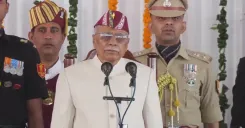
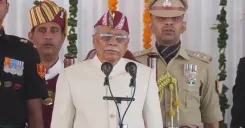
Giriraj Singh flags women's 80% role in Khadi sector
Synopsis
Union Textiles Minister Giriraj Singh on 19 October 2026 highlighted that women constitute 80 per cent of Khadi and Village Industries workers, pointing to KVIC-driven training, modern machinery and toolkit distribution as key drivers of their economic empowerment and self-reliance.
Key Takeaways
Minister Giriraj Singh stated that women account for 80 per cent of workers in India's Khadi and Village Industries sector.
The Khadi and Village Industries Commission (KVIC) , a statutory body established in 1956 , is the implementing arm for training and equipment distribution.
KVIC's modernisation drive includes access to modern machinery and toolkits alongside formal training programmes for rural women artisans.
The minister's framing explicitly links aatmanirbharta (self-reliance) with women's participation in the unorganised sector.
The messaging aligns with the broader Atmanirbhar Bharat and Skill India policy arcs under the current government.
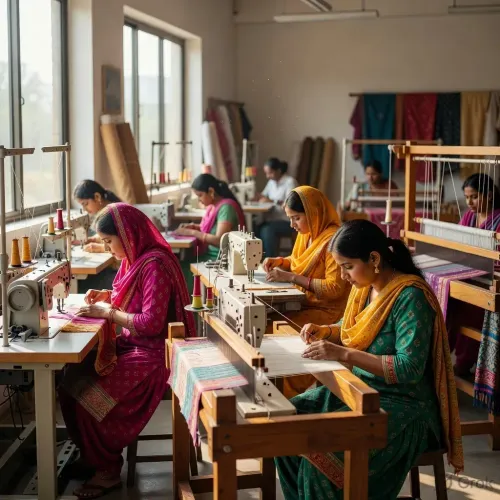
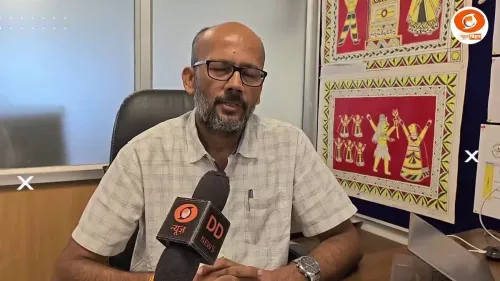
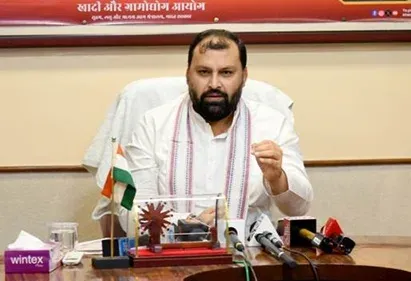
Eight in every ten workers in India's Khadi and Village Industries sector are women — and Union Textiles Minister Giriraj Singh wants that number front and centre in the national conversation on economic self-reliance. On Monday, 19 October 2026, the minister took to X to highlight how the Khadi and Village Industries Commission (KVIC) is channelling training, modern machinery, and toolkits directly to rural women artisans, turning a centuries-old craft tradition into a live engine of financial independence.
Posting in Hindi, Minister Singh wrote: 'Khadi evam Gramodyog kshetra mein mahilaon ki 80% bhagidari unke kaushal, saamarthya aur aatmanirbharta ka sashakt praman hai' — 'The 80 per cent participation of women in the Khadi and village industries sector is powerful proof of their skill, capability and self-reliance.' He added that KVIC-backed access to training, modern machines and toolkits is linking women's skills to new opportunities and playing a pivotal role in making them economically empowered.What KVIC actually does on the ground
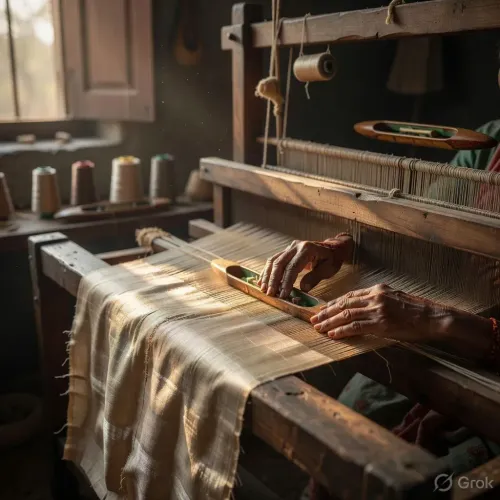
The Khadi and Village Industries Commission is a statutory body established by Parliament in 1956, originally mandated to promote rural employment and preserve India's hand-spun, hand-woven cloth heritage — a legacy stretching back to the independence movement. Over decades, its remit has expanded well beyond the spinning wheel: KVIC now funds training programmes, subsidises equipment, and distributes modern toolkits to artisans and micro-entrepreneurs across the unorganised sector. The intersection of this mandate with the Textiles Ministry's broader craft-preservation and employment agenda is precisely what makes Minister Singh's emphasis notable.
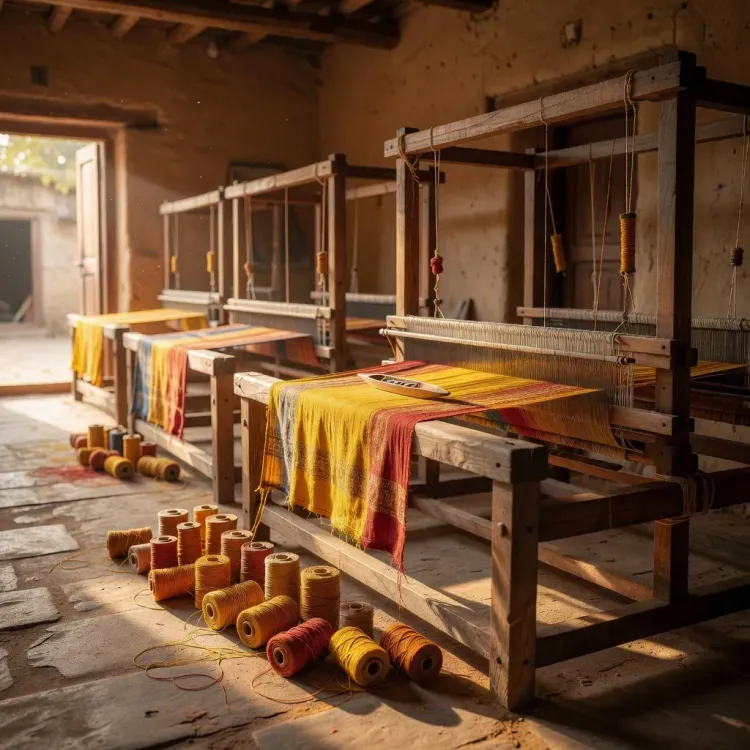
Women have long formed the backbone of Khadi production — weaving, spinning, dyeing, and finishing — in villages where formal employment options remain limited. The modernisation push Minister Singh references is aimed at moving these workers from subsistence-level piece-rates toward more productive, better-remunerated participation, without displacing the handmade character that gives Khadi its premium market position.
Self-reliance as policy vocabulary
The minister's framing — aatmanirbharta (self-reliance), kaushal (skill), saamarthya (capability) — maps directly onto the government's flagship Atmanirbhar Bharat push and the wider Skill India ecosystem. This is not accidental. KVIC sits at the junction of multiple ministry priorities: rural employment, women's economic agency, craft preservation, and micro-enterprise development. When the Textiles Minister invokes these themes together, it signals that the sector is being actively positioned as a showcase for convergence between traditional livelihoods and modern upskilling.
The broader pattern here is consistent: government messaging around KVIC has increasingly emphasised quantifiable participation metrics and tangible delivery — machines distributed, training sessions held, toolkits in hand — as evidence of on-ground impact rather than policy intent alone.
Point of View
Rural-employment context. The Khadi sector's overlap with MSME, Textiles, and Skill Development mandates makes it a convenient policy canvas for convergence messaging. Highlighting 80 per cent female participation also quietly pre-empts criticism that flagship self-reliance schemes bypass women in the unorganised sector. Watch for whether this translates into specific budgetary allocations or parliamentary commitments on KVIC's training and toolkit pipeline.
NationPress
19 Oct 2026
Frequently Asked Questions
What is women's participation rate in the Khadi and Village Industries sector?
Union Textiles Minister Giriraj Singh cited an 80 per cent women's participation rate in the Khadi and Village Industries sector, describing it as evidence of their skill and self-reliance.
What is the Khadi and Village Industries Commission (KVIC)?
KVIC is a statutory body established by Parliament in 1956 under the Ministry of MSME. It promotes and develops Khadi and village industries, focusing on rural employment, craft preservation, and economic self-reliance.
How is KVIC supporting rural women artisans?
According to Minister Giriraj Singh, KVIC is providing training programmes, modern machinery, and toolkits to women in the Khadi and village industries sector, linking their traditional skills to new economic opportunities.
What is Atmanirbhar Bharat's connection to the Khadi sector?
The Khadi sector's emphasis on self-reliance, skill development, and rural employment makes it a natural fit for the Atmanirbhar Bharat framework, and the government has increasingly positioned KVIC-backed women's participation as a showcase for this convergence.
Who is Giriraj Singh and what ministry does he head?
Giriraj Singh is a senior BJP leader and Lok Sabha MP from Begusarai, Bihar, currently serving as India's Union Minister of Textiles.