Giriraj Singh Highlights 12 Years of Women Empowerment Schemes
Synopsis
Union Textiles Minister Giriraj Singh has marked 12 years of BJP governance by spotlighting a decade-long push on women's welfare — from Ujjwala and Jan Dhan to the abolition of triple talaq and the landmark 33 percent women's reservation law passed in 2023.
Key Takeaways
Union Textiles Minister Giriraj Singh posted on June 12, 2026 , marking 12 years of Nari Shakti under the BJP-led government.
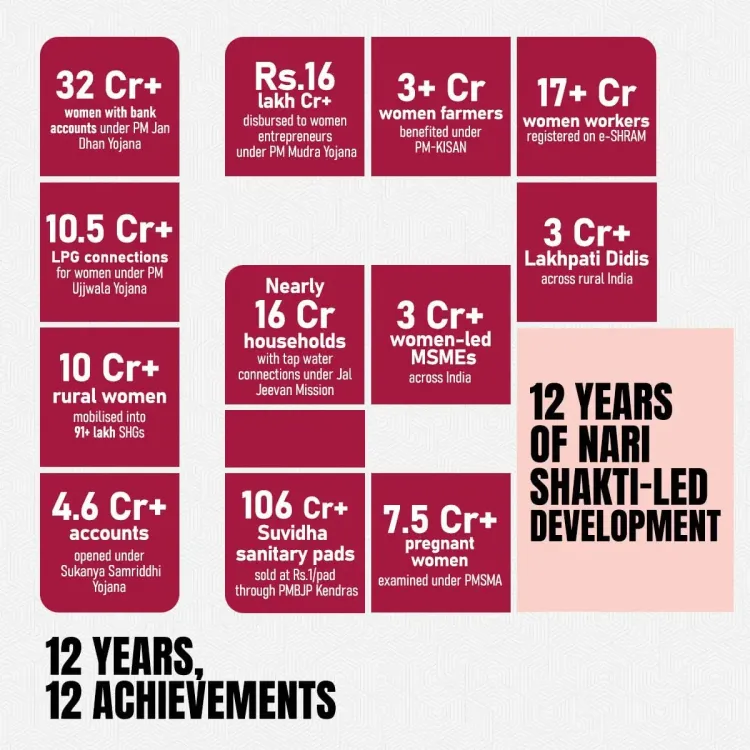
The post highlights welfare schemes in water, sanitation, clean cooking fuel ( Ujjwala Yojana ), housing, financial inclusion, and self-employment.
The Muslim Women (Protection of Rights on Marriage) Act, 2019 criminalised instant triple talaq, a key personal law reform cited by Singh.
The Nari Shakti Vandan Adhiniyam, 2023 provides 33 percent reservation for women in Lok Sabha and state assemblies — a bill that had lapsed since 2010 before being enacted.
Singh frames women's advancement as central to the Viksit Bharat 2047 national development roadmap.
Operationalisation of the women's reservation is tied to the upcoming delimitation exercise ahead of the next general election cycle.
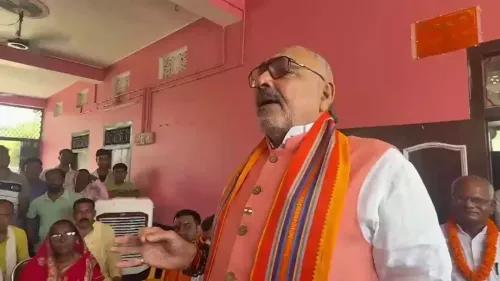
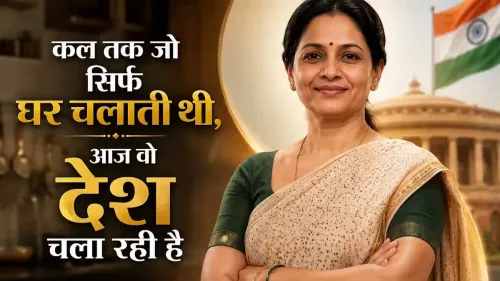
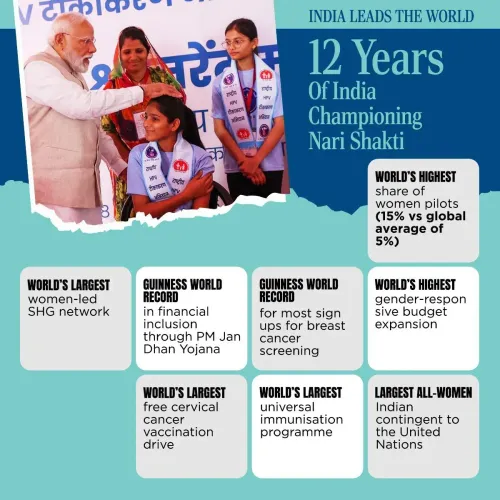
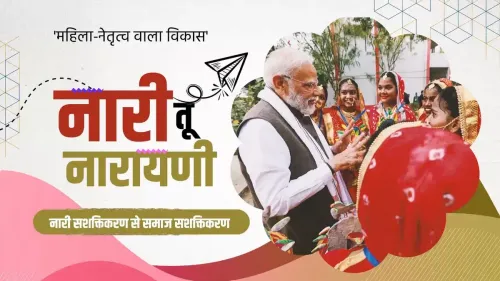
Union Textiles Minister Giriraj Singh on Friday, June 12, 2026, posted on X to mark what the ruling BJP is calling 12 years of Nari Shakti, highlighting a range of government initiatives aimed at women's empowerment — from clean cooking fuel and sanitation to political reservation and personal law reform.
In his post, Singh wrote: 'पिछले 12 वर्षों में महिलाओं के सशक्तिकरण को केंद्र में रखकर अनेक ऐतिहासिक कदम उठाए गए हैं' — ('In the last 12 years, many historic steps have been taken with women's empowerment at the centre'). He cited schemes related to water, sanitation, clean fuel, housing, financial inclusion, and self-employment as having made life easier for crores of women.
Context
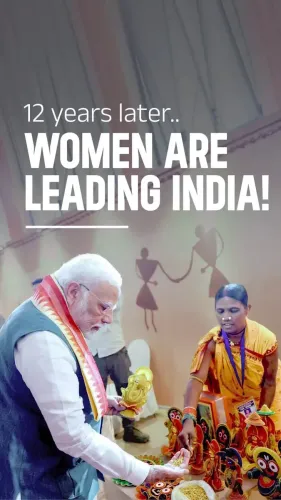
Singh's post is timed to the #12YearsOfNariShakti campaign, marking a dozen years since the BJP-led NDA government came to power in May 2014. The post references two landmark legislative actions alongside welfare delivery: the abolition of instant triple talaq and the passage of the women's reservation law.
On triple talaq, Singh noted that the practice — 'कुप्रथा' (an unjust custom) — was ended, delivering 'justice and dignity' to women. This refers to the Muslim Women (Protection of Rights on Marriage) Act, 2019, enacted in July 2019, which criminalised the practice of instant triple talaq after a sustained legal and political campaign.
Policy Backdrop
The welfare architecture Singh references spans multiple flagship schemes. The Pradhan Mantri Ujjwala Yojana, launched in May 2016, provided free LPG connections to women in below-poverty-line households, targeting clean cooking fuel access in rural India. Complementary programmes in sanitation, housing under Pradhan Mantri Awas Yojana, and the Jan Dhan financial inclusion drive also directed benefits primarily through women beneficiaries.
On the political representation front, Singh highlighted the Nari Shakti Vandan Adhiniyam, 2023 — a constitutional amendment passed in September 2023 that mandates 33 percent reservation for women in the Lok Sabha and state legislative assemblies. The Women's Reservation Bill had first cleared the Rajya Sabha in 2010 but lapsed repeatedly before being enacted in its current form.
Stakeholders and Impact
The beneficiary groups span a wide demographic: rural women from below-poverty-line households who accessed LPG and housing benefits; Muslim women who gained legal protection from instant divorce; and women across political parties who stand to gain seats once the reservation is operationalised. The government's framing positions these as complementary — material access reinforced by formal legal and political rights.
Singh concluded his post by stating that 'today India's women are setting new records in every field and playing a leading role in building Viksit Bharat' — the government's Developed India 2047 vision that places women as central agents in national development targets.
What's Next
The most consequential pending step in this arc is the operationalisation of the 33 percent women's reservation in Parliament and state assemblies, which is linked to the delimitation exercise expected ahead of the next general election cycle. Observers will also watch for fresh budgetary allocations targeting women-specific self-employment and credit programmes in the coming Union Budgets. The #12YearsOfNariShakti campaign signals that women's welfare and empowerment will remain a central political and policy theme for the ruling party through the run-up to 2047.
Point of View
The party is constructing a unified political identity as the architect of women's advancement. The reference to Viksit Bharat 2047 signals that this framing is not merely retrospective but is being positioned as a forward-looking electoral and policy commitment. The timing — exactly 12 years after the first NDA majority — suggests a coordinated communications effort rather than a standalone ministerial observation.
NationPress
24 Sept 2026
Frequently Asked Questions
What is the Nari Shakti Vandan Adhiniyam 2023?
The Nari Shakti Vandan Adhiniyam, 2023 is a constitutional amendment passed in September 2023 that reserves 33 percent of seats for women in the Lok Sabha and state legislative assemblies. Its operationalisation is linked to the delimitation exercise.
What is the Muslim Women (Protection of Rights on Marriage) Act 2019?
The Muslim Women (Protection of Rights on Marriage) Act, 2019, enacted in July 2019, criminalised the practice of instant triple talaq in India, providing legal protection and recourse to Muslim women subjected to the practice.
What is Pradhan Mantri Ujjwala Yojana and how does it help women?
Pradhan Mantri Ujjwala Yojana, launched in May 2016, provides free LPG connections to women from below-poverty-line households, replacing hazardous solid fuels with clean cooking gas and primarily benefiting rural women.
What does Viksit Bharat 2047 mean for women?
Viksit Bharat 2047 is the central government's roadmap to make India a developed nation by 2047. Women are positioned as central agents in this vision, with welfare schemes and political reservation framed as foundational steps toward that goal.
When did the BJP government come to power and what is the 12 years of Nari Shakti campaign?
The BJP-led NDA government came to power in May 2014. The '12 Years of Nari Shakti' campaign, amplified by ministers including Giriraj Singh in June 2026, marks 12 years of that tenure by cataloguing women-focused legislative and welfare milestones.