Giriraj Singh Hails 12 Years of Middle-Class Empowerment
Synopsis
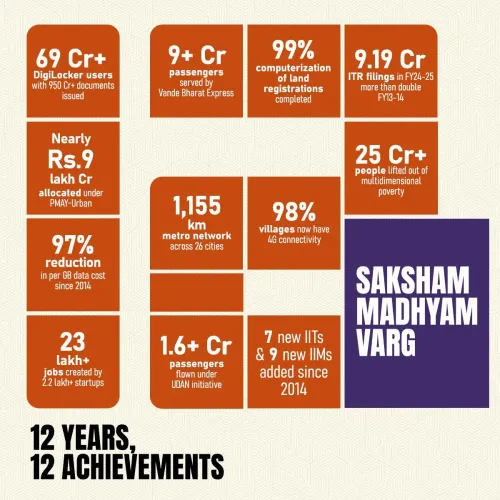
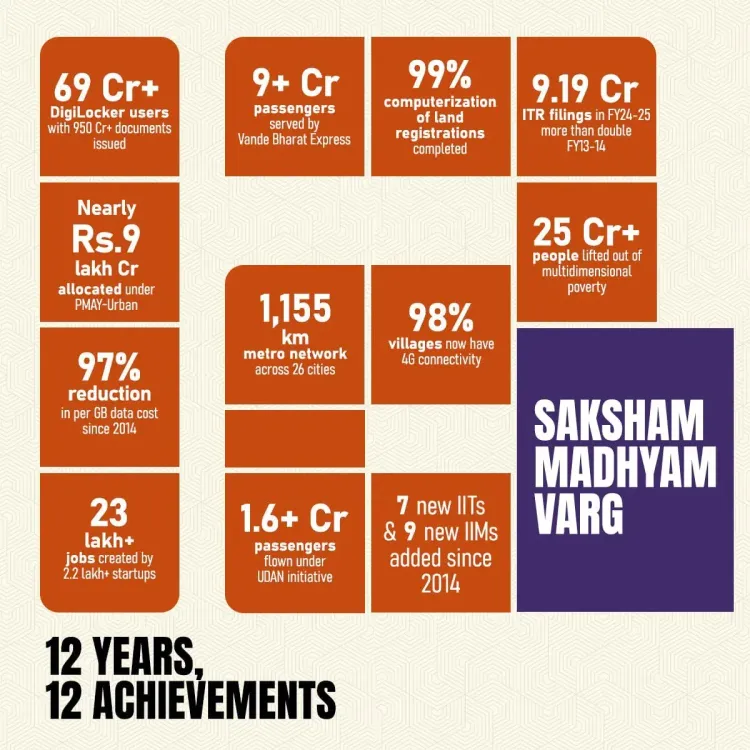
Union Textiles Minister Giriraj Singh on 15 June 2026 cited ₹48,000 crore in annual GST savings, 66 crore daily UPI transactions, 9 crore Vande Bharat passengers, and 69 crore DigiLocker users as evidence of twelve years of unprecedented middle-class empowerment under BJP governance.
Key Takeaways
Giriraj Singh posted on 15 June 2026 attributing twelve years of policy to 'unprecedented' middle-class empowerment under the hashtag #12YearsOfSakshamMiddleClass .
GST reforms are claimed to generate annual savings of ₹48,000 crore for consumers and businesses.
66 crore UPI transactions are said to occur daily, reflecting the scale of India's digital payments revolution.
More than 9 crore passengers have travelled on the Vande Bharat Express since its 2019 launch.
DigiLocker has surpassed 69 crore registered users , making it one of the world's largest digital document platforms.
India now operates the world's third-largest metro rail network , a key urban mobility milestone cited by the minister.
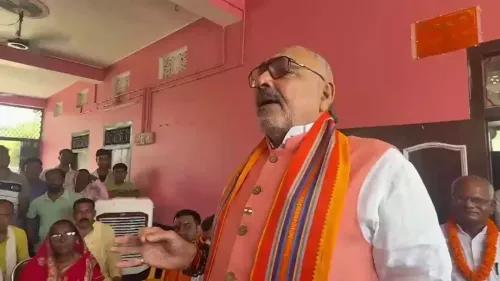
Union Textiles Minister Giriraj Singh on Monday, 15 June 2026, credited twelve years of central government policy with delivering an 'unprecedented empowerment' of India's middle class, citing sweeping gains in digital payments, rail connectivity, and tax reform as proof of a transformed quality of life.
Context
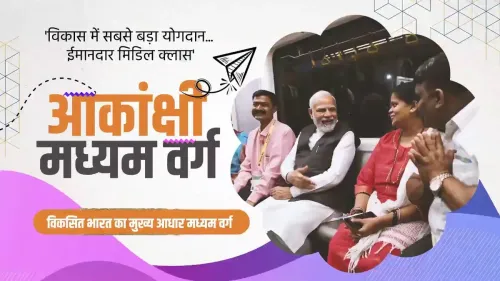
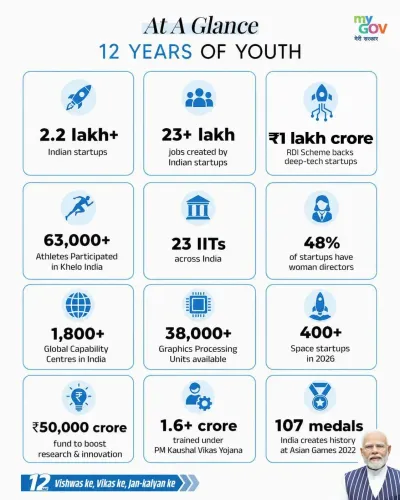
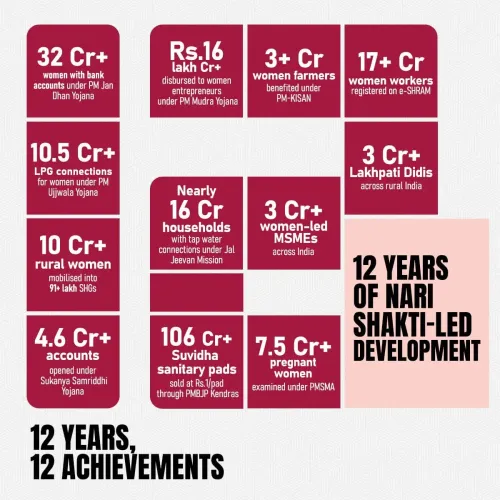
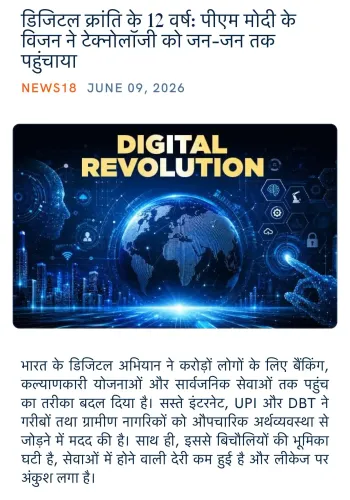
Posting under the hashtag #12YearsOfSakshamMiddleClass, Singh wrote that the past twelve years had brought 'Ease of Living' — ease of living — to India's middle class in ways never seen before. He pointed to GST reforms generating annual savings of ₹48,000 crore and 66 crore daily UPI transactions as twin pillars of what he called a 'digital and economic revolution.' The post was accompanied by four images and published at 9:42 am IST.
The minister's remarks arrive as the BJP marks a political milestone tied to its tenure in government, with senior leaders across the party amplifying narratives of middle-class progress through coordinated social-media messaging.
Policy Backdrop
The Goods and Services Tax (GST), rolled out on 1 July 2017, replaced a fragmented web of central and state levies with a unified indirect tax structure. Alongside it, the Unified Payments Interface (UPI) — launched by the National Payments Corporation of India (NPCI) in August 2016 — created an interoperable, real-time digital payments layer that has since become central to everyday commerce for hundreds of millions of Indians.
DigiLocker, introduced in February 2015 under the Digital India programme, now counts more than 69 crore registered users according to Singh's post, enabling citizens to store and share official documents digitally. The Vande Bharat Express, India's semi-high-speed rail service, began commercial operations in February 2019 on the New Delhi–Varanasi route and has since carried more than 9 crore passengers, the minister said.
Singh also highlighted India's position as home to the world's third-largest metro rail network — a rapid urban expansion that has reshaped commuting for millions of middle-class households in cities from Delhi to Bengaluru to Hyderabad.
Stakeholders and Impact
The constituencies Singh invokes — digital payment users, rail commuters, document-holders — map closely onto urban and semi-urban middle-income households that political analysts regard as a decisive electoral bloc. GST rationalisation has lowered compliance costs for small traders and salaried consumers alike, while UPI's zero-fee architecture has pulled informal transactions into a verifiable, formalised economy.
Metro expansion and premium rail services such as Vande Bharat address time-poverty — a concern that resonates strongly with working professionals. DigiLocker, meanwhile, has reduced friction in accessing government services, from school admissions to vehicle registration, for a demographic that increasingly transacts online.
What's Next
Parliamentary debates on further GST rate rationalisation are expected to intensify ahead of the next Union Budget, with industry bodies pushing for a simpler slab structure. Any new digital public infrastructure announcements — particularly around the UPI ecosystem or expansion of DigiLocker services — will be closely watched as the government seeks to deepen its 'Ease of Living' narrative. The Vande Bharat fleet is also set for further expansion on regional routes, extending the premium rail experience beyond Tier-1 corridors.
Point of View
UPI volume, Vande Bharat ridership, DigiLocker adoption — is deliberate: each targets a distinct anxiety of the urban and semi-urban middle class (tax burden, payment friction, commute quality, bureaucratic hassle). By framing these as a single 'Ease of Living' arc, the party seeks to consolidate a demographic that swung decisively in its favour in 2014 and has remained central to its electoral arithmetic. Whether the numbers withstand independent scrutiny will determine how effectively the narrative travels beyond the party's own ecosystem.
NationPress
20 Sept 2026
Frequently Asked Questions
What is the #12YearsOfSakshamMiddleClass campaign about?
It is a BJP social-media campaign marking twelve years of central government policy, with senior leaders including Union Textiles Minister Giriraj Singh highlighting reforms such as GST , UPI , Vande Bharat , and DigiLocker as evidence of middle-class empowerment.
How much has GST saved India's middle class annually according to Giriraj Singh?
Singh's post claims that GST reforms have generated annual savings of ₹48,000 crore for consumers and businesses, though this figure has not been independently verified.
How many UPI transactions happen daily in India in 2026?
According to Giriraj Singh's post dated 15 June 2026 , India records 66 crore UPI transactions every day , underlining the scale of the country's digital payments ecosystem.
How many passengers have travelled on Vande Bharat Express?
Singh's post states that more than 9 crore passengers have travelled on Vande Bharat Express trains since the semi-high-speed service launched commercially in February 2019 .
What is DigiLocker and how many users does it have?
DigiLocker is a cloud-based digital document wallet launched in February 2015 under the Digital India programme. Singh's post claims it has surpassed 69 crore registered users , making it one of the largest such platforms globally.