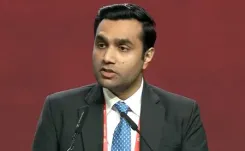
Giriraj Singh hails Digital India on programme's anniversary
Synopsis
Union Textiles Minister Giriraj Singh on 2 July 2026 lauded the Digital India programme, saying tasks that once required long queues and paperwork are now done on mobile phones in minutes, crediting PM Modi's leadership for making technology accessible to crores of citizens.
Key Takeaways
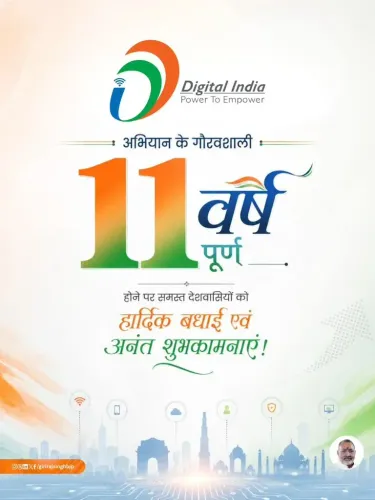
Giriraj Singh praised the Digital India programme on 2 July 2026 , marking the period around its 11th anniversary since its launch on 1 July 2015 .
The minister highlighted that tasks previously requiring long queues and paperwork can now be completed on a mobile phone within minutes .
He credited Prime Minister Narendra Modi 's leadership for making technology a tool of convenience for ordinary citizens.
Three specific areas were cited: digital payments , health services , and new opportunities for small business owners .
The Unified Payments Interface (UPI) , introduced in 2016 , has been a central pillar of the Digital India vision Singh referenced.
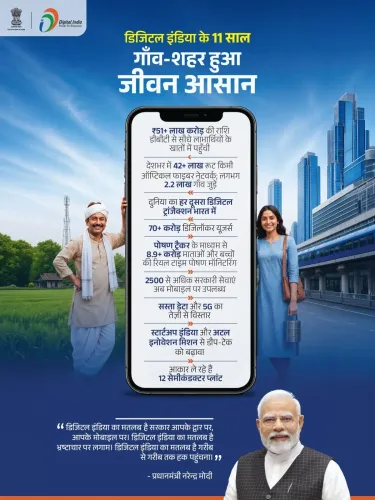
Upcoming priorities include expanded 5G coverage and the Ayushman Bharat Digital Mission health ID rollout.
Union Textiles Minister Giriraj Singh on Thursday, 2 July 2026, praised the Digital India programme, saying technology has transformed everyday tasks that once required long queues and paperwork into processes completable on a mobile phone within minutes.
Context
Posting on X, Giriraj Singh wrote in Hindi: 'पहले कई कामों के लिए लंबी कतारें और कागजी प्रक्रियाएं थीं, आज वही काम मोबाइल से कुछ ही मिनटों में हो रहे हैं' ('Earlier, many tasks required long queues and paperwork; today those same tasks are done on a mobile in just a few minutes'). He credited Prime Minister Narendra Modi's leadership for making technology a tool of convenience for the common citizen. The post coincides with the period around 1 July, the anniversary of the formal launch of the Digital India programme in 2015.
Policy Backdrop
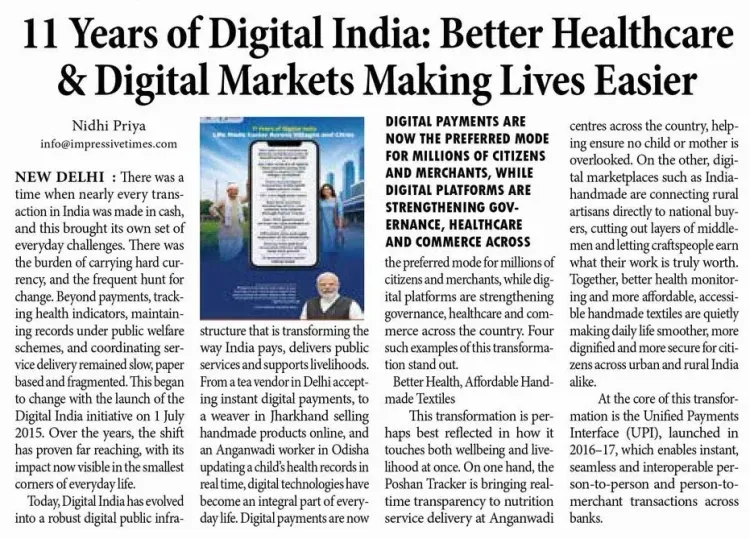
Prime Minister Narendra Modi launched the Digital India programme on 1 July 2015 with the stated aim of transforming India into a digitally empowered society by delivering public services electronically and reducing dependence on paper-based processes. A key pillar of the initiative has been the Unified Payments Interface (UPI), introduced by the National Payments Corporation of India in 2016, which enabled real-time digital transactions and became central to the programme's goals. The broader push since 2014 has integrated Aadhaar-linked services, direct benefit transfers, and online portals across ministries, with the stated objectives of reducing corruption and lowering transaction costs for citizens.
Giriraj Singh specifically highlighted three pillars of the initiative's reach: digital payments, access to health services, and new opportunities for small business owners — groups the government has consistently cited as primary beneficiaries of the programme's expansion.
Stakeholders and Impact
The Digital India programme has been designed to serve crores of ordinary citizens, with particular emphasis on rural communities and small traders who previously faced barriers of distance, paperwork, and limited banking access. Mobile-first delivery of government services has been positioned as a leveller, allowing users in remote areas to access welfare schemes, health records, and payment systems without visiting a government office. Small business owners, whom Singh explicitly mentioned, have benefited from digital payment infrastructure that reduced cash-handling costs and expanded their customer base.
What's Next
The government's next-phase priorities for Digital India include expanded 5G network coverage and the rollout of health identity cards under the Ayushman Bharat Digital Mission, which aims to link every citizen's medical records to a unique digital ID. Parliamentary discussions around a proposed Data Protection framework are also expected to shape how digital platforms used by small traders and citizens handle personal data. Singh's post, tagged #DigitalIndia and #RisingIndia, reflects the ruling party's continued effort to frame the programme as a cornerstone of governance ahead of future electoral cycles.
Point of View
Arriving around the programme's anniversary and reinforcing the BJP's long-standing narrative that the Modi government has made governance citizen-friendly through technology. By spotlighting payments, health, and small businesses in a single post, Singh is echoing a three-pronged messaging template the party has used consistently to broaden the programme's perceived reach beyond urban, tech-savvy users. The shout-out from a senior minister who holds the Textiles portfolio — not the IT or Electronics ministry — signals that Digital India has been institutionalised as a cross-cutting talking point for the entire cabinet. With next-phase components like 5G and digital health IDs still rolling out, such ministerial amplification is likely to intensify as the government seeks to cement its technology-governance legacy.
NationPress
2 Jul 2026
Frequently Asked Questions
What is the Digital India programme?
Digital India is a Government of India initiative launched by Prime Minister Narendra Modi on 1 July 2015 to deliver public services electronically, reduce paperwork, and expand digital access for citizens and businesses across the country.
Why did Giriraj Singh post about Digital India?
Giriraj Singh posted on 2 July 2026 to praise the Digital India programme, noting that tasks once requiring long queues and paperwork can now be completed on a mobile phone in minutes, and crediting PM Modi's leadership for the transformation.
What is UPI and how does it relate to Digital India?
The Unified Payments Interface (UPI) was introduced by the National Payments Corporation of India in 2016 and enables real-time digital payments between bank accounts via mobile. It became a central pillar of the Digital India programme's goal of reducing cash dependence.
How has Digital India helped small business owners?
Digital payment infrastructure under Digital India has allowed small traders to accept payments without cash-handling costs, reach more customers digitally, and access government schemes and portals online, reducing their dependence on physical paperwork and middlemen.
What are the next steps for Digital India?
The government's upcoming priorities include expanded 5G network coverage across India and the rollout of health identity cards under the Ayushman Bharat Digital Mission , alongside parliamentary deliberation on a proposed Data Protection framework.