Giriraj Singh Hails India-UK CETA, Cites $140 Mn Day-One Exports
Synopsis
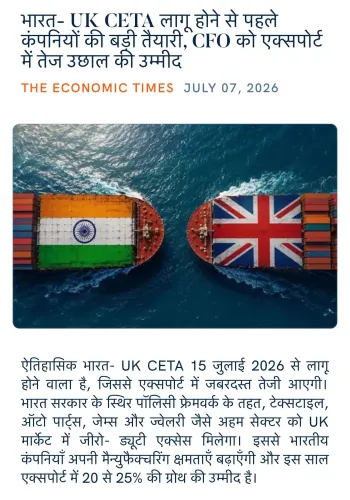
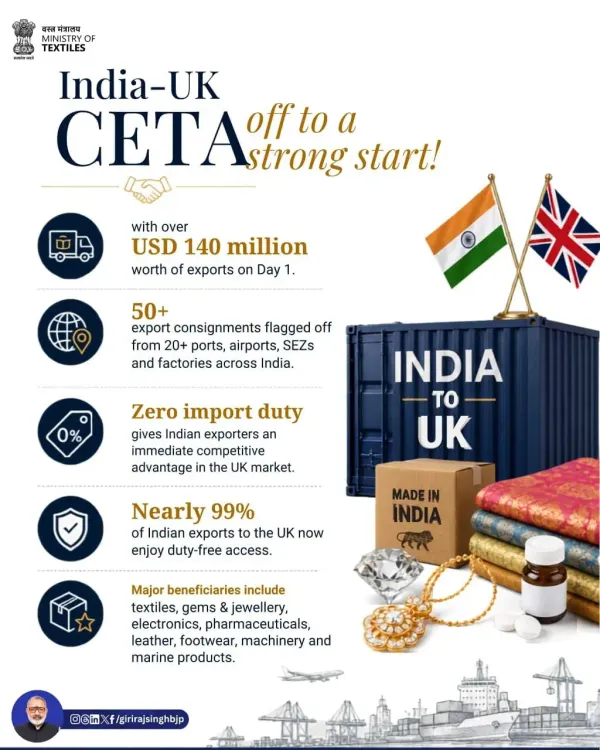
Union Textiles Minister Giriraj Singh marked the first day of the India-UK CETA by citing over USD 140 million in exports and 50-plus consignments dispatched, with Indian goods now entering the UK at zero import duty — a milestone he linked to Make in India and Viksit Bharat 2047.
Key Takeaways
Union Textiles Minister Giriraj Singh announced that the India-UK CETA generated over USD 140 million in exports on its very first day.
More than 50 export consignments were dispatched to the UK on day one of the agreement coming into force.
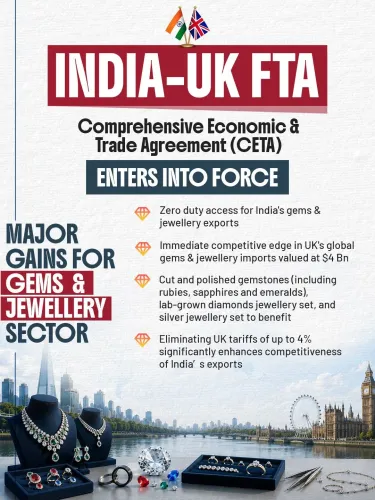
Indian goods now enjoy zero import duty access to the UK market under the CETA.
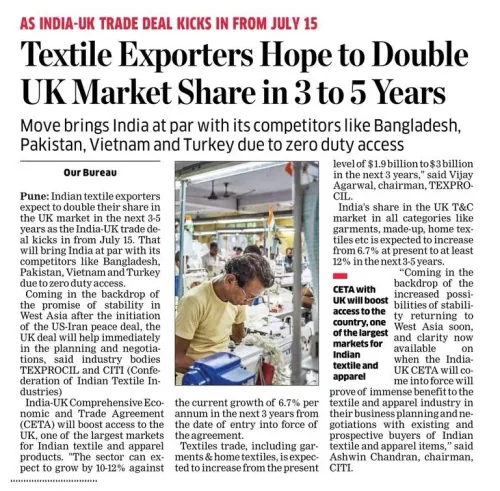
The textiles sector is among the key beneficiaries, alongside other labour-intensive industries and MSME manufacturers .
The CETA is part of India's broader bilateral trade strategy that has included agreements with Australia and the UAE since 2021.
Singh connected the deal to two flagship programmes: Make in India and the Viksit Bharat 2047 long-term development vision.
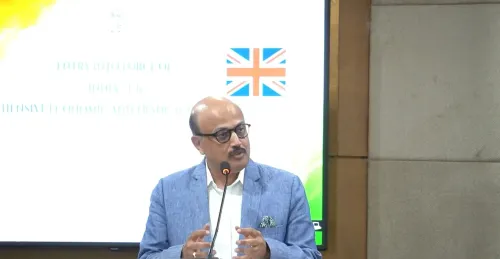
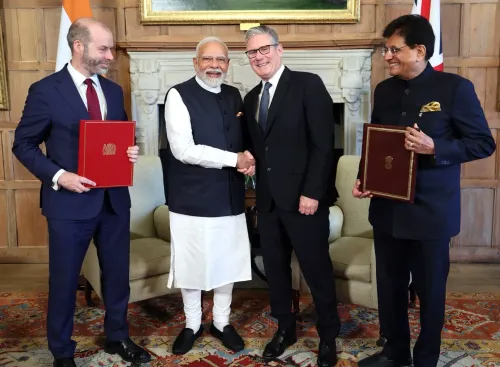
Union Textiles Minister Giriraj Singh on Monday, 27 July 2026 celebrated the launch of the India-UK Comprehensive Economic and Trade Agreement (CETA), saying Indian exports had taken 'a new flight' on the very first day of the deal coming into force, with over USD 140 million in shipments and more than 50 export consignments dispatched, with Indian goods now eligible for zero import duty in the United Kingdom.
Posting on X, Singh wrote: 'Bharat-UK CETA ke saath Bharatiya niryaat ne nayi udaan bhar di hai' — ('With the India-UK CETA, Indian exports have taken a new flight'). He highlighted the first-day figures as evidence of the agreement's historic potential and said the deal would give fresh momentum to exports across multiple sectors, including textiles, while strengthening the global identity of 'Made in India'.
Context
The India-UK CETA is a landmark bilateral trade agreement aimed at reducing tariffs on goods and services traded between the two countries. For Indian exporters, the most immediate benefit is zero import duty access to the UK market — a significant gain for labour-intensive industries such as textiles, garments, leather, and engineering goods. The first-day dispatch of over 50 consignments signals strong readiness among Indian exporters to capitalise on the new regime.
Policy Backdrop
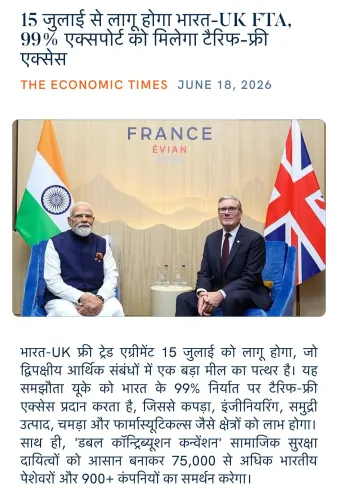
Negotiations for a India-UK Free Trade Agreement were formally relaunched in January 2022 after an earlier round of talks between 2005 and 2010 had stalled. The CETA is the culmination of those renewed efforts and fits into a broader Indian trade strategy that has already produced agreements with Australia and the UAE since 2021. The government has pursued these bilateral pacts to expand market access for labour-intensive sectors and reduce dependence on a narrow set of trading partners. For the textiles sector specifically — which Singh oversees — duty-free access to the UK opens a significant consumer market for Indian fabrics, garments, and home textiles.
The agreement also aligns with two flagship government programmes: Make in India, the 2014 initiative to boost domestic manufacturing and exports, and Viksit Bharat 2047, the long-term vision to make India a fully developed economy by the centenary of its independence.
Stakeholders and Impact
The most direct beneficiaries are textile exporters and MSME manufacturers who have historically faced tariff barriers in the UK market. Zero-duty access lowers the cost of Indian goods relative to competitors, potentially increasing order volumes from British retailers and buyers. Sectors such as readymade garments, technical textiles, and home furnishings are expected to see early gains.
For the broader manufacturing ecosystem, the CETA sends a signal about India's growing ability to negotiate favourable market-access terms. The 'Made in India' branding that Singh referenced stands to gain visibility as Indian products enter UK shelves under preferential terms, reinforcing the country's positioning as a reliable global supply-chain partner.
What's Next
Analysts and industry bodies will watch closely for the sector-specific tariff schedules and rules-of-origin provisions once the agreement is formally notified, as these details will determine which products qualify for zero duty and under what conditions. Any parliamentary scrutiny or review mechanisms on either side will also be key to the agreement's long-term stability. For the textiles ministry, the immediate task is ensuring that exporters — particularly smaller MSME units — have the documentation and logistics support to fully utilise the new preferential access before competitors from other countries adjust their own strategies.
Point of View
If sustained, would represent a meaningful early signal for an agreement that took over four years to conclude after the 2022 relaunch. The minister's invocation of both Make in India and Viksit Bharat 2047 in the same breath is textbook political signalling: anchoring a trade milestone to two of the BJP's most recognisable economic brand identities. The broader pattern — India inking deals with the UAE, Australia, and now the UK in quick succession — suggests a deliberate pivot toward market diversification that the textiles lobby has long demanded.
NationPress
27 Jul 2026
Frequently Asked Questions
What is the India-UK CETA?
The India-UK Comprehensive Economic and Trade Agreement (CETA) is a bilateral trade deal between India and the United Kingdom that reduces or eliminates tariffs on a wide range of goods and services, giving Indian exporters zero or lower import duty access to the UK market.
What did Giriraj Singh say about India-UK CETA exports?
Union Textiles Minister Giriraj Singh said that on the first day of the India-UK CETA, India recorded over USD 140 million in exports, dispatched more than 50 consignments, and that Indian products now benefit from zero import duty in the UK.
How does the India-UK CETA benefit the textiles sector?
Indian textile exporters gain zero import duty access to the UK market under the CETA, making Indian fabrics, garments, and home textiles more price-competitive against rivals and potentially boosting order volumes from British buyers.
When were India-UK free trade negotiations relaunched?
India and the UK formally relaunched free trade agreement negotiations in January 2022, after an earlier round of talks between 2005 and 2010 had failed to produce a deal.
What is Viksit Bharat 2047?
Viksit Bharat 2047 is the Indian government's long-term vision to transform India into a fully developed economy by 2047, the centenary of the country's independence, with trade agreements like the India-UK CETA seen as stepping stones toward that goal.