Giriraj Singh Hails UPI at 14,000 Ft as Symbol of New India
Synopsis
Union Textiles Minister Giriraj Singh on 27 July 2026 highlighted a young Indian making QR code payments at 14,000 feet as proof of last-mile digital transformation, crediting PM Modi's Digital India vision and calling youth trust the backbone of Viksit Bharat.
Key Takeaways
Giriraj Singh posted on 27 July 2026 invoking a scene of QR code payment at 14,000 feet as a symbol of India's digital reach.
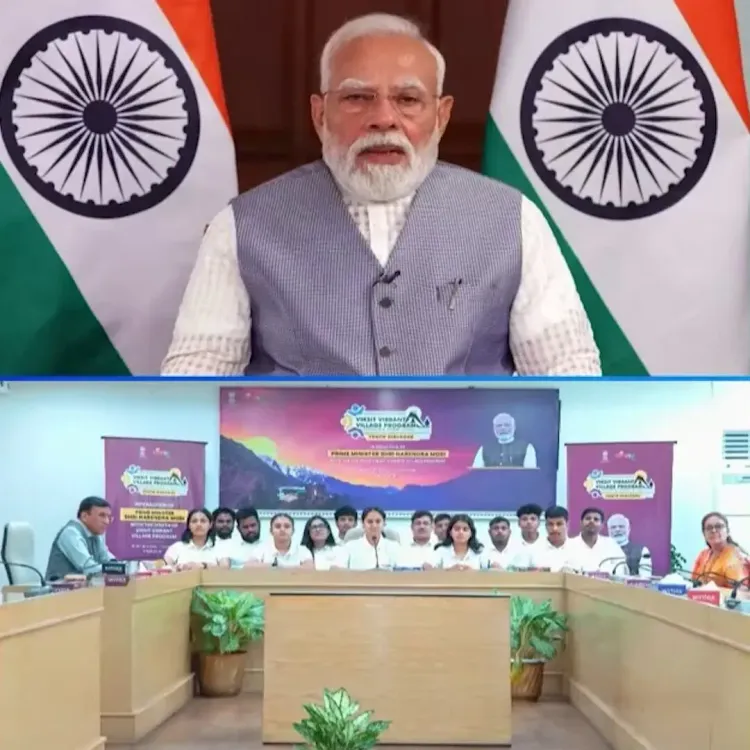
The post was tagged #Youth4ViksitBharat , linking the moment to the government's Viksit Bharat 2047 development vision.
UPI , launched in 2016 by NPCI , underpins the QR-based payment capability highlighted in the post.
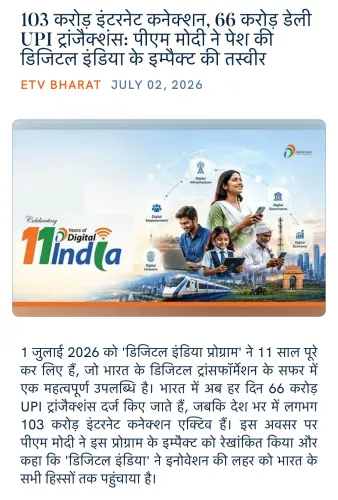
The Digital India programme, launched in 2015 , laid the infrastructure groundwork for extending digital services to remote regions.
Singh credited PM Modi 's trust in youth and commitment to last-mile development as the foundation of India's digital transformation story.
Union Textiles Minister Giriraj Singh on Monday, 27 July 2026, shared a social media post invoking the image of a young Indian named Ashish making a video call to his parents and completing a QR code payment at an altitude of 14,000 feet, framing it as evidence of India's last-mile digital transformation under Prime Minister Narendra Modi.
Context
The post, shared under the hashtag #Youth4ViksitBharat, describes a scene at 14,000 feet where a young man named Ashish video-calls his parents and pays via QR code with ease. In Singh's words, 'यह केवल तकनीक की कहानी नहीं है, यह नए भारत की बदलती तस्वीर है' — 'This is not merely a story of technology; it is the changing face of new India.' The minister attributed this transformation to Prime Minister Narendra Modi's trust in youth and his commitment to carrying development to the furthest corners of the country.
Singh added that this trust in young Indians and their participation is what makes Modi 'the most beloved leader of the youth,' and called it the greatest strength of a Viksit Bharat — a developed India.
Policy Backdrop
The vignette Singh invokes draws on two flagship policy pillars of the Modi government. The Digital India programme, launched in 2015, set out to expand digital infrastructure and services across the country, including in remote and border regions. A year later, the Unified Payments Interface (UPI) — developed by the National Payments Corporation of India (NPCI) — introduced QR-code-based instant payments that have since become ubiquitous across urban and rural India alike.
UPI has been central to India's financial inclusion story, enabling citizens without traditional banking access to transact digitally. The extension of mobile connectivity to high-altitude and border areas has been a stated objective of successive digital infrastructure drives, with the government positioning such access as both a governance and national-security priority.
Stakeholders and Impact
The post specifically centres India's youth as both beneficiaries and agents of this digital shift. The Viksit Bharat 2047 vision — the government's long-term development framework targeting a fully developed India by the centenary of independence — has made youth participation one of its organising themes. Campaigns under the #Youth4ViksitBharat banner aim to channel young Indians' energy toward national development goals.
Residents of remote and high-altitude regions — including those in border areas, hill stations, and tourist destinations — stand to gain most visibly from last-mile digital connectivity. For them, seamless digital payments and video communication represent a qualitative shift in daily life and economic participation.
What's Next
The government is expected to push further rollout of digital infrastructure in border and high-altitude areas, alongside youth engagement programmes tied to the Viksit Bharat 2047 agenda. Singh's post signals that the ruling party intends to make last-mile digital access a recurring political and policy talking point in the run-up to broader development milestones. As India's UPI ecosystem continues to expand internationally, the domestic narrative around its reach into remote geographies is likely to grow in prominence.
Point of View
The minister translates infrastructure statistics into emotional currency. The #Youth4ViksitBharat hashtag signals a coordinated effort to mobilise young voters around the government's development record. The framing positions PM Modi as uniquely trusted by youth, a recurring electoral theme the BJP has deployed consistently since 2014.
NationPress
27 Jul 2026
Frequently Asked Questions
What did Giriraj Singh post about UPI and 14,000 feet?
On 27 July 2026 , Union Textiles Minister Giriraj Singh shared a post describing a young man named Ashish making a video call to his parents and completing a QR code payment at 14,000 feet , calling it the changing face of new India under PM Modi .
What is Viksit Bharat 2047?
Viksit Bharat 2047 is the Indian government's long-term development vision targeting a fully developed India by the centenary of independence in 2047 , with youth participation as a central pillar.
How does UPI work at high altitudes in India?
UPI (Unified Payments Interface) , launched in 2016 by the National Payments Corporation of India , enables QR-code-based instant digital payments wherever mobile internet connectivity is available, including in high-altitude and remote regions where the government has expanded network infrastructure.
What is the Digital India programme?
Digital India is a flagship government programme launched in 2015 to expand digital infrastructure, internet connectivity, and digital services across India, including in rural and remote areas.
Why is Giriraj Singh talking about youth and PM Modi?
Singh's post is part of the #Youth4ViksitBharat campaign, which aims to connect young Indians with the government's development agenda and frame PM Modi as the leader most trusted by India's youth.