Giriraj Singh: Handloom Skills Must Meet Market Demand
Synopsis
Union Textiles Minister Giriraj Singh met Rajasthan handloom entrepreneur Ruma Devi and argued that pairing traditional weaving skills with market awareness — illustrated by converting a handloom shawl into a jacket — is essential to expanding artisan livelihoods and product viability.
Key Takeaways
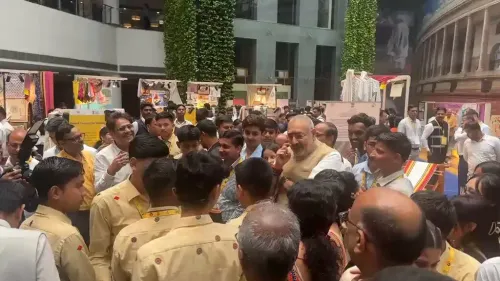
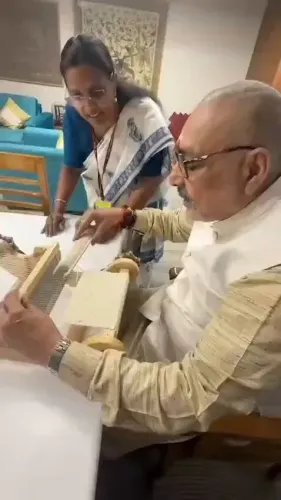
Union Textiles Minister Giriraj Singh met handloom entrepreneur Ruma Devi from Rajasthan and discussed market-oriented value addition for handloom products.
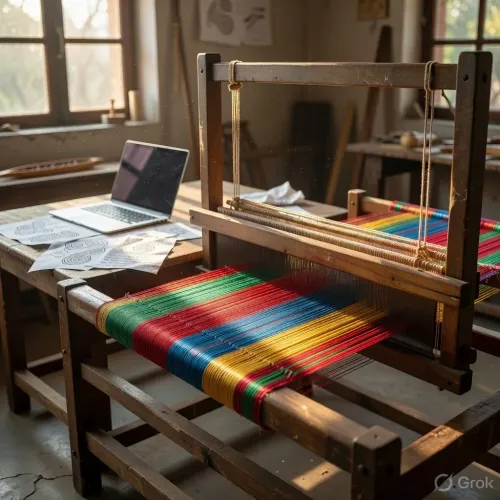
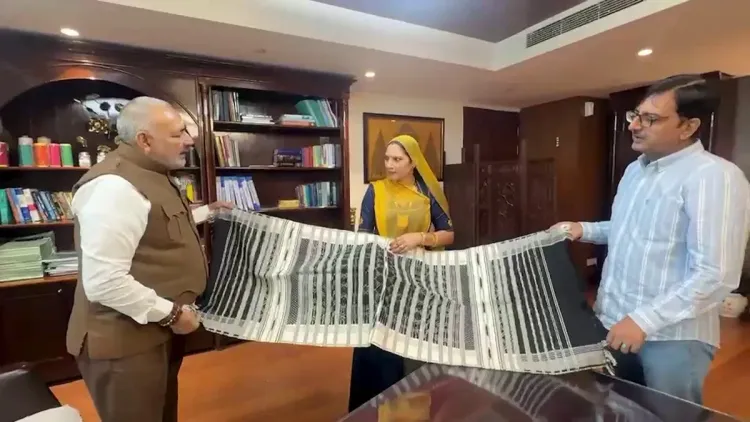
Ruma Devi presented a handloom fabric usable as a shawl; the discussion centred on repositioning it as a jacket to match market demand.
Singh stated that combining skill with market understanding expands both the utility and the possibilities of a product.
The post reflects the Ministry of Textiles' focus on bridging the gap between traditional craft production and commercial viability.
The Skill India Mission (launched 2015 ) underpins the government's broader push to align vocational training with market requirements in the textiles sector.
A handloom shawl becoming a jacket — that single image captures the entire argument Union Textiles Minister Giriraj Singh made on Friday, 14 August 2026, when he shared a lesson from his meeting with Rajasthan-based handloom entrepreneur Ruma Devi: craft without commercial instinct leaves money — and livelihoods — on the table.
Posting in Hindi, the Minister described how Ruma Devi arrived with a piece of handloom fabric that could be worn as a shawl. The conversation quickly turned to possibility: with value addition, the same cloth could be repositioned as a jacket — a product far more aligned with what today's market actually wants. 'कौशल में जब बाजार की समझ जुड़ती है, तो उपयोग और संभावनाएँ दोनों बढ़ती हैं' — 'When market understanding is added to skill, both utility and possibilities grow,' he wrote.
Ruma Devi and the Artisan Economy She Represents
Ruma Devi is not an abstract case study. She is a recognised handloom entrepreneur from Rajasthan known for organising women artisan collectives and championing traditional weaves. Her presence in a conversation with the Textiles Minister signals that the ministry is actively engaging practitioners — not just policymakers — to shape its market-linkage thinking.
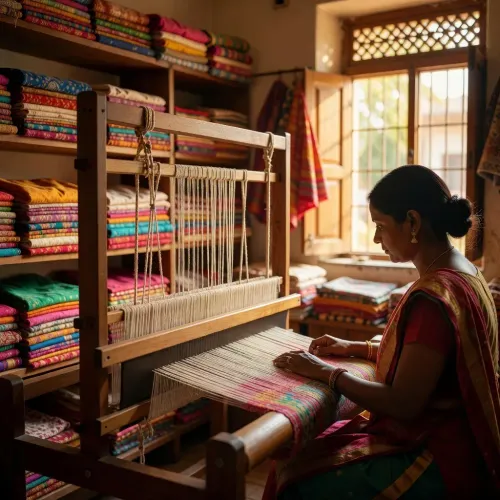
India's handloom sector employs millions of weavers, the vast majority of them women in rural clusters. The sector's persistent challenge is not the quality of the craft but the gap between what artisans produce and what urban and export buyers will pay a premium for. A shawl-to-jacket conversion is a small, vivid example of that gap — and of how design intervention and value addition can close it.
Skill India's Unfinished Bridge Between Loom and Market
The Skill India Mission, launched in 2015, set out to align vocational training with real market demand across sectors, including textiles. More than a decade on, the Ministry of Textiles continues to wrestle with the same structural problem: weavers gain technical skill but rarely gain the market literacy — pricing, trend-reading, product design — needed to capture higher value.
Minister Singh's post is a public articulation of that gap, framed as a ministerial priority. The call to pair kaushal (skill) with bazaar ki samajh (market understanding) is a direct policy signal — one that points toward potential announcements on handloom cluster upgrades or skill-market linkage pilots from the Ministry of Textiles.
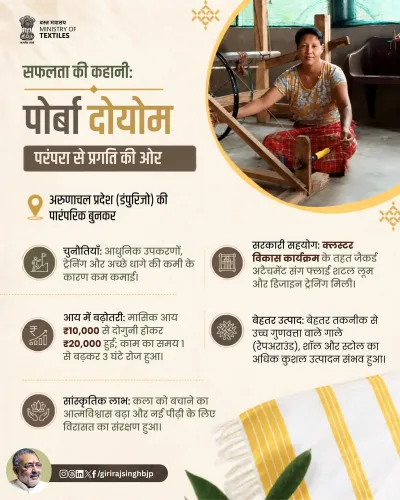
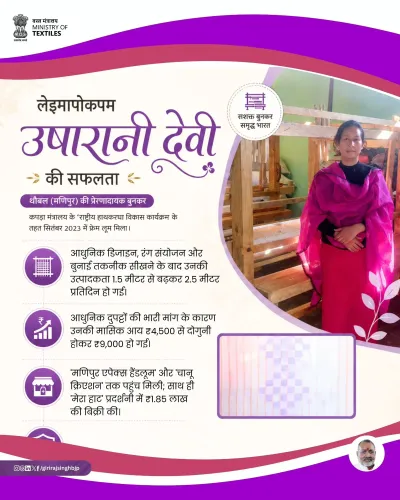
The handloom-to-fashion pipeline already has precedents in government programmes, but execution at scale remains the challenge. If the shawl-to-jacket idea sounds simple, that is the point: the most durable transformations in artisan economies begin with exactly this kind of concrete, product-level reimagination.
Point of View
A grassroots woman entrepreneur, also serves a dual purpose: it humanises the policy argument and reinforces the party's outreach to women in informal craft economies. The real test will be whether ministerial messaging translates into funded, scaled market-linkage programmes rather than remaining a recurring talking point.
NationPress
14 Aug 2026
Frequently Asked Questions
Who is Ruma Devi and why is she significant in handloom?
Ruma Devi is a Rajasthan-based handloom entrepreneur known for organising women artisan collectives and promoting traditional weaves, making her a prominent grassroots voice in India's craft economy.
What did Giriraj Singh say about handloom and market skills?
Minister Giriraj Singh said that skill alone is not enough — when market understanding is added to craft skill, both the utility and the possibilities of a product increase, using the example of converting a handloom shawl into a jacket.
What is value addition in handloom textiles?
Value addition in handloom refers to redesigning or repurposing traditional fabric — through better finishing, new product forms like jackets or accessories, or design intervention — to make it more appealing and higher-priced in urban or export markets.
How does Skill India relate to the handloom sector?
The Skill India Mission, launched in 2015, aims to align vocational training with market demand across sectors including textiles, though bridging the gap between weaving skill and commercial market literacy remains an ongoing challenge.
What is the Ministry of Textiles doing for handloom artisans?
The Ministry of Textiles has been focusing on market-linkage programmes, cluster upgrades, and skill development to help handloom artisans move beyond subsistence production toward higher-value, market-ready products.