Giriraj Singh Highlights Artisan Talent at Indie Haat
Synopsis
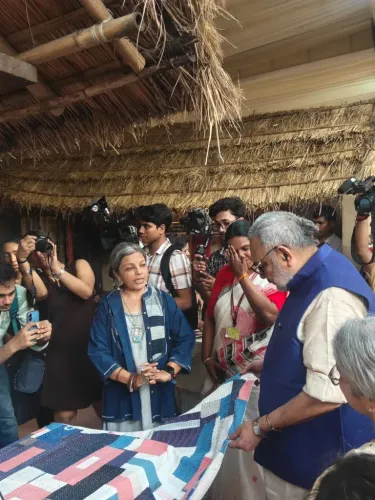
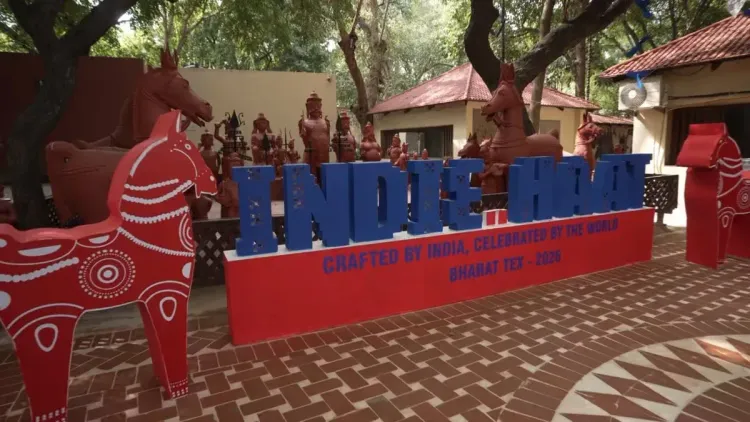
Union Textiles Minister Giriraj Singh on 14 July 2026 spotlighted Indie Haat, calling it a vivid showcase of India's handloom and handicraft heritage and praising the skill of artisans and weavers who gathered from across the country.
Key Takeaways
Giriraj Singh , Union Textiles Minister, visited and publicly endorsed Indie Haat on 14 July 2026 .
He described the event as a 'beautiful glimpse' of India's diverse handicraft and handloom traditions.
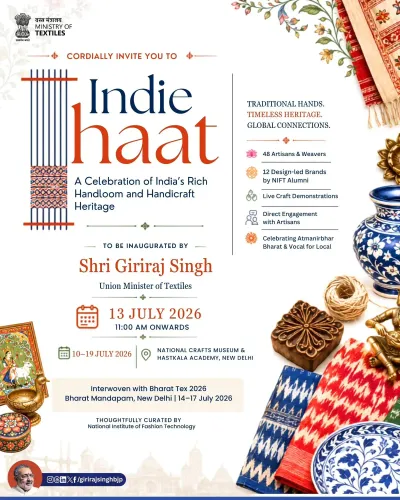
Indie Haat is an exhibition platform that aggregates artisans and weavers from multiple Indian states to improve their direct market access.
The handloom sector is protected by the Handlooms (Reservation of Articles for Production) Act, 1985 and supported by the National Handloom Development Programme (2015) .
Government promotion of such events links cultural heritage with rural livelihood generation and export potential.
Budget allocations for handloom welfare and possible inclusion of Indie Haat-style events in major trade fairs such as Bharat Tex remain key things to watch.
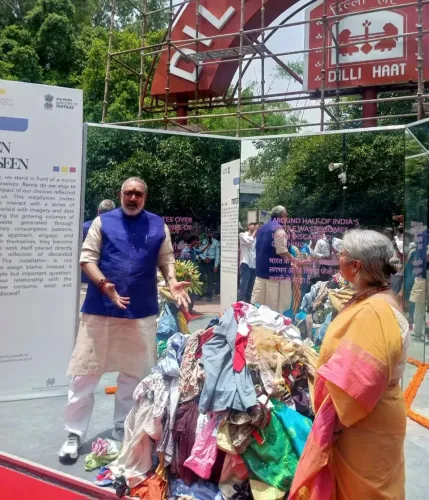
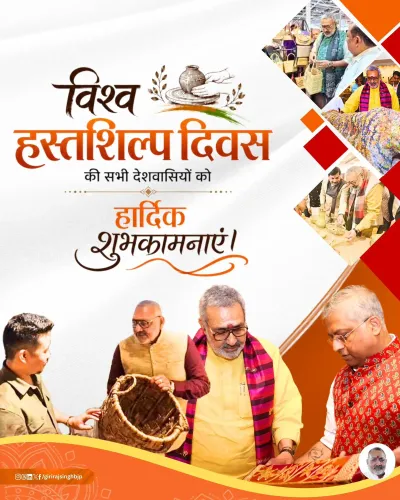
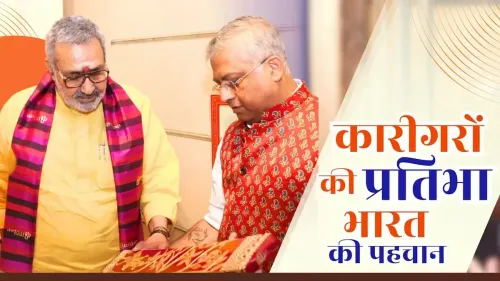
Union Textiles Minister Giriraj Singh on Tuesday, 14 July 2026 visited Indie Haat, an exhibition platform showcasing handicrafts and handloom products from artisans across Indian states, calling it a vivid reflection of the country's diverse craft traditions. The minister shared his impressions on X, drawing attention to the skill of weavers and craftspeople who had travelled from different parts of India to participate.
Context
Posting in Hindi, Singh wrote: 'Indie Haat mein Bharat ki vividh hastashilp aur hathkargha paramparaon ki sundar jhalak dekhne ko mili' — 'At Indie Haat, one got a beautiful glimpse of India's diverse handicraft and handloom traditions.' He added that the skill of artisans and weavers who had come from different parts of the country was 'the identity of our cultural heritage.' The post was accompanied by a video, giving followers a visual tour of the exhibition.
Indie Haat functions as a curated marketplace that brings together artisan clusters from multiple states under one roof, providing direct market access to craftspeople who otherwise depend on intermediaries. Events of this kind are a recurring feature of the Ministry of Textiles' promotional calendar.
Policy Backdrop
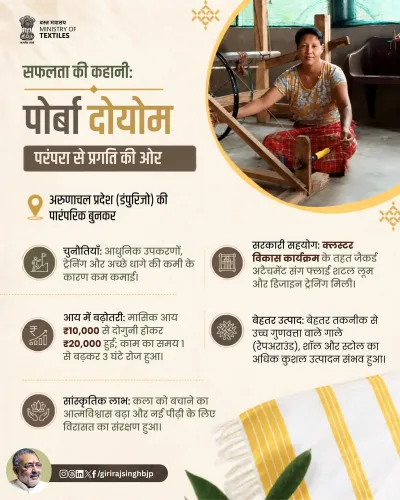
India's handloom sector is underpinned by a long legislative and programmatic framework. The Handlooms (Reservation of Articles for Production) Act, 1985 was enacted to shield traditional weavers from competition by powerloom manufacturers. Three decades later, the National Handloom Development Programme (2015) extended that protection with infrastructure grants, marketing support, and welfare cover for weavers.
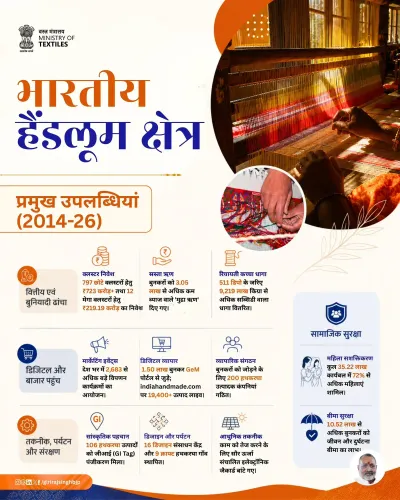
Government messaging on textiles has consistently linked cultural preservation with rural livelihood generation and export ambition. Domestic exhibitions, Geographical Indication registrations, and international trade participation have all been used to create durable market channels for dispersed artisan clusters — positioning Indian handlooms within both a soft-power and a sustainable-fashion narrative.
Stakeholders and Impact
The primary beneficiaries of platforms such as Indie Haat are handloom weavers and handicraft artisans, many of whom operate in rural or semi-urban clusters with limited direct access to urban consumers or export buyers. For these communities, ministerial visibility and official endorsement can translate into greater footfall, media attention, and follow-on procurement interest.
Craft clusters from states as varied as West Bengal (Jamdani and Tant weaves), Rajasthan (block prints and Kota Doria), Uttar Pradesh (Banarasi silk), Odisha (Sambalpuri ikat), and the North-East (Muga silk, Manipuri weaves) have historically featured at such exhibitions. Singh's public endorsement amplifies the platform's reach beyond its physical audience.
What's Next
Observers of the textiles sector will watch the forthcoming Union Budget for allocations to handloom welfare and marketing schemes, which have fluctuated in recent years. There is also growing interest in whether Indie Haat-style curated exhibitions will be embedded in larger trade events such as Bharat Tex or international expos, giving artisans a global showcase alongside domestic visibility.
Singh's continued public engagement with weaver and artisan communities signals that the Ministry of Textiles intends to keep craft promotion at the centre of its communications strategy — a posture that carries both cultural resonance and electoral relevance in states with large weaver populations.
Point of View
Uttar Pradesh, and Odisha, sustained ministerial attention to this sector carries an implicit political dividend. The broader pattern suggests that craft promotion will remain a durable pillar of the Ministry of Textiles' outreach, regardless of which party holds office.
NationPress
14 Jul 2026
Frequently Asked Questions
What is Indie Haat and who organises it?
Indie Haat is an exhibition platform that brings together handicraft and handloom artisans from different Indian states under one roof to improve their direct market access. It is associated with the Ministry of Textiles' promotional activities, though specific organisational details of the July 2026 edition have not been officially confirmed beyond the minister's post.
Why did Giriraj Singh visit Indie Haat?
Union Textiles Minister Giriraj Singh visited Indie Haat on 14 July 2026 as part of the ministry's ongoing effort to promote India's handloom and handicraft sector, and he shared his impressions publicly on X to amplify awareness of the event and the artisans participating in it.
What government schemes support Indian handloom weavers?
The two principal pillars are the Handlooms (Reservation of Articles for Production) Act, 1985 , which protects traditional weavers from powerloom competition, and the National Handloom Development Programme (2015) , which provides infrastructure, marketing support, and welfare assistance to weavers across India.
How does Indie Haat benefit artisans and weavers?
Platforms like Indie Haat give artisans direct access to urban consumers and potential buyers, reducing dependence on intermediaries. Ministerial endorsement also attracts media coverage and corporate procurement interest, which can translate into sustained orders for weaver communities.
What should we watch for next in India's handloom policy?
Key indicators include Union Budget allocations for handloom welfare and marketing schemes, and whether Indie Haat-style curated exhibitions are integrated into larger trade events such as Bharat Tex or international expos to give Indian artisans a global platform.