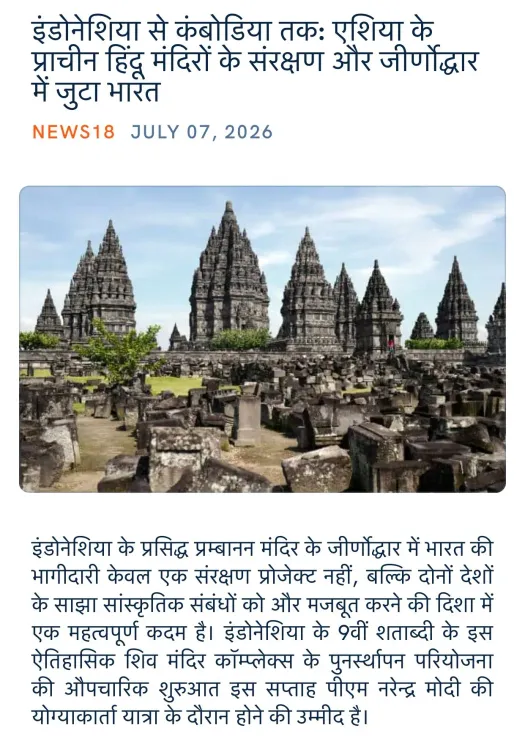
Giriraj Singh highlights India restoring Hindu temples across Asia
Synopsis
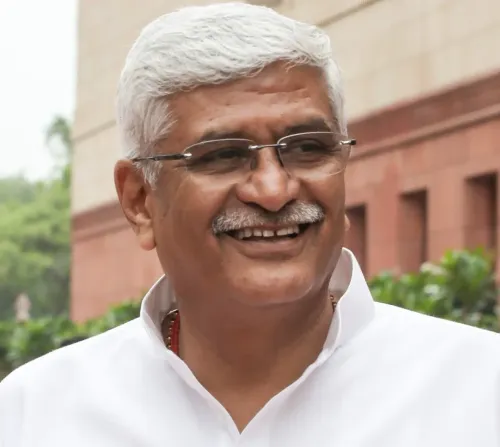
Union Textiles Minister Giriraj Singh on 7 July 2026 spotlighted India's ongoing effort to preserve and restore ancient Hindu temples from Indonesia to Cambodia, reflecting New Delhi's Act East Policy cultural diplomacy through the Archaeological Survey of India.
Key Takeaways
Union Textiles Minister Giriraj Singh shared a post on 7 July 2026 highlighting India's temple restoration work across Southeast Asia .
Projects span from Indonesia (Java and Bali) to Cambodia (Angkor complex), covering some of Asia's most significant ancient Hindu heritage sites.
The Archaeological Survey of India (ASI) is the principal agency executing these international conservation projects.
The initiative is formally backed by India's Act East Policy , adopted in 2014 , which explicitly includes cultural and heritage cooperation with ASEAN states.
These projects function as soft-power tools, reinforcing civilizational ties with ASEAN members alongside trade and security engagement.
Future MoUs and site handovers are expected to be announced at upcoming ASEAN-India Summits .
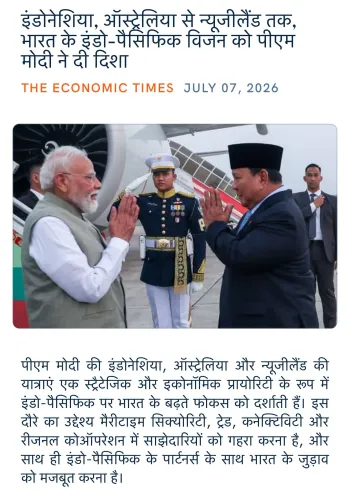
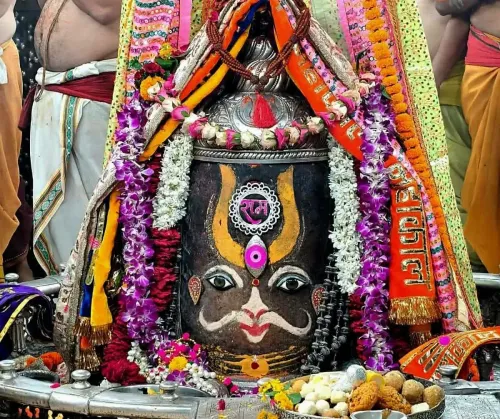
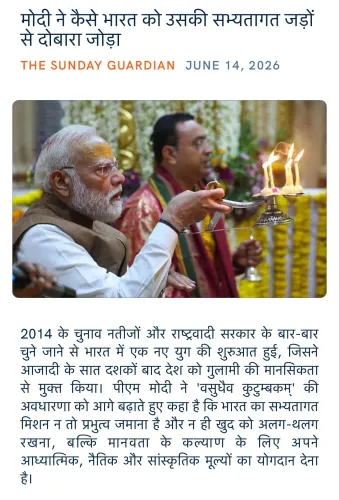
Union Textiles Minister Giriraj Singh on Tuesday, 7 July 2026 shared an explainer on India's ongoing efforts to preserve and restore ancient Hindu temples across Southeast Asia, spotlighting projects stretching from Indonesia to Cambodia. The post, shared via the NaMo App, drew attention to India's civilizational outreach through heritage conservation in the region.
Context
The Hindi-language post translates as: 'Indonesia se Cambodia tak: Asia ke prachin Hindu mandiron ke sanrakshan aur jirnoddhaar mein juta Bharat' — 'From Indonesia to Cambodia: India engaged in the preservation and restoration of ancient Hindu temples across Asia.' The framing underscores a cultural thread that connects India with its eastern neighbours, rooted in shared religious and architectural heritage predating modern nation-states.
Cambodia is home to some of the world's most celebrated Hindu-Buddhist complexes, including the Angkor group of monuments, where Indian conservation teams have worked alongside local authorities. Indonesia, particularly the islands of Java and Bali, hosts significant Hindu temple sites that have been part of bilateral cultural cooperation programmes.
Policy Backdrop
India's engagement with Southeast Asian heritage sites is formally anchored in its Act East Policy, which replaced the earlier Look East Policy in 2014 and explicitly incorporated cultural and heritage cooperation with ASEAN member states. The Archaeological Survey of India (ASI), the government agency responsible for archaeological research and monument preservation, has been the principal executing body for these international restoration projects.
These heritage initiatives operate alongside trade, connectivity and security cooperation, allowing India to project itself as a net provider of expertise without attaching direct political conditions. The approach reinforces civilizational linkages that predate colonial-era boundaries and resonate with populations across Southeast Asia that share deep cultural ties with the Indian subcontinent.
Stakeholders and Impact
ASEAN governments, local heritage bodies, and international conservation experts are the primary stakeholders in these projects. For host countries, Indian technical assistance offers both material restoration support and a diplomatic signal of long-term partnership. For India, the projects serve as soft-power instruments that complement harder economic and strategic objectives in the region.
Local communities living near restored temple complexes also benefit, as conservation work typically boosts heritage tourism and generates ancillary livelihoods. The involvement of the ASI brings internationally recognised methodology to sites that might otherwise face resource constraints in maintaining their structural integrity.
What's Next
Progress on fresh memoranda of understanding and formal site handovers is expected to feature at upcoming ASEAN-India Summits and bilateral state visits. As India deepens its Act East engagement, the heritage conservation portfolio is likely to expand to additional sites across the broader Indo-Pacific region. Minister Giriraj Singh's amplification of this narrative signals continued political backing for cultural diplomacy as a pillar of India's foreign policy.
Point of View
Suggesting the BJP's broader intent to foreground civilizational diplomacy as a vote-friendly foreign-policy narrative. By amplifying India's role as a restorer of Hindu heritage beyond its borders, the government reinforces a domestic ideological message while simultaneously advancing legitimate soft-power objectives in Southeast Asia. The Act East Policy framing gives these projects institutional credibility, but the political valence of sharing such content via the NaMo App is unmistakable. Analysts will watch whether this cultural push translates into concrete new project announcements at the next ASEAN-India Summit.
NationPress
7 Jul 2026
Frequently Asked Questions
Which Hindu temples is India restoring in Southeast Asia?
India, through the Archaeological Survey of India, has been involved in conserving and restoring ancient Hindu and Hindu-Buddhist temple complexes in Cambodia, including the Angkor group of monuments, and sites in Indonesia, particularly on the islands of Java and Bali.
What is India's Act East Policy and how does it relate to temple restoration?
India's Act East Policy, launched in 2014, upgraded the earlier Look East Policy and explicitly includes cultural and heritage cooperation with ASEAN member states. Temple restoration projects in Southeast Asia are a key part of this cultural diplomacy pillar.
What is the Archaeological Survey of India's role in overseas heritage projects?
The Archaeological Survey of India (ASI) is the government agency that executes India's international monument conservation work, providing technical expertise and methodology to restoration projects in countries like Cambodia and Indonesia.
Why is India restoring Hindu temples in other countries?
These projects reinforce civilizational and cultural ties between India and Southeast Asian nations, serve as soft-power instruments under the Act East Policy, and position India as a net provider of heritage expertise without political conditionality.
What did Giriraj Singh post about Hindu temples in Asia?
On 7 July 2026, Union Textiles Minister Giriraj Singh shared a post highlighting India's efforts to preserve and restore ancient Hindu temples across Asia, from Indonesia to Cambodia, describing it as an example of India's civilizational outreach in the region.