Giriraj Singh highlights Kutch weaver's Tangaliya craft revival
Synopsis
Union Textiles Minister Giriraj Singh praised Kutch weaver Jitendrabhai for blending the GI-tagged Tangaliya weaving tradition with modern design and technology, crediting government scheme support for strengthening both the craft and his livelihood, under the banner 'Empowered weavers, prosperous India.'
Key Takeaways
Union Textiles Minister Giriraj Singh on September 29, 2026 highlighted weaver Jitendrabhai from Kutch, Gujarat as a model of craft-meets-modernity.
Tangaliya weaving , native to the Bharwad community of Kutch, is a GI-tagged dotted-weave textile tradition under government protection.
Government scheme support — including the National Handloom Development Programme (2015) and Weaver Service Centres — was credited for enabling Jitendrabhai's skill upgrade and livelihood improvement.
The Minister's rallying call 'सशक्त बुनकर, समृद्ध भारत' ('Empowered weavers, prosperous India') frames handloom revival as a national economic priority.
India's handloom sector employs over 35 lakh weavers , making artisan support a significant policy and employment issue beyond cultural preservation.
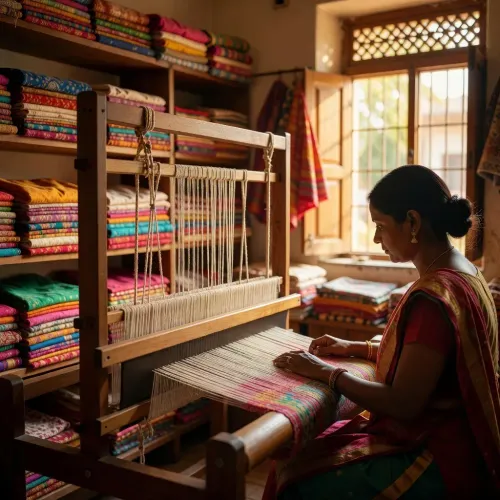
A centuries-old dotted weave from the salt flats of Kutch, Gujarat is finding fresh life — and a steadier income for the artisan keeping it alive. Union Textiles Minister Giriraj Singh, on Tuesday, September 29, 2026, spotlighted weaver Jitendrabhai, who has fused the ancient Tangaliya weaving tradition with modern technology and contemporary design sensibilities, backed by government scheme support.
In his post, the Minister wrote: 'कच्छ की तंगलिया बुनाई की समृद्ध परंपरा को आगे बढ़ाते हुए जितेंद्रभाई जी ने अपने कौशल को नई तकनीक और आधुनिक डिजाइनों से जोड़ा है।' — 'Carrying forward the rich tradition of Tangaliya weaving from Kutch, Jitendrabhai has linked his skill with new technology and modern designs. Government scheme support has helped give this skill a new direction, strengthening both the traditional art and his livelihood.' He signed off with a crisp rallying call: 'सशक्त बुनकर, समृद्ध भारत' — 'Empowered weavers, prosperous India.'Tangaliya's distinctive dots and a GI-tagged legacy
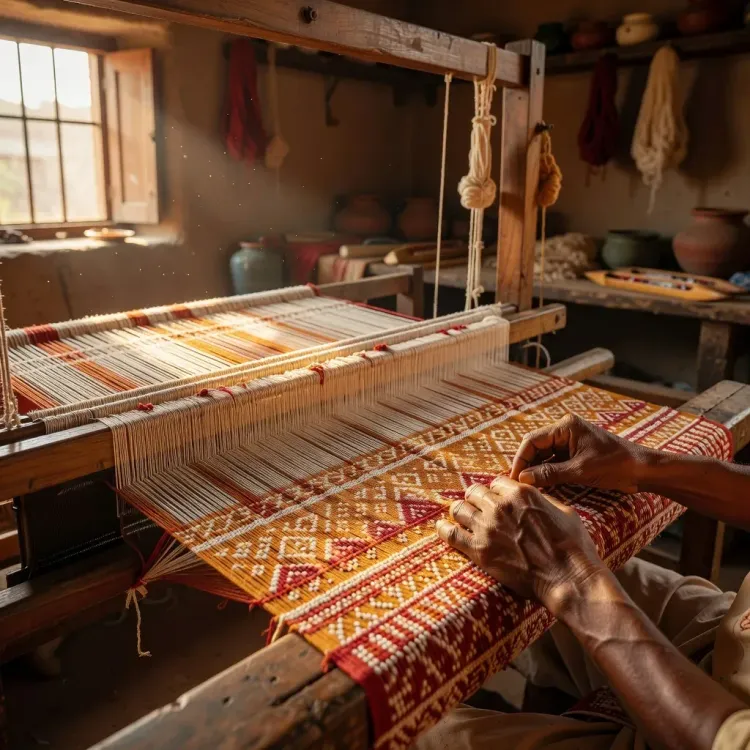
Tangaliya weaving is native to the Bharwad shepherd community of Kutch and is instantly recognisable by its raised geometric dots woven directly into wool or cotton cloth. The craft holds a Geographical Indication (GI) tag, placing it among India's protected textile heritage products. Yet GI status alone has never guaranteed a living wage — that gap is precisely where government intervention has tried to step in.
The National Handloom Development Programme, launched in 2015, was designed to do exactly what the Minister describes: connect artisans like Jitendrabhai to design innovation, technology upgrades, and market access. Weaver Service Centres, operating since the 1970s, provide the on-ground training muscle. Together, they form the two-track approach — preserve the aesthetic, improve the economics — that has defined handloom policy across successive governments.
Cluster development as Kutch's competitive edge
Kutch sits at the heart of western India's craft cluster strategy. The district's handloom and embroidery traditions face relentless pressure from powerloom fabrics and synthetic alternatives that undercut prices. The Ministry of Textiles has pushed cluster-based development precisely to give artisans collective bargaining power, shared infrastructure, and direct access to buyer-seller meets and national handloom expos.
Jitendrabhai's story — one weaver, one craft, one policy intervention turning into a livelihood uplift — is the human proof-of-concept the Ministry wants to amplify. Whether similar trajectories play out at scale across Kutch's broader weaver community will depend on the rollout of revised cluster projects and the reach of upcoming national handloom fairs.
Handloom still employs over 35 lakh weavers across India, making it the second-largest employer in the textile sector after agriculture. Keeping those looms running — and profitable — is not nostalgia. It is economic policy.
Point of View
Singh reinforces the BJP government's 'Vocal for Local' narrative ahead of potential handloom expo cycles. The broader policy arc — cluster development, design intervention, market linkage — has bipartisan roots but is being increasingly branded as a Modi-era achievement. The real test is whether spotlight moments like this translate into sustained cluster investment for Kutch's weaver community at scale.
NationPress
29 Sept 2026
Frequently Asked Questions
What is Tangaliya weaving?
Tangaliya is a traditional dotted-weave textile technique native to the Bharwad shepherd community of Kutch, Gujarat. It is characterised by raised geometric dot patterns woven into wool or cotton fabric and holds a Geographical Indication (GI) tag, recognising it as a protected Indian craft heritage product.
Which government scheme helped Kutch weaver Jitendrabhai?
The post by Minister Giriraj Singh credits government scheme support for Jitendrabhai's skill and livelihood improvement, though the specific scheme is not named. The National Handloom Development Programme (2015) and the network of Weaver Service Centres are the primary central government instruments supporting handloom artisans in clusters like Kutch.
What is the National Handloom Development Programme?
The National Handloom Development Programme was launched in 2015 by the Ministry of Textiles to support handloom weavers through design innovation, technology upgradation, and improved market linkages. It operates through cluster-based interventions across major weaving regions in India.
Why is Kutch important for India's handloom sector?
Kutch, Gujarat, is one of India's most celebrated craft districts, home to multiple GI-tagged textile traditions including Tangaliya weaving and Kutch embroidery. Its artisan clusters are a focal point for the Ministry of Textiles' western India handloom promotion strategy.
What does 'Sashakt Bunkar, Samridh Bharat' mean?
'Sashakt Bunkar, Samridh Bharat' translates to 'Empowered Weavers, Prosperous India.' It is the tagline used by Union Textiles Minister Giriraj Singh to frame handloom artisan welfare as integral to India's broader economic development goals.