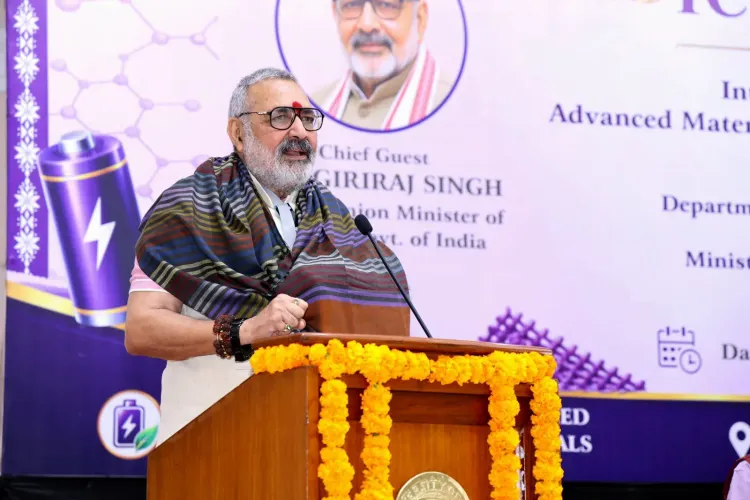
Giriraj Singh inaugurates ICAMET-2026 at Delhi University
Synopsis
Union Textiles Minister Giriraj Singh inaugurated ICAMET-2026 at Delhi University alongside Vice-Chancellor Prof. Yogesh Singh, calling for stronger academia-industry coordination in technical textiles and energy materials to accelerate Atmanirbhar Bharat goals and create opportunities for young PhD researchers.
Key Takeaways
Giriraj Singh inaugurated ICAMET-2026 — the International Conference on Advanced Materials for Energy and Textile Applications — at Delhi University's chemistry department on 29 October 2026 .
The minister participated at the invitation of Dr.
Alok Roy and research scholar Ayush Ishwar , alongside Vice-Chancellor Prof.
Discussions covered energy storage, battery technology, and technical textiles — fields converging under advanced materials science.
Singh linked stronger academia-industry coordination to accelerating the Atmanirbhar Bharat initiative and expanding opportunities for young PhD scholars.
The National Technical Textiles Mission (2020, ₹1,480 crore) and the PLI scheme for textiles (2021) form the policy backbone behind such research-industry integration efforts.
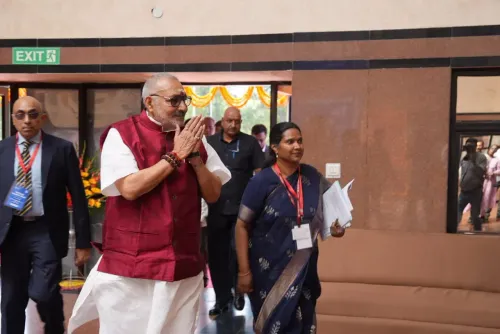
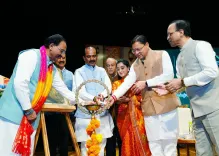
Where the chemistry lab meets the loom — Union Textiles Minister Giriraj Singh stepped into Delhi University's chemistry department on Thursday, 29 October 2026, to inaugurate ICAMET-2026, an international conference dedicated to advanced materials for energy and textile applications, underscoring the government's push to wire academic research directly into India's industrial ambitions.
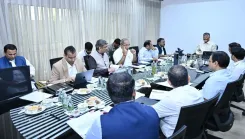
Attending at the invitation of Dr. Alok Roy and research scholar Ayush Ishwar, Singh joined Delhi University Vice-Chancellor Professor Yogesh Singh for the opening session of the International Conference on Advanced Materials for Energy and Textile Applications (ICAMET-2026), organised by the university's chemistry department. The minister described the gathering as a 'meaningful dialogue' — sarthak samvad — with scholars on the future of energy storage, battery technology, and technical textiles.
From battery tech to smart fabric: what ICAMET-2026 put on the table
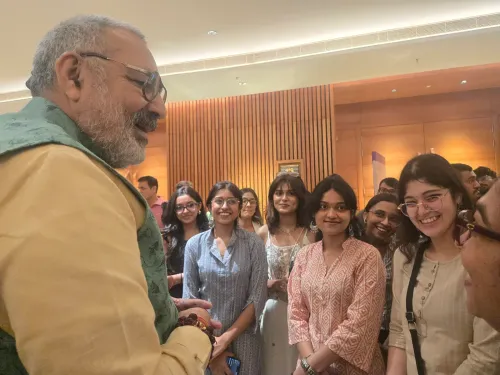
The conference brought together researchers working at the intersection of materials science and textile engineering — fields that are converging fast as wearable electronics, energy-harvesting fabrics, and lightweight composites reshape what 'cloth' can do. Singh noted that the textiles sector is today 'forging new dimensions of innovation, advanced technology, and sustainable development.' He also had a warm exchange with distinguished speaker Professor Sangeet Ragi on the conference sidelines.
The minister's core argument was structural: better coordination between scientific research and industry is the fastest route to accelerating the Atmanirbhar Bharat goal — and, critically, to opening fresh opportunities for young PhD scholars whose talent currently outpaces the pipelines available to absorb it.
Policy scaffolding already in place
The minister's presence at an academic conference is not incidental. The government has been building the scaffolding for exactly this kind of academia-industry bridge for several years. The National Technical Textiles Mission, approved in 2020 with an outlay of ₹1,480 crore, was explicitly designed to boost research, innovation, and global competitiveness in technical textiles. A year later, the Production Linked Incentive (PLI) scheme for textiles followed, targeting investment in advanced manufacturing.
Together, those two schemes set the financial and institutional stage for events like ICAMET-2026 — where the real test is whether lab-level breakthroughs in materials science actually translate into factory-floor and export wins for Indian industry.
Why young researchers are the variable that matters most
Singh's specific call-out of young PhD scholars signals a deliberate message. India graduates a large number of science doctorates each year, yet industry absorption in high-value technical textiles has historically lagged behind China, South Korea, and the European Union. Bridging that gap — turning a chemistry dissertation on energy-harvesting polymers into a licensed product — is precisely the kind of outcome the National Technical Textiles Mission was meant to catalyse.
A Union Minister at a university chemistry conference is, in itself, a statement of intent: that textiles policy is no longer only about looms and yarn counts, but about supercapacitors, smart fibres, and the researchers who build them.
The next question is whether those coordination mechanisms move from ministerial rhetoric to funded, time-bound academia-industry partnerships — and how quickly ICAMET-2026's research outputs find their way into the mission's implementation pipeline.
Point of View
The minister is trying to connect two policy arcs: industrial self-reliance and the absorption of India's research talent into high-value manufacturing. The ₹1,480-crore National Technical Textiles Mission has existed since 2020, but visible ministerial engagement at university events suggests the government now wants to accelerate the slow-burning academia-industry pipeline it funded. The real test will be whether ICAMET-scale conversations produce concrete licensing agreements and start-up formations, or remain a recurring ceremonial footnote.
NationPress
29 Oct 2026
Frequently Asked Questions
What is ICAMET-2026?
ICAMET-2026 stands for the International Conference on Advanced Materials for Energy and Textile Applications, organised by the chemistry department of Delhi University . It focuses on research in energy storage, battery technology, and technical textiles.
Why did Giriraj Singh attend a university chemistry conference?
As Union Textiles Minister , Giriraj Singh attended to promote stronger coordination between scientific research and industry — a key pillar of both the National Technical Textiles Mission and the broader Atmanirbhar Bharat programme.
What is India's National Technical Textiles Mission?
The National Technical Textiles Mission was approved in 2020 with an outlay of ₹1,480 crore to boost research, innovation, and global competitiveness in technical textiles — products ranging from medical fabrics to geotextiles and smart fibres.
What is the PLI scheme for textiles?
The Production Linked Incentive (PLI) scheme for textiles , announced in 2021 , provides financial incentives to attract investment and promote advanced manufacturing in India's textiles sector, with a focus on man-made fibres and technical textiles.
How does academic research connect to India's textiles export ambitions?
India aims to use academic breakthroughs in materials science — such as energy-harvesting fabrics and lightweight composites — to move up the textiles value chain, compete with advanced manufacturing nations, and reduce import dependence, as envisioned under Atmanirbhar Bharat .