Giriraj Singh Hails Thangka Art as Jewel of Buddhist Heritage
Synopsis
Union Textiles Minister Giriraj Singh spotlighted Thangka painting on 23 October 2026, calling it an invaluable part of India's Buddhist tradition and praising its intricate spiritual symbolism as a reflection of the country's rich craft diversity.
Key Takeaways
Giriraj Singh , Union Minister of Textiles, praised Thangka painting as an invaluable part of India's cultural heritage on 23 October 2026 .
Thangka is a Buddhist scroll-painting tradition practised across India's Himalayan belt, including Ladakh, Sikkim, Arunachal Pradesh, and Himachal Pradesh .
The minister highlighted the art's intricate artistry and spiritual symbols as markers of India's traditional craft diversity.
The Ministry of Textiles oversees frameworks that support traditional artisans, including those working in Himalayan and Buddhist-linked craft clusters.
No specific scheme or event was cited; any immediate policy trigger remains unconfirmed.
An ancient brush stroke connecting the Himalayas to the soul of Indian civilisation — Union Textiles Minister Giriraj Singh turned the spotlight on Thangka painting on Friday, 23 October 2026, calling it an invaluable part of India's rich cultural heritage and Buddhist tradition.
Posting in Hindi on X, the Minister wrote: 'थंका चित्रकला भारत की समृद्ध सांस्कृतिक विरासत और बौद्ध परंपरा का अनमोल हिस्सा है।' ('Thangka painting is an invaluable part of India's rich cultural heritage and Buddhist tradition.') He added that through its intricate artistry and spiritual symbols, this art form reflects the diversity and distinctiveness of India's traditional craftsmanship.
What Makes Thangka a Living Art
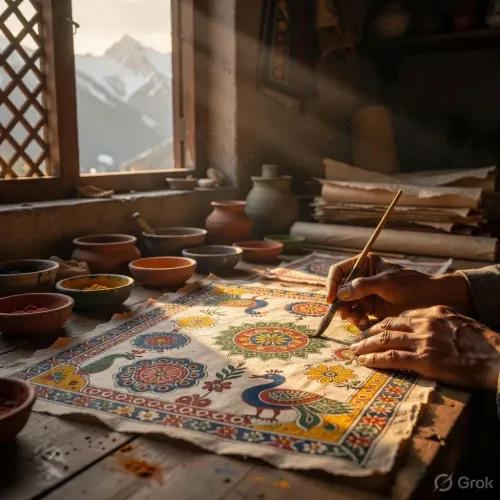
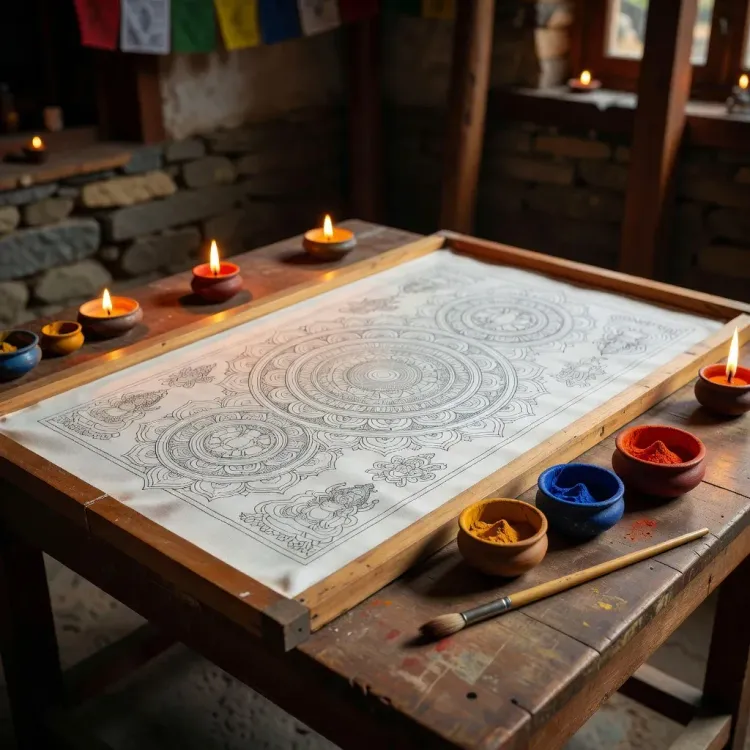
Thangka is a form of scroll painting practised primarily across the Himalayan belt — spanning Ladakh, Sikkim, Arunachal Pradesh, Himachal Pradesh, and parts of West Bengal's Darjeeling hills — as well as in communities in Nepal, Bhutan, and Tibet. Executed on cotton or silk, each work is dense with iconography: deities, mandalas, and cosmological maps rendered in mineral pigments and gold, often taking months to complete. The craft is inseparable from Buddhist monastic life, where Thangkas serve as meditation aids, teaching tools, and objects of veneration.
The sheer labour of a single piece — the grinding of lapis lazuli, the layering of vermillion, the hair-thin outlining of a deity's fingers — is what makes every Thangka both a work of devotion and a work of extraordinary skill.
Textiles Ministry's Stake in Craft Survival
The Ministry of Textiles sits at the intersection of heritage and livelihood when it comes to crafts like Thangka. India's handicraft and handloom ecosystem, overseen in part by the ministry, has historically channelled support to traditional artisans through cluster development, design intervention, and export promotion frameworks. Himalayan and Buddhist-linked crafts have been part of broader efforts by successive governments to document, revive, and market India's indigenous art forms on national and global stages.
As a senior BJP leader and Lok Sabha MP from Begusarai, Bihar, Giriraj Singh's ministerial focus on such a geographically distinct craft signals the Centre's intent to position India's Buddhist cultural corridor — from Bodh Gaya to the Himalayan frontier — as both a spiritual and artisanal destination of global significance.
Whether this acknowledgement translates into a formal scheme inclusion, an exhibition, or a GI-tag push for regional Thangka styles remains to be watched — but the minister's public salute to the art places it firmly in national conversation.
Point of View
Elevating crafts like Thangka also builds the case for artisan livelihoods within the broader handicraft export narrative. The post, while ceremonial in tone, quietly stakes out the government's cultural-economic interest in the Buddhist corridor stretching from Bodh Gaya to Ladakh. Watch for whether this translates into a GI-tag push, a dedicated exhibition, or an artisan-cluster announcement in the coming weeks.
NationPress
23 Oct 2026
Frequently Asked Questions
What is Thangka painting?
Thangka is a traditional Buddhist scroll-painting art form practised across India's Himalayan regions, including Ladakh, Sikkim, Arunachal Pradesh, and Himachal Pradesh. Each piece is painted on cotton or silk using mineral pigments, depicting deities, mandalas, and spiritual narratives.
Why did Giriraj Singh post about Thangka art?
Union Textiles Minister Giriraj Singh shared a post on 23 October 2026 praising Thangka painting as an invaluable part of India's Buddhist heritage and traditional craftsmanship, highlighting its intricate artistry and spiritual symbolism.
Where is Thangka painting practised in India?
Thangka painting is practised primarily in India's Himalayan belt — across Ladakh, Sikkim, Arunachal Pradesh, Himachal Pradesh, and the Darjeeling hills of West Bengal — by artisans deeply rooted in Buddhist monastic communities.
Does the Ministry of Textiles support Thangka artisans?
The Ministry of Textiles oversees handicraft and handloom support frameworks that have historically included Himalayan and Buddhist-linked crafts through cluster development and export promotion, though no specific scheme targeting Thangka was announced in this post.
Is Thangka painting recognised as a heritage craft in India?
Thangka is widely acknowledged as part of India's intangible cultural heritage linked to Buddhist tradition. Efforts to promote and document it have been ongoing across culture, textiles, and tourism ministries, with Geographical Indication status for regional styles discussed in craft-policy circles.