Giriraj Singh: Textiles Sector Creating Youth Jobs via FDI, NIFT, NID
Synopsis
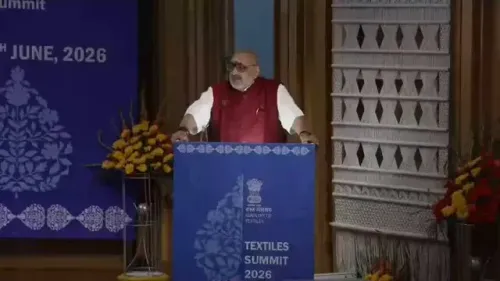
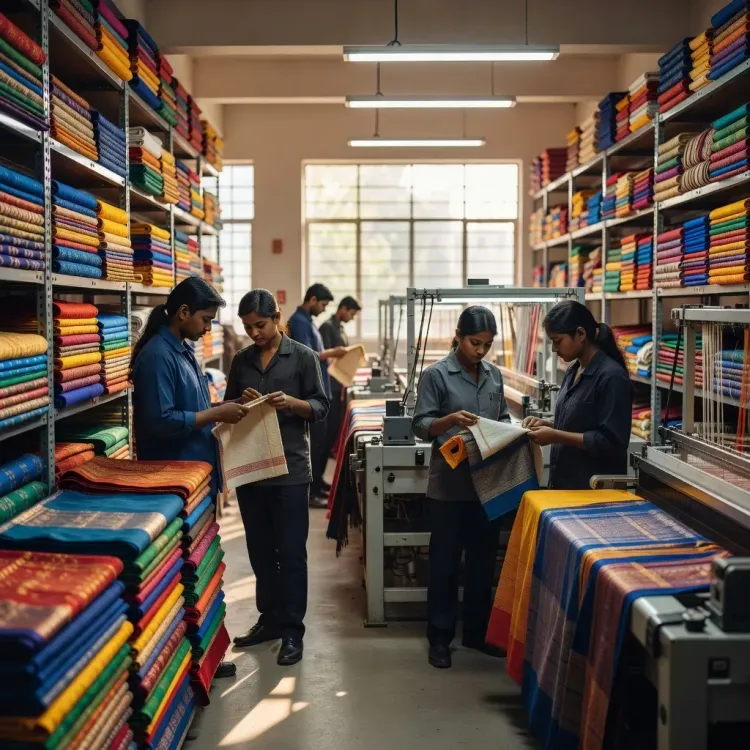
Union Textiles Minister Giriraj Singh on October 23 highlighted how NIFT and NID education, combined with FDI liberalisation and the PLI Scheme, is widening employment and entrepreneurship opportunities for India's youth in the textile sector.
Key Takeaways
Union Textiles Minister Giriraj Singh on October 23, 2026 stated that India's textile sector is creating new jobs and entrepreneurship avenues for youth.
1961) are cited as key institutions supplying design and skills talent to the industry.
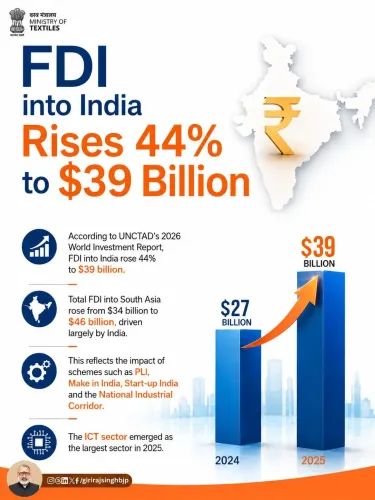
100% FDI under the automatic route has been permitted in the textiles sector since 2016 , lowering the barrier for foreign investment.
The Production Linked Incentive (PLI) Scheme for Textiles , notified in 2021 , ties government incentives directly to manufacturing scale-up and job creation.
The sector forms a central pillar of the Make in India and Atmanirbhar Bharat manufacturing frameworks.
Textile MSMEs and youth entrepreneurs are identified as the primary beneficiaries of this combined education-investment approach.
India's textile sector is being positioned as a launchpad for youth employment and entrepreneurship — and Union Textiles Minister Giriraj Singh wants the country to know it. On Friday, October 23, 2026, the senior BJP leader posted on X, pointing to education from institutions like NIFT and NID, combined with FDI-driven investment, as the twin engines widening opportunity for young Indians in the sector.
In his post, the Minister wrote: 'Bharat ka textile sector yuvaon ke liye rojgar aur udyamita ke naye avsar srujit kar raha hai.' — 'India's textile sector is creating new opportunities of employment and entrepreneurship for the youth.' He specifically highlighted how design and skill education flowing from NIFT (National Institute of Fashion Technology) and NID (National Institute of Design), alongside FDI, is expanding the horizon for young people in the industry.
NIFT and NID: The Design-to-Industry Pipeline
NIFT, established in 1986, runs multiple campuses across India offering specialised education in fashion, textiles, and apparel. NID, founded in 1961, is India's premier design education institution, with strong programs in textile and allied design disciplines. Together, they form the institutional backbone feeding skilled, design-literate graduates into an industry that competes globally on aesthetics as much as volume.
The logic is straightforward: raw manufacturing capacity alone does not win premium markets. Trained designers and entrepreneurs do. By linking these institutes to a sector actively liberalised for foreign investment, the government's approach aims to move India up the textile value chain — from commodity thread to finished, design-led exports.
FDI Liberalisation and the Employment Multiplier
The pathway for foreign capital into textiles was cleared significantly in 2016, when 100% FDI under the automatic route was permitted in the sector. That means foreign investors can enter without prior government approval — a signal of confidence intended to attract large-scale manufacturing and retail players. The Production Linked Incentive (PLI) Scheme for Textiles, notified in 2021, added a further layer, directly tying government incentives to manufacturing scale-up and job creation.
Textile MSMEs and youth entrepreneurs stand to gain the most from this architecture. The sector has historically been one of India's largest employers, particularly for semi-skilled workers, but the newer emphasis on design education and FDI is aimed at upgrading who gets hired — and at what wage level.
Where This Sits in the Bigger Manufacturing Push
Giriraj Singh's message lands squarely within the broader Make in India and Atmanirbhar Bharat frameworks that have defined the government's industrial narrative across successive terms. Textiles is not an incidental sector in this story — it is one of the most labour-intensive industries in the economy, making youth employment in it a political and economic priority simultaneously.
India's regional rivals — particularly Bangladesh, Vietnam, and Cambodia — have aggressively chased the same global garment orders. Design capability and investment climate are precisely the variables that can tilt sourcing decisions. Every NIFT graduate who launches a brand, and every FDI dollar that builds a manufacturing unit, is a data point in that competition.
The Minister has flagged the direction. The quarterly FDI inflow numbers, and any expansion of NIFT or NID campuses, will show whether the ambition is being matched on the ground.
Point of View
Not separate policy silos. By invoking NIFT and NID alongside FDI in a single message, he is signalling that the value-chain upgrade — not just volume manufacturing — is the target. This matters politically because youth unemployment remains a live pressure point; anchoring the sector's growth story to skilled, design-led jobs is a deliberate reframe. Whether the narrative holds depends on whether FDI inflows and campus expansions actually materialise at the scale the framing implies.
NationPress
23 Oct 2026
Frequently Asked Questions
What did Giriraj Singh say about the textile sector and youth employment?
Giriraj Singh stated on October 23, 2026 that India's textile sector is creating new employment and entrepreneurship opportunities for youth, driven by education from NIFT and NID and by FDI-led investment in the industry.
What is NIFT and how does it relate to the textile sector?
NIFT, or the National Institute of Fashion Technology, was established in 1986 and operates multiple campuses across India. It provides specialised education in fashion, textiles, and apparel, feeding skilled graduates directly into the industry.
Is 100% FDI allowed in India's textile sector?
Yes. Since 2016, 100% FDI under the automatic route has been permitted in the textiles sector, meaning foreign investors can enter without prior government approval.
What is the PLI Scheme for Textiles?
The Production Linked Incentive Scheme for Textiles was notified in 2021. It offers government incentives tied to manufacturing scale-up, with the explicit goal of boosting production and generating employment in the sector.
How does India's textile policy connect to Make in India and Atmanirbhar Bharat?
Textiles is one of India's most labour-intensive industries and has been positioned as a cornerstone of both the Make in India and Atmanirbhar Bharat frameworks, which aim to boost domestic manufacturing, create skilled jobs, and raise export competitiveness.