Giriraj Singh spotlights Varanasi weaver Lakshmi Ji's self-reliance story
Synopsis
Union Textiles Minister Giriraj Singh on 19 November 2026 spotlighted Lakshmi Ji, a Varanasi weaver who, backed by government training schemes, now connects over 250 weavers — holding her up as a model of women's empowerment and self-reliance in India's handloom sector.
Key Takeaways
Union Textiles Minister Giriraj Singh highlighted the story of Lakshmi Ji , a weaver from Varanasi , on 19 November 2026 .
Lakshmi Ji reportedly connects more than 250 weavers , acting as a hub for the local weaving community.
The minister credited government skill-training and support schemes for enabling her journey.
The post carries the slogan 'Sashakt Bunkar, Sashakt Bharat' — 'Empowered Weavers, Empowered India'.
Varanasi is a flagship centre for India's Banarasi silk handloom tradition and a long-standing focus of Textiles Ministry cluster-development programmes.
A woman weaver from Varanasi is now the face of what government training and handloom support can look like on the ground — and Union Textiles Minister Giriraj Singh wants the country to notice.
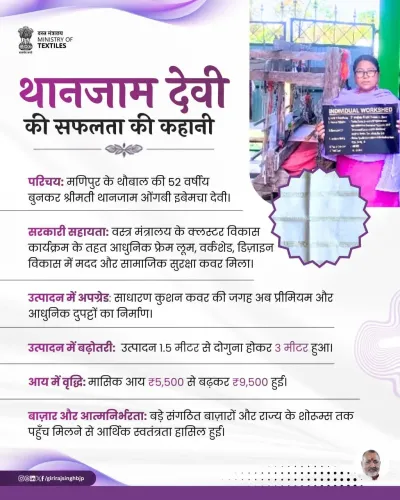
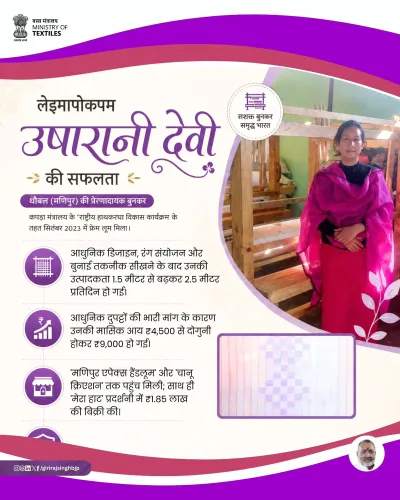
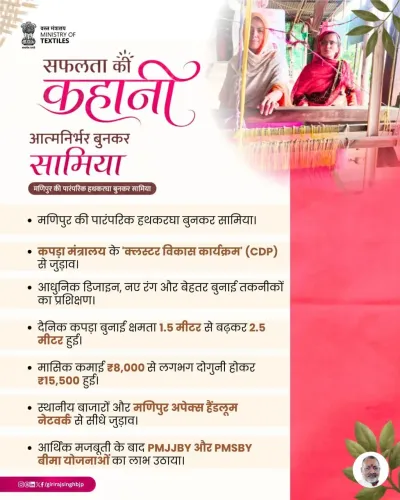
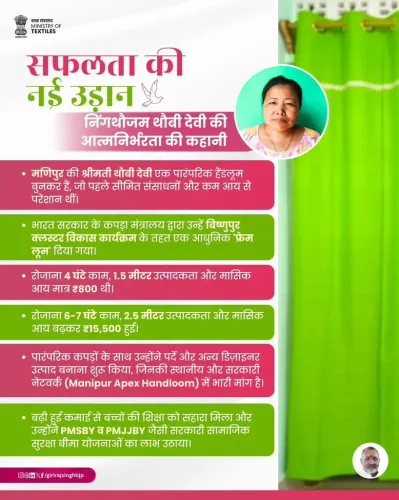
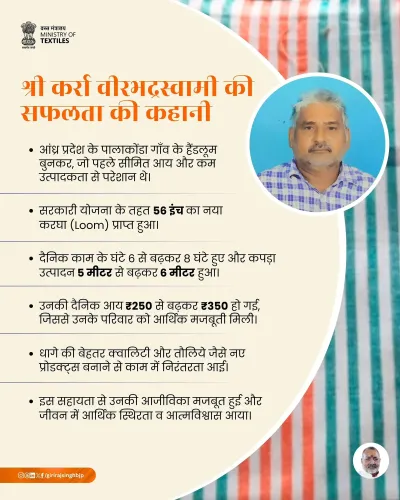
Posting on Thursday, 19 November 2026, Minister Singh highlighted the journey of Lakshmi Ji, a weaver from Varanasi, calling her an example of women's empowerment and self-reliance. 'सशक्त बुनकर, सशक्त भारत' ('Empowered weavers, empowered India'), he wrote — a phrase that doubles as both tribute and policy slogan.
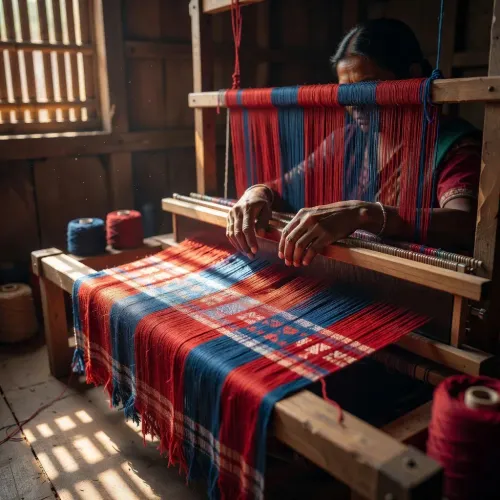
According to the post, Lakshmi Ji has used skill and hard work to 'write a new story of success', with training and support received under government schemes giving her journey a new direction. Today, the minister says, she is connecting more than 250 weavers and emerging as a model of women's empowerment and self-sufficiency.
Why Varanasi's looms are always in the picture
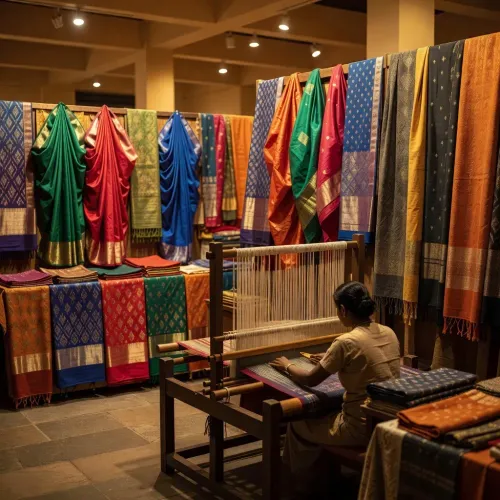
Varanasi sits at the heart of India's Banarasi silk handloom tradition — one of the most globally recognised weaving clusters in the country. The city's weavers have long been a focus of cluster-development initiatives, market-linkage programmes, and skill-training efforts administered through the Ministry of Textiles. Spotlighting individual beneficiaries from this cluster is a deliberate communication strategy: a single human story anchors what can otherwise be an abstract policy conversation about allocations and targets.The ministry's broader push for women weavers
The Textiles Ministry has consistently channelled welfare messaging around women artisans, framing handloom support not just as an economic intervention but as a social empowerment story. Training programmes under various centrally-sponsored schemes have aimed at equipping women weavers with skills, financial access, and market connections — with the goal of reducing dependence on middlemen and increasing direct income. The idea of a single beneficiary scaling up to anchor a network of 250-plus weavers is precisely the kind of multiplier effect these programmes target. For Giriraj Singh, who holds the Textiles portfolio, amplifying such stories serves a dual purpose: it validates the scheme architecture his ministry oversees and keeps women artisans — often invisible in mainstream economic data — in the public conversation.Point of View
Minister Giriraj Singh is deploying a well-established BJP communications playbook: convert scheme delivery into a human story with a face and a number. The '250 weavers' figure is doing real political work here — it frames the beneficiary not as a passive recipient but as a multiplier, which is the most defensible metric for any welfare programme. For the Textiles Ministry, whose mandate spans both the economic weight of the handloom sector and its deep cultural symbolism, keeping women weavers visible in political messaging is as much a governance signal as it is electoral arithmetic, particularly in Uttar Pradesh.
NationPress
19 Nov 2026
Frequently Asked Questions
Who is Lakshmi Ji from Varanasi mentioned by Giriraj Singh?
Giriraj Singh's post refers to her as a weaver from Varanasi who has used skill, hard work, and government training to build a network of more than 250 weavers, though further biographical details are not publicly verified.
What government schemes support Varanasi weavers?
The Ministry of Textiles administers several centrally-sponsored programmes focused on handloom cluster development, skill training, and market linkages; Varanasi's Banarasi silk weaving cluster has been a long-standing focus of these interventions.
What does 'Sashakt Bunkar, Sashakt Bharat' mean?
The Hindi slogan translates to 'Empowered Weavers, Empowered India' — a phrase Union Textiles Minister Giriraj Singh used to frame women weaver self-reliance as integral to national development.
What is Giriraj Singh's role in India's textiles sector?
Giriraj Singh serves as Union Minister of Textiles, overseeing policy and welfare programmes for the handloom, handicrafts, and broader textiles industry across India.
Why is Varanasi significant to India's handloom industry?
Varanasi is the home of the Banarasi silk weaving tradition, one of India's most recognised handloom clusters, and has historically been a priority area for government-led artisan development and market-linkage programmes.