Giriraj Singh Highlights AP Weaver's Self-Reliance Journey
Synopsis
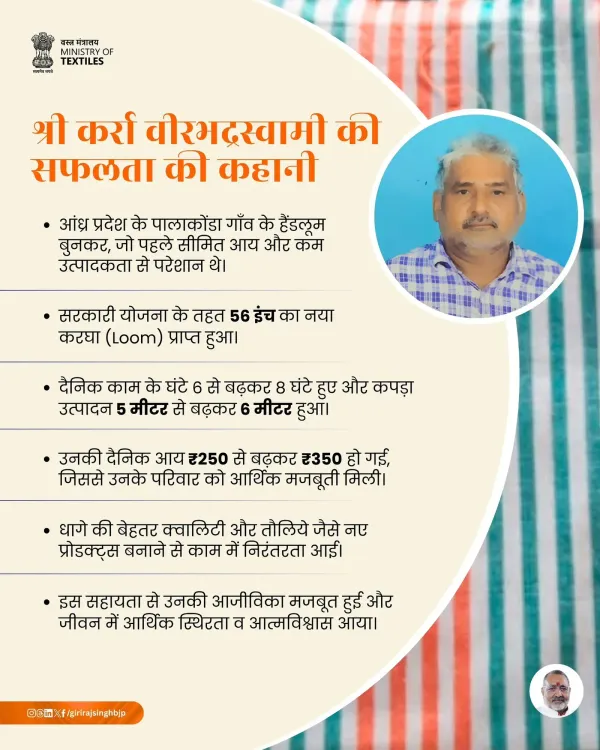
Union Textiles Minister Giriraj Singh spotlighted Andhra Pradesh weaver Karra Veerabhadrswamy on 25 May 2026, citing new-loom technology and government support as drivers of higher output and income — a case study in the Centre's Atmanirbhar Bharat and Vocal for Local push for artisan self-reliance.
Key Takeaways
Union Textiles Minister Giriraj Singh shared the story of Andhra Pradesh handloom weaver Karra Veerabhadrswamy on 25 May 2026 .
The minister credited advanced technology and new looms for increased cloth production and improved income for the weaver.
The post was framed under the slogan 'Sashakt Bunkar, Samridh Bharat' (Empowered Weaver, Prosperous India).
The narrative aligns with the Atmanirbhar Bharat Abhiyan launched by PM Modi in May 2020 and the National Handloom Development Programme .
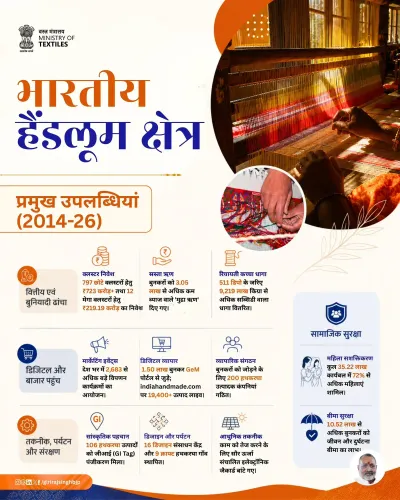
India's handloom sector employs an estimated 35 lakh weavers, making individual success stories a key government outreach tool.
Parliamentary scrutiny of the next Union Textiles Budget and state-level subsidy rollouts in Andhra Pradesh are the immediate policy milestones to watch.
Union Textiles Minister Giriraj Singh on Monday, 25 May 2026, spotlighted the story of an Andhra Pradesh handloom weaver as a model of self-reliance enabled by government support, sharing the account on his official X account to amplify the Centre's push for artisan empowerment under the Atmanirbhar Bharat framework.
Context
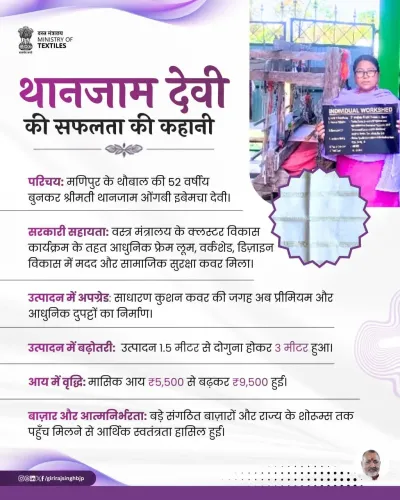
In his post, the minister highlighted Karra Veerabhadrswamy, a handloom weaver from Andhra Pradesh, writing: 'Apni mehnat aur sarkari sahyog se atmanirbharta ki nayi kahani likh rahe hain' ('Writing a new story of self-reliance through hard work and government support'). He noted that access to advanced technology and new looms had increased Veerabhadrswamy's cloth production, while also lifting his income and confidence. The post carried the hashtags #VocalForLocal, #Handloom, #SupportWeavers, and #AtmanirbharBharat, signalling its alignment with the Centre's flagship artisan-support messaging.
Policy Backdrop
The post draws directly from two interlocking policy pillars. The Atmanirbhar Bharat Abhiyan, announced by Prime Minister Narendra Modi in May 2020, placed domestic textile production and artisan livelihoods at the centre of India's self-reliance agenda. Alongside it, the National Handloom Development Programme — operational since the 12th Five Year Plan period — provides technology upgradation grants, new-loom subsidies, and marketing assistance to weavers across major handloom states.
Andhra Pradesh is among India's established handloom hubs, with weaving clusters concentrated in districts such as Guntur, Krishna, and East Godavari. Central schemes have periodically channelled technology and credit support to these clusters, aiming to raise productivity without displacing the traditional character of handloom fabric.
Stakeholders and Impact
India's handloom sector employs an estimated 35 lakh weavers and allied workers, making it the second-largest employer in the textile value chain after agriculture. Individual-beneficiary narratives, such as the one the minister shared, are a standard communication tool used by the government to demonstrate on-the-ground outcomes of scheme spending and to encourage other artisans to access available support.
For weavers like Karra Veerabhadrswamy, technology upgradation — newer looms, improved yarn-feeding mechanisms, and digital design inputs — can meaningfully raise output per working day, which in a piece-rate occupation directly translates into higher earnings. The minister's framing of the story under 'Sashakt Bunkar, Samridh Bharat' ('Empowered Weaver, Prosperous India') reflects the government's broader narrative that artisan welfare and national economic strength are inseparable goals.
What's Next
Attention will now turn to forthcoming parliamentary deliberations on the Union Textiles Budget and any revisions to handloom cluster development guidelines that may follow. Andhra Pradesh's state government is also expected to roll out its own tranche of technology-upgradation subsidies for weavers, which could complement central programme funding. If individual beneficiary outcomes like Veerabhadrswamy's are formally documented and aggregated, they could inform the next revision of the National Handloom Development Programme's eligibility and disbursement norms — shaping support for lakhs of weavers across the country.
Point of View
They could become the evidentiary base for the next round of handloom policy revisions — giving the communication exercise a policy function beyond public relations.
NationPress
9 Oct 2026
Frequently Asked Questions
Who is Karra Veerabhadrswamy?
Karra Veerabhadrswamy is a handloom weaver from Andhra Pradesh whose story of increased production and income through new-loom technology was highlighted by Union Textiles Minister Giriraj Singh on 25 May 2026.
What is the National Handloom Development Programme?
The National Handloom Development Programme is a central government scheme operational since the 12th Five Year Plan that provides technology upgradation grants, new-loom subsidies, and marketing support to handloom weavers across India.
What is Atmanirbhar Bharat and how does it relate to handloom weavers?
Atmanirbhar Bharat Abhiyan is a national self-reliance campaign announced by PM Modi in May 2020 that includes targeted support for domestic textile production and artisans, encouraging local manufacturing and reducing import dependence.
How many weavers does India's handloom sector employ?
India's handloom sector employs an estimated 35 lakh weavers and allied workers, making it the second-largest employer in the textile value chain after agriculture.
What does Vocal for Local mean for handloom products?
Vocal for Local encourages Indian consumers and institutions to prefer domestically made goods, including handloom fabrics, helping weavers access wider markets and sustain traditional craft-based livelihoods.