CM Sawant launches integrated ERP for Goa labour welfare boards
Synopsis
Goa Chief Minister Pramod Sawant launched integrated ERP systems for the Goa Labour Welfare Board and the BOCW Welfare Board at Mantralaya, Porvorim, digitising worker registration, cess collection and scheme delivery using blockchain, AI, DigiLocker and geo-fenced inspections, in a project executed by RailTel.
Key Takeaways
Two boards digitalised: ERP systems launched simultaneously for the Goa Labour Welfare Board and the Goa Building and Other Construction Workers Welfare Board.
Technology stack: Platforms include e-Sign, DigiLocker, online payments, AI-enabled cost validation, blockchain-backed verification, QR authentication and geo-fenced mobile inspections.
Executing agency: RailTel , the Railways PSU, developed and deployed both systems.
Legislative foundation: The BOCW board operates under the central Building and Other Construction Workers Act, 1996 , which mandates state-level welfare boards and cess collection.
CM's appeal: Sawant directly urged all eligible workers to register with the boards and claim available benefits.
Broader pattern: The launch aligns with the national Digital India push to reduce leakages and paperwork in state welfare administration.
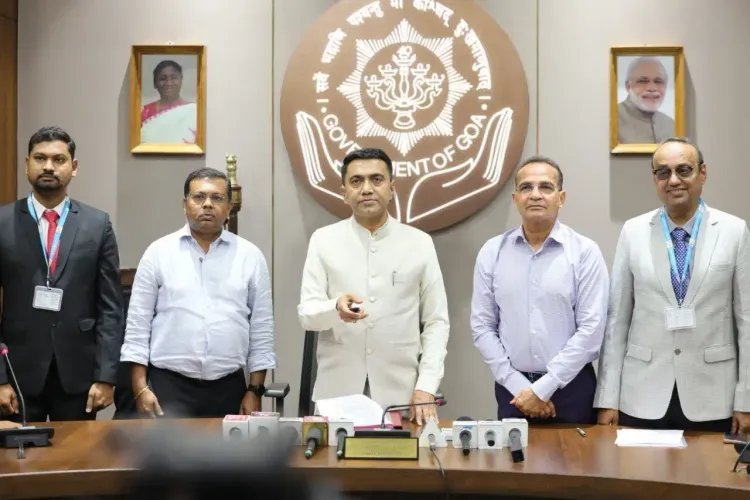
A quiet bureaucratic process — worker registration, cess collection, scheme disbursement — got a sweeping technological overhaul on Friday, 25 September 2026, when Goa Chief Minister Pramod Sawant launched integrated ERP (Enterprise Resource Planning) systems for both the Goa Labour Welfare Board and the Goa Building and Other Construction Workers Welfare Board at a function in Mantralaya, Porvorim.
What the two new systems actually do
The platforms are built end-to-end: worker registration, database management, contribution and cess collection, renewals, welfare scheme processing and real-time monitoring are all brought under a single digital roof. The result, in practice, is that a construction worker applying for a welfare benefit no longer needs to navigate paper queues or multiple offices. The systems also incorporate e-Sign, DigiLocker integration, online payments, AI-enabled cost validation, blockchain-backed verification, QR authentication and geo-fenced mobile inspections — a stack of features designed to make the process traceable at every step and harder to game.
The systems were developed and deployed by RailTel, the Railways public-sector undertaking that has increasingly expanded into state-level e-governance and ERP projects. CM Sawant called the launch a 'Digital Kranti' — a digital revolution — in labour welfare, offering congratulations to both welfare boards and to RailTel for the rollout.
The BOCW framework powering this reform
The Goa Building and Other Construction Workers Welfare Board draws its mandate from the Building and Other Construction Workers (Regulation of Employment and Conditions of Service) Act, 1996, a central law that required every state to constitute a welfare board and levy a cess on construction cost. For decades, weak registration infrastructure and paper-heavy processes meant large numbers of eligible construction workers never accessed the benefits they were entitled to — a leakage problem common across Indian states.
The new ERP directly targets that gap. By digitising cess collection and linking scheme disbursement to verified worker records, the system makes it structurally harder for contributions to accumulate in boards without reaching beneficiaries. The integration of DigiLocker and blockchain verification mirrors reforms other states have piloted under India's broader Digital India programme, but the addition of AI-enabled cost validation and geo-fenced mobile inspections pushes Goa's version toward the more advanced end of what state-level labour boards have deployed.
CM Sawant's appeal to workers
Alongside the technical launch, CM Sawant made a direct appeal: eligible workers who have not yet registered with either welfare board should do so and actively claim the benefits and services available to them. The appeal signals that the administration is aware that technology alone does not guarantee uptake — outreach to the last-mile beneficiary remains the harder challenge.
The real test of Friday's launch will be measured in registration numbers and processing times in the months ahead. If worker enrolment rises and scheme-to-disbursement cycles shorten, Goa's BOCW reform could become a template worth watching for other states still running their welfare boards on paper.
Point of View
Accountable delivery mechanisms — a persistent failure point in BOCW implementation across India. By deploying blockchain-backed verification and AI cost validation alongside more standard DigiLocker integration, the Sawant administration is signalling ambition beyond basic digitisation. The political calculus is clear: tangible welfare delivery to construction workers — a large, mobile and historically under-served constituency — can yield electoral dividends while also defending against Opposition charges of governance drift. Whether the technology investment translates into measurable registration growth will be the metric that matters.
NationPress
26 Sept 2026
Frequently Asked Questions
What is the Goa Labour Welfare Board ERP system?
It is an end-to-end digital platform launched on 25 September 2026 that automates worker registration, database management, cess and contribution collection, renewals and welfare scheme processing for the Goa Labour Welfare Board, replacing paper-based workflows.
Who built the ERP system for Goa's labour welfare boards?
RailTel , the Railways public-sector undertaking, developed and deployed the integrated ERP systems for both Goa welfare boards.
What is the Goa BOCW Welfare Board and who is eligible?
The Goa Building and Other Construction Workers Welfare Board is a statutory body constituted under the central BOCW Act of 1996 to provide welfare benefits to building and construction workers in Goa; workers employed in construction activities in the state are eligible to register.
What technology features does the new Goa labour welfare ERP include?
The platforms incorporate e-Sign, DigiLocker integration, online payments, AI-enabled cost validation, blockchain-backed verification, QR authentication and geo-fenced mobile inspections.
How can Goa construction workers register with the welfare board?
Chief Minister Pramod Sawant has appealed to all eligible workers to register through the newly launched digital platforms of the respective welfare boards to access available benefits and services.