Government Defends Delimitation Process Against Opposition Criticism
Synopsis
In a robust response to allegations of regional injustice, the Central Government emphasizes that the upcoming delimitation aims to enhance representation while maintaining fair safeguards for marginalized groups. Key reforms are set to reshape political representation across India.
Key Takeaways
Delimitation aims to expand legislative representation.
Proposed increase in Lok Sabha seats from 543 to 850.
Women's reservation framework includes 'quota within quota.' Reforms are based on the 2011 Census data.
Seven Constitutional provisions are being amended.
New Delhi, April 16 (NationPress) The Central Government has firmly countered the claims made by Opposition parties, especially the DMK, regarding potential injustices faced by southern states in the forthcoming delimitation process. As per official statements, the reforms aim to enhance representation throughout the nation while guaranteeing fair protections for women and marginalized groups.
The crux of the government's stance highlights a significant increase in legislative representation. The overall number of Lok Sabha seats is projected to rise dramatically—from the current 543 to as many as 850—once the delimitation is enacted.
This growth will positively impact all states, including those in southern India, according to sources. For example, the representation of Tamil Nadu in the Lok Sabha is anticipated to grow from 39 to 59 seats, dispelling fears that the state might lose its influence.
Furthermore, the government has clarified that the delimitation will be based on the 2011 Census. Officials describe this decision as a progressive measure that 'ensures consistency and prevents arbitrary redistribution.'
This principle will be applicable not only to parliamentary seats but also to state Assembly constituencies, which will be restructured using 2011 population figures.
Sources indicate that the reforms will usher in a considerable rise in the total number of Assembly seats across the nation—from 4,123 to 6,186.
Additionally, there will be a 50 percent boost in representation within legislative bodies overall. This expansion is perceived as a structural reform to 'accommodate population growth and enhance democratic representation.'
Regarding women's reservation, government representatives confirmed that the framework will incorporate 'quota within quota' provisions. This ensures that vertical reservation for Scheduled Castes (SC) and Scheduled Tribes (ST) women is maintained within the broader women’s quota, addressing issues of fair inclusion.
Seven Constitutional provisions are being revised as part of this reform initiative, including Articles 55, 81, 82, 170, 332, 334, and 334A, aimed at facilitating changes in representation and reservation.
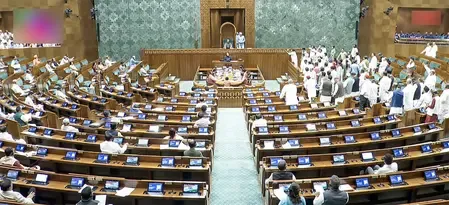
The legislative process commenced with Union Ministers Arjun Ram Meghwal and Amit Shah presenting three significant bills in the Lok Sabha: The Constitution (One Hundred and Thirty-First Amendment) Bill, 2026, The Delimitation Bill, 2026, and The Union Territories Laws (Amendment) Bill, 2026. These initiatives are designed to operationalize women’s reservation ahead of the 2029 general elections.
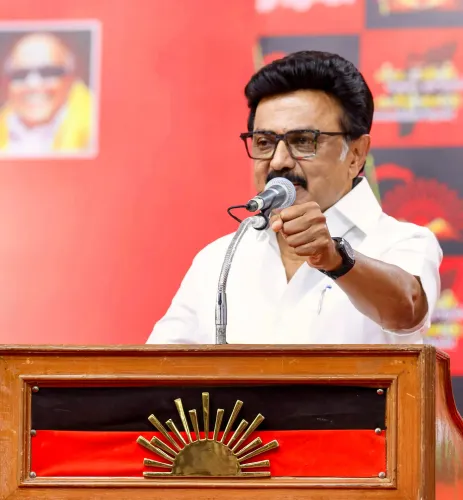
Government officials have dismissed the Opposition's critiques as politically motivated. They specifically accused the DMK of engaging in a 'political stunt' to fabricate a misleading narrative regarding regional inequities, asserting that such tactics will falter once the comprehensive details of the reform are disclosed.
The government asserts that the delimitation and reservation framework is constitutionally valid and aimed at broadening democratic participation, not diminishing representation for any region, as stated by sources.
Point of View
The government's focus on data from the 2011 Census and structural reforms may enhance democratic participation rather than hinder it.
NationPress
7 Oct 2026
Frequently Asked Questions
What is the purpose of the delimitation exercise?
The delimitation exercise aims to redraw the boundaries of parliamentary and state Assembly constituencies to ensure fair representation based on the latest population data.
How will women's representation be addressed in the reforms?
The reforms will include provisions for 'quota within quota,' ensuring that women from Scheduled Castes and Scheduled Tribes are adequately represented.
What changes are being proposed for Lok Sabha seats?
The total number of Lok Sabha seats is proposed to increase from 543 to up to 850, benefiting representation across all states.
On what basis will the delimitation be conducted?
The delimitation will be conducted based on the 2011 Census data to ensure uniformity in representation.
What are the key bills introduced for this reform?
The key bills include The Constitution (One Hundred and Thirty-First Amendment) Bill, The Delimitation Bill, and The Union Territories Laws (Amendment) Bill.