National Urban Conclave 2026: Govt maps reforms for housing, walkability, and city governance
Synopsis
At the National Urban Conclave 2026 in Bhubaneswar, Union Minister Manohar Lal and senior officials laid out India's most detailed urban reform blueprint in years — covering mayoral empowerment, pedestrian rights, integrated water planning, and a digital overhaul of building approvals. The call to give Mayors five-year fixed tenures with executive powers stands out as a structural shift that could redefine city governance.
Key Takeaways
The National Urban Conclave 2026 concluded in Bhubaneswar on 25 October 2026 with recommendations from seven technical sessions .
Union Minister Manohar Lal highlighted that over half of India's legacy waste has been remediated under ongoing urban missions.
The 'Model Municipal Law' session recommended giving Mayors five-year tenures with clearly defined executive powers and greater fiscal autonomy.
The 'Affordable Housing' session called for land reservation near transit and employment hubs and the introduction of single-window approvals .
New launches included the Used Water Marketplace under AMRUT 2.0 and the UCF Portal for the Urban Challenge Fund.
Recommendations now move to state governments and urban local bodies for localised implementation.
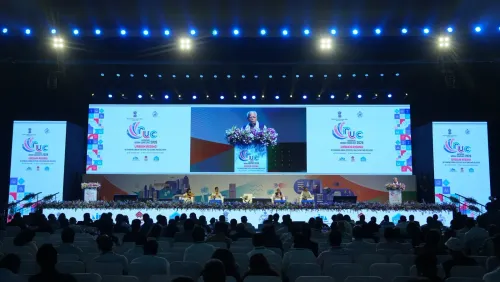
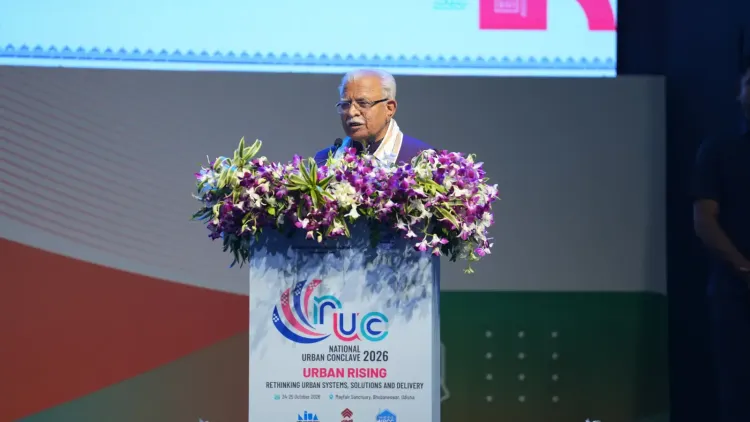
The National Urban Conclave 2026 concluded in Bhubaneswar on Sunday, 25 October 2026, producing a detailed reform roadmap spanning affordable housing, pedestrian infrastructure, water and waste management, municipal law overhaul, and outcome-based service delivery. The two-day event brought together representatives from the Union and state governments, urban local bodies, industry, academia, and knowledge institutions to chart India's urban future.
Key Takeaways from the Closing Session
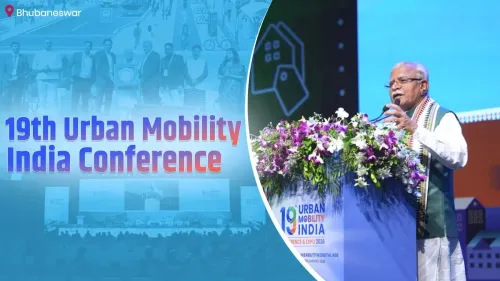
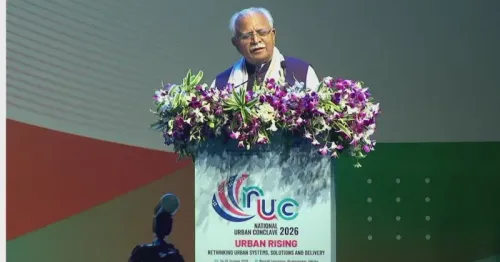
Delivering the closing remarks, Union Minister of Housing and Urban Affairs Manohar Lal underlined the importance of locating affordable housing near employment centres and public transport nodes. He also called for circularity in construction practices and the scientific remediation of legacy waste, noting that more than half of India's legacy waste has already been processed. He stressed the need to prevent fresh accumulation while sustaining remediation efforts so that India's urban transformation remains 'inclusive, sustainable and future-ready.'
Satendra Singh, Secretary for Urban Development, reflected on outcomes from the conclave's seven technical sessions and called for translating policy deliberations into practical, implementable urban solutions — a recurring concern given the historical gap between policy intent and ground-level delivery.
What the Seven Sessions Recommended
The session on 'Right to Walk' addressed fragmented pedestrian spaces, poor accessibility, and unclear institutional responsibilities. It recommended institutionalising the right to walk in statutory plans, securing pedestrian right-of-way, and establishing dedicated financing mechanisms for footpath infrastructure.
The 'Water, Waste and Resource Efficiency' session called for integrating water, wastewater, and solid waste planning and shifting to outcome-based service delivery with stronger performance monitoring. The 'Affordable Housing' session recommended reserving land near transit hubs and employment zones, developing rental and transit housing models, and introducing single-window approvals to cut developer timelines.
The 'Integrated Urban Development and Infrastructure Delivery' session pushed for shared GIS-based databases, corridor-based planning, and better investment alignment across sectors. The 'New Paradigms for Urban Service Delivery' session recommended shifting from asset creation to performance-based contracts, integrating municipal agencies around defined responsibilities, and improving own-source revenue mobilisation — a persistent weakness for urban local bodies across India.
The 'Model Building Bye-Laws' session recommended simplified, digital-first approvals with risk-based scrutiny and rationalised Floor Area Ratio (FAR) and parking norms. The 'Model Municipal Law' session went furthest in structural terms, recommending that Mayors be given five-year tenures with clearly defined executive powers, stronger devolution of municipal functions, and enhanced fiscal autonomy — reforms that urban governance experts have argued for over two decades.
New Initiatives Launched
Several publications and digital tools were unveiled on the conclave's second day, including the Used Water Marketplace under AMRUT 2.0 and the UCF Portal, which is designed to enable transparent and streamlined implementation of the Urban Challenge Fund. Both initiatives are aimed at closing the financing and accountability gaps that have historically slowed urban programme delivery.
Context and What Comes Next
The conclave builds on the momentum of existing national missions — AMRUT, Swachh Bharat Mission–Urban, and PM SVANidhi — which have expanded water and sanitation access, improved waste management, and promoted financial inclusion for street vendors. This comes amid India's accelerating urbanisation, with cities expected to house nearly 600 million people by 2030, placing enormous pressure on infrastructure, housing supply, and governance capacity.
The recommendations now move to the implementation stage, with state governments and urban local bodies expected to adapt the model frameworks to their local contexts. Whether the conclave's actionable outputs translate into legislative and administrative changes — or remain aspirational blueprints — will be the real measure of its impact.
Point of View
The JNNURM in 2005, the AMRUT launch in 2015 — and the gap between policy ambition and municipal reality has persisted through all of them. The recommendation to grant Mayors five-year fixed tenures with executive authority is the right structural call, but it has been made before and diluted in legislative translation. The real accountability test is whether the Centre conditions Mission funding on states actually devolving powers, or whether this conclave joins a long shelf of well-intentioned documents. India's cities are on track to house 600 million people by 2030; incremental reform at this stage is a risk in itself.
NationPress
25 Oct 2026
Frequently Asked Questions
What is the National Urban Conclave 2026?
The National Urban Conclave 2026 is a two-day policy event organised by the Ministry of Housing and Urban Affairs, held in Bhubaneswar on 24–25 October 2026. It brought together Union and state government officials, urban local bodies, industry, and academia to develop actionable reform recommendations for India's cities.
What were the main recommendations from the conclave?
The conclave's seven technical sessions recommended a wide range of reforms: institutionalising the Right to Walk, integrating water and waste planning, reserving land for affordable housing near transit hubs, empowering Mayors with five-year tenures, simplifying building approvals through digital platforms, and shifting urban service delivery to an outcome-based model.
What new initiatives were launched at the conclave?
Two key initiatives were launched: the Used Water Marketplace under AMRUT 2.0, which aims to create a trading platform for treated wastewater, and the UCF Portal, designed to enable transparent and efficient implementation of the Urban Challenge Fund.
Why is the proposal to give Mayors a five-year tenure significant?
Currently, the tenure and powers of Mayors vary widely across states, and many lack direct executive authority, limiting accountability. A fixed five-year tenure with defined executive powers would align city leadership with the municipal council's term and strengthen urban governance — a reform urban experts have long advocated.
How does this conclave connect to existing urban missions like AMRUT and Swachh Bharat?
The conclave builds on the progress of AMRUT, Swachh Bharat Mission–Urban, and PM SVANidhi, which have expanded water and sanitation access and improved waste management. The recommendations are intended to deepen and institutionalise these gains while addressing gaps in financing, capacity, and accountability.