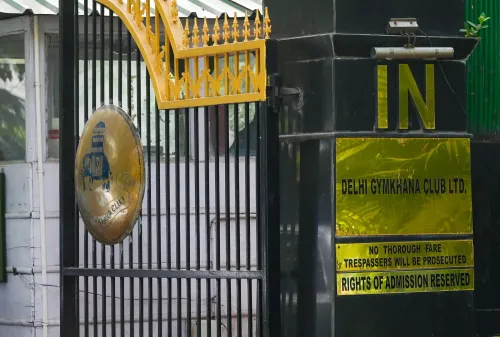
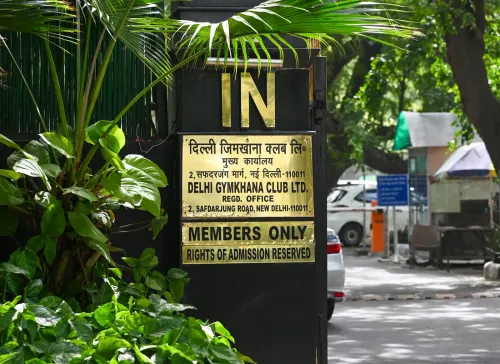
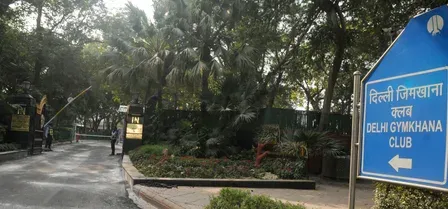
Delhi Gymkhana Club eviction: Govt to reclaim 27.3-acre Lutyens plot on June 5
Synopsis
The Union government has served the Delhi Gymkhana Club — a 112-year-old imperial-era institution on 27.3 acres in Lutyens Delhi — with an eviction notice, ordering handover by 5 June for Defence infrastructure and public security needs. The move ends the Club's century-long presence steps from the Prime Minister's Residence, and raises immediate questions about whether its members will seek legal relief before the deadline.
Key Takeaways
The Union government has ordered the Delhi Gymkhana Club to vacate its 27.3-acre premises at 2, Safdarjung Road , Lutyens Delhi, by 5 June .
The eviction notice, signed by Deputy L&DO Suchit Goyal , cites the need to strengthen Defence infrastructure and fulfil public security purposes .
The President of India , acting through the Land and Development Office , has formally terminated the lease under Clause 4 of the lease deed.
The Club was established in July 1913 and its buildings were designed by architect Robert T Russell ; it has approximately 5,600 permanent members .
Aspiring civilian members reportedly wait over 40 years and must pay over ₹7 lakh as an application fee to join the waiting list.
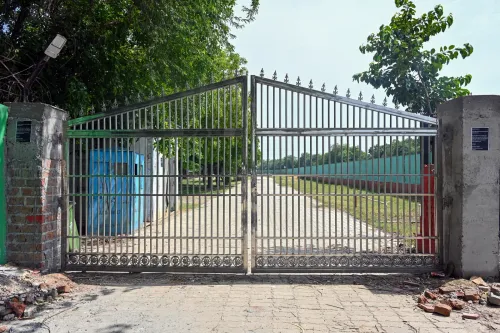
The Delhi Gymkhana Club, one of India's oldest and most prestigious elite social institutions, is set to be evicted from its 27.3-acre premises at 2, Safdarjung Road in Lutyens Delhi by the Union government on 5 June, according to an official eviction notice made available on Saturday, 23 May. The government has cited the need to strengthen Defence infrastructure and fulfil public security purposes as grounds for reclaiming the strategically located land.
What the Eviction Notice Says
The notice, signed by Deputy Land and Development Officer Suchit Goyal and issued to the Club on 22 May, states that the premises are located in a 'highly sensitive and strategic area of Delhi' and are 'critically required for the strengthening and securing of Defence infrastructure and other vital public security purposes.' The Union Ministry of Housing and Urban Affairs described the action as a 're-entry and resumption of premises,' linking it to urgent institutional needs, governance infrastructure, and public-interest projects integrated with the resumption of adjoining government lands.
The Club's General Committee and Secretary have been directed to hand over 'peaceful possession' of the premises — including all buildings, structures, lawns, and fittings — to representatives of the Land and Development Office on 5 June. The notice warned that in the event of non-compliance, 'possession shall be taken in accordance with law.'
Legal Basis for Reclamation
The notice invoked Clause 4 of the Club's lease deed, which grants the lessor the authority to re-enter the premises if the land is required for a public purpose. Acting through the Land and Development Office (L&DO), the President of India has formally determined the lease and ordered immediate re-entry. The entire land parcel, along with all structures on it, will vest absolutely with the President through the L&DO.
Notably, the Club's premises sit in close proximity to the official Prime Minister's Residence at 7, Lok Kalyan Marg, lending credence to the government's stated security rationale.
About the Delhi Gymkhana Club
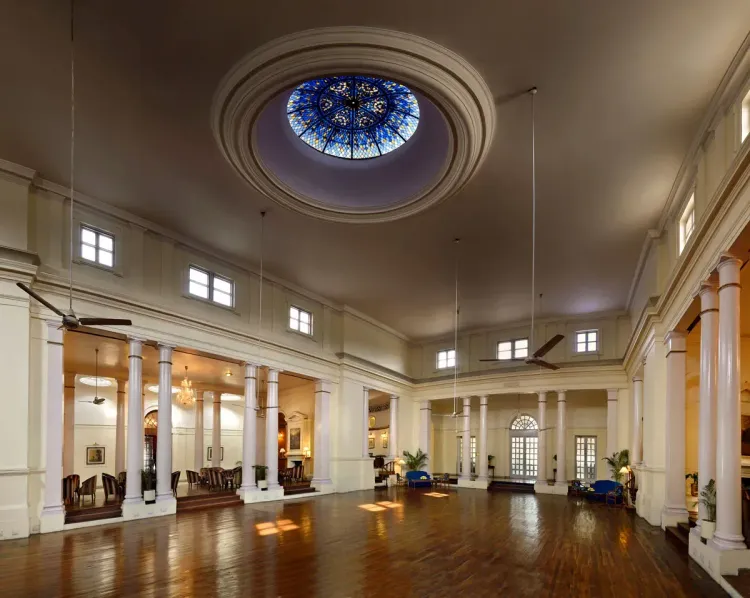
Established in July 1913, the Delhi Gymkhana Club has long served as a central gathering hub for senior bureaucrats, diplomats, and military officials. Its iconic main buildings were designed by architect Robert T Russell, who also designed Connaught Place and the Commander-in-Chief's residence — later known as Teen Murti House, the official residence of Prime Minister Jawaharlal Nehru. The Club moved to its current address in the early 1930s.
The Club maintains a cap of approximately 5,600 permanent members, with around 100 new permanent members admitted each year. It carries a notoriously long waiting list — aspiring civilian members reportedly wait over 40 years for a spot, and must deposit an application fee of over ₹7 lakh to reserve a place in the queue. A quota exists for government and defence personnel in the annual membership intake.
What Happens Next
The Club management has until 5 June to comply with the handover directive. It remains to be seen whether the Club will mount a legal challenge before that date. The government has not publicly detailed what specific infrastructure or security installations are planned for the site. All eyes are now on whether one of colonial-era Delhi's most storied institutions will seek judicial relief before the deadline.
Point of View
But the absence of any public detail on what replaces it leaves room for speculation. What is less discussed is that the Club has been under government scrutiny for years over governance and membership irregularities; this eviction, framed purely in security terms, sidesteps that entire controversy. Whether the Club pursues judicial relief — and how quickly courts respond — will determine if 5 June is a real deadline or an opening bid.
NationPress
26 Sept 2026
Frequently Asked Questions
Why is the Delhi Gymkhana Club being evicted?
The Union government has cited the need to strengthen Defence infrastructure and fulfil public security purposes, noting that the Club's 27.3-acre premises are located in a 'highly sensitive and strategic area of Delhi.' The land is also described as essential for urgent institutional needs and governance infrastructure linked to adjoining government lands.
When must the Delhi Gymkhana Club vacate its premises?
The Club has been directed to hand over peaceful possession of its premises at 2, Safdarjung Road on 5 June, as stated in the eviction notice issued on 22 May. Non-compliance could result in possession being taken by force under applicable law.
What is the legal basis for the government's action?
The eviction invokes Clause 4 of the Club's lease deed, which allows the lessor to re-enter the premises if required for a public purpose. The President of India, acting through the Land and Development Office, has formally determined the lease and ordered immediate re-entry of the property.
What is the history of the Delhi Gymkhana Club?
The Delhi Gymkhana Club was established in July 1913 and is one of India's oldest elite social institutions. Its buildings at the current Safdarjung Road address were constructed in the early 1930s and designed by architect Robert T Russell, who also designed Connaught Place and Teen Murti House.
Who are the members of the Delhi Gymkhana Club?
The Club has approximately 5,600 permanent members, drawn primarily from senior bureaucrats, diplomats, and military officials. Around 100 new permanent members are admitted each year, and aspiring civilian members reportedly wait over 40 years, with an application fee of over ₹7 lakh required to join the waiting list.