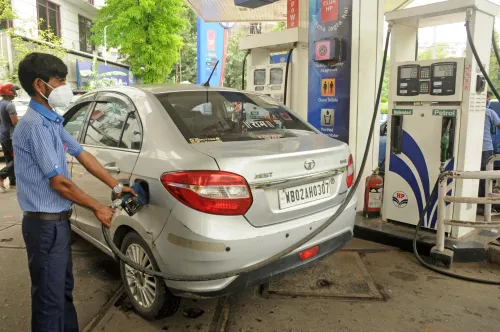
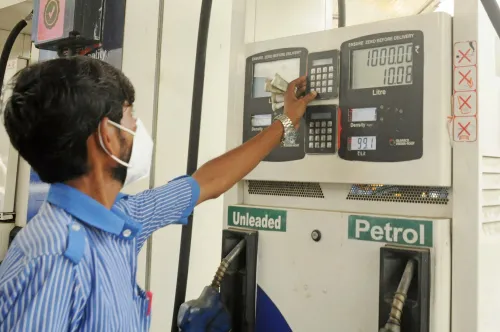
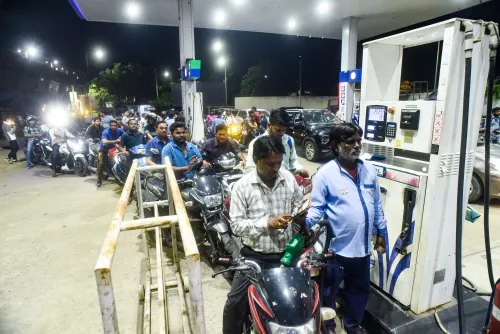
Fuel prices: Govt cuts excise duty, takes ₹1.23 lakh crore revenue hit
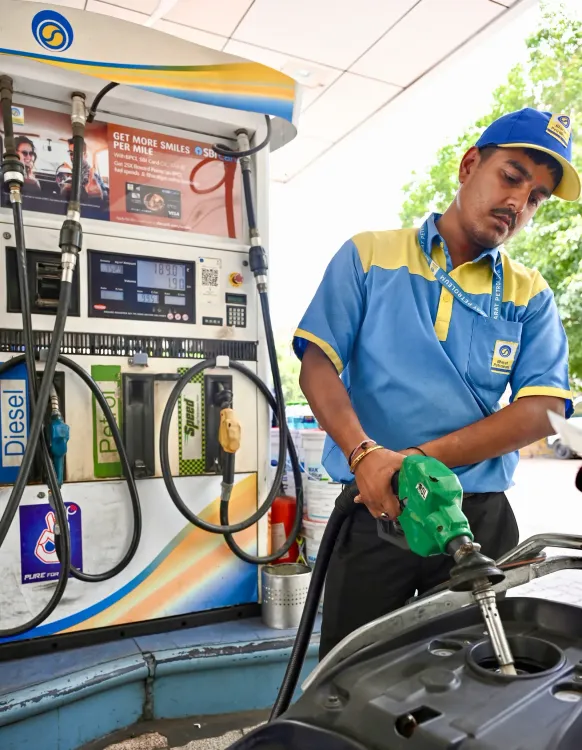
Synopsis
India absorbed a ₹1.23 lakh crore revenue hit by slashing petrol and diesel excise duty ₹10 per litre — and Parliament has now been told the government will keep doing whatever it takes to hold fuel prices down. With Russian crude crossing 50% of July imports and the Strait of Hormuz closed, India's energy pivot is already well underway.
Key Takeaways
The Centre cut special additional excise duty on petrol and diesel by ₹10 per litre earlier in 2026 to shield consumers from Middle East conflict-driven price surges.
The duty reduction resulted in a revenue loss of approximately ₹1.23 lakh crore in financial year 2026-27 .
Minister of State for Finance Pankaj Chaudhary told the Rajya Sabha on 4 August that the government will continue fiscal and administrative steps to control fuel prices.
Russian crude accounted for over 50 per cent of India's oil imports in July , up sharply as India diversifies away from Gulf sources after the Strait of Hormuz closure.
Public-sector OMCs have been absorbing under-recoveries; the excise cut provided partial relief to keep supply uninterrupted.
The Indian government will continue deploying fiscal and administrative measures to keep fuel prices in check as the Middle East conflict sustains upward pressure on global oil and gas markets, Parliament was informed on Tuesday, 4 August. The assurance came in a written reply to a question in the Rajya Sabha, underscoring the Centre's intent to shield consumers even at significant cost to the exchequer.
The Excise Duty Cut and Its Cost
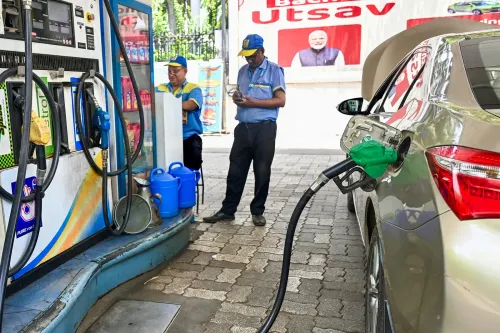
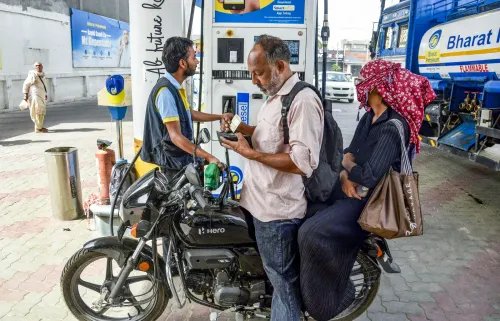
Earlier this year, the Centre reduced the special additional excise duty on petrol and diesel by ₹10 per litre to cushion consumers from the fuel price surge triggered by the Middle East conflict. The move came at a steep price: a revenue loss of approximately ₹1.23 lakh crore to the government in financial year 2026-27.
Minister of State for Finance Pankaj Chaudhary noted that the duty reduction 'partly offset the under-recoveries being absorbed by public-sector oil marketing companies (OMCs), enabling them to continue supplying fuel without disruption.'
What the Government Said
Chaudhary stated in his written reply: 'The government will continue to adopt appropriate fiscal and administrative measures to mitigate the impact of future fuel price volatility while maintaining fiscal sustainability.'
He added that the government's strategy involves accommodating such measures within available budgetary space by closely monitoring revenue and expenditure trends, reprioritising expenditure, and responding to evolving economic conditions. 'This enables the government to respond to unforeseen shocks, such as elevated international crude oil prices, while continuing to meet budgetary commitments, support macroeconomic stability, and adhere to the fiscal consolidation path,' he said.
Diversification and Energy Security
Beyond the duty relief, the Centre has been actively diversifying its crude oil import sources to reduce dependence on Gulf supplies — a move that has gained urgency following the closure of the Strait of Hormuz. In July, India significantly increased purchases of Russian crude at discounted prices, which accounted for over 50 per cent of the country's oil imports during the month.
The government has also outlined a longer-term agenda: strengthening domestic revenue mobilisation, expanding strategic petroleum reserves, promoting alternative and cleaner fuels, and improving overall energy efficiency — all aimed at reducing the economy's vulnerability to external energy shocks.
Impact on Oil Marketing Companies
Public-sector OMCs have been absorbing under-recoveries — the gap between the cost of supplying fuel and the price charged to consumers — since the conflict-driven price surge began. The excise duty reduction by the Centre provided partial relief, allowing these companies to maintain uninterrupted fuel supply across the country. Notably, any sustained rise in crude prices without a corresponding duty adjustment would put fresh pressure on OMC balance sheets.
What Comes Next
The government has not announced any specific timeline for further duty revisions, but Chaudhary's statement signals a reactive rather than pre-emptive approach — with adjustments contingent on how international crude prices evolve. With Russian crude now forming the majority of India's import basket and the Middle East situation remaining fluid, the Centre's room to manoeuvre will depend heavily on global price trajectories in the coming months.
Point of View
And the government deserves credit for absorbing it rather than passing the full crude shock to consumers. But the open-ended commitment — 'we will continue appropriate measures' — lacks a trigger mechanism or a ceiling, which creates uncertainty for fiscal consolidation targets. More telling is the Russian crude figure: at over 50% of July imports, India's energy diversification is no longer a policy aspiration but an operational reality, driven as much by price necessity as by geopolitical hedging. The long-term push on strategic reserves and cleaner fuels is the right direction, but these are multi-year plays — the near-term pressure on OMC balance sheets and the exchequer will not ease until Middle East tensions do.
NationPress
19 Sept 2026
Frequently Asked Questions
Why did the government cut excise duty on petrol and diesel?
The Centre reduced the special additional excise duty on petrol and diesel by ₹10 per litre to protect consumers from a surge in fuel prices triggered by the Middle East conflict. The cut helped public-sector oil marketing companies continue supplying fuel without disruption by partially offsetting their under-recoveries.
How much revenue did the government lose due to the excise duty cut?
The excise duty reduction on petrol and diesel resulted in a revenue loss of approximately ₹1.23 lakh crore to the government in financial year 2026-27, according to Minister of State for Finance Pankaj Chaudhary's statement in the Rajya Sabha.
What is India doing to reduce dependence on Middle East oil?
India has significantly increased purchases of Russian crude at discounted prices, which accounted for over 50 per cent of the country's oil imports in July 2026. The shift follows the closure of the Strait of Hormuz and is part of a broader strategy to diversify crude import sources and expand strategic petroleum reserves.
Will the government cut fuel taxes further?
The government has not announced a specific timeline or threshold for further duty revisions. Minister Pankaj Chaudhary told Parliament that future measures will be guided by evolving economic conditions and available budgetary space, suggesting adjustments will be reactive to international crude price movements.
What are under-recoveries and why do they matter?
Under-recoveries refer to the gap between the actual cost of supplying fuel and the price charged to consumers by public-sector oil marketing companies. When crude prices rise but retail prices are held steady, OMCs absorb this loss — straining their finances unless offset by government duty cuts or direct support.