Goyal Accuses Opposition of 'Regime Change' Conspiracy, Not Electoral Reform
Synopsis
Union Minister Piyush Goyal accused the opposition of weaponising 'Regime Change' rhetoric to create anarchy and grab power, dismissing their stated concerns over electoral rolls, the CEC, and youth welfare as a smokescreen for institutional destabilisation.
Key Takeaways
Union Minister Piyush Goyal posted a sharp political attack on October 16, 2026 , targeting opposition use of the phrase 'Regime Change'.
He argued the opposition's fight is not genuinely about electoral reform, SIR (Special Intensive Revision) , or Chief Election Commissioner Gyanesh Kumar .
Goyal directly accused the opposition of plotting to 'create anarchy' to capture political power.
He also dismissed opposition invocations of youth welfare as hollow, reclaiming that language for the ruling side.
As Leader of the House in the Rajya Sabha , Goyal's framing signals the BJP government's official posture on challenges to the Election Commission.
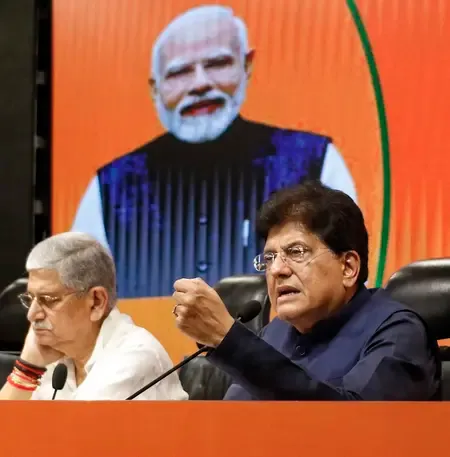
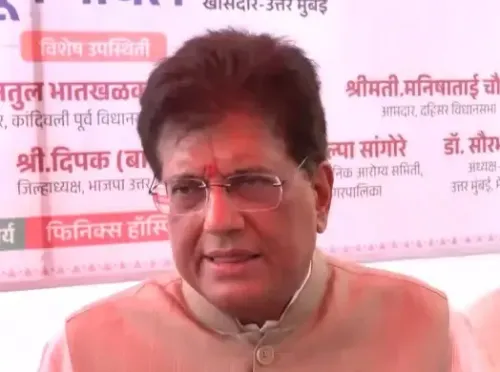
A single phrase — 'Regime Change' — has become the flashpoint of a sharp political salvo fired by Union Commerce and Industry Minister Piyush Goyal on Friday, October 16, 2026, targeting what he calls a deliberate plot to destabilise India through manufactured anarchy rather than genuine democratic reform.
The 'Regime Change' Charge and What Goyal Is Alleging
Goyal's post, written in Hindi, cuts straight to the accusation: the use of the phrase 'Regime Change' — he argues — unmasks the real agenda. 'It becomes clear that their fight is not for electoral reform, not for SIR, not for Gyanesh Kumar, not for the bright future of the country's youth,' he wrote. 'Rather, this is their conspiracy to capture power by creating anarchy in the country.'
The reference to SIR (Special Intensive Revision) — a voter-roll verification drive by the Election Commission of India — and to Gyanesh Kumar, the current Chief Election Commissioner, signals that Goyal is responding to an ongoing opposition campaign around electoral rolls and the independence of the Election Commission. His argument: the opposition is using legitimate-sounding grievances as cover for a deeper destabilisation push.
Why 'Anarchy' Is the Operative Word Here
By invoking 'Anarchy' (his word, in English, inside a Hindi post — a deliberate rhetorical choice), Goyal escalates the framing beyond a policy disagreement. He is not contesting the opposition's electoral-reform arguments on their merits; he is questioning the movement's fundamental intent. The implication is that street pressure on the Election Commission is not civic activism — it is, in his reading, an attempt to delegitimise institutions ahead of an electoral cycle.
The Leader of the House in the Rajya Sabha deploying this language carries parliamentary weight. It signals the ruling establishment's official posture: that challenges to the Election Commission's processes will be characterised not as accountability demands but as threats to constitutional order.
What the Youth Reference Is Doing in This Argument
Goyal's mention of 'desh ke naujawanon ka ujjwal bhavishya' — the bright future of the country's youth — is a pointed rhetorical move. It reclaims a vocabulary the opposition frequently uses, inverting the charge: if the opposition truly cared about youth, Goyal implies, it would pursue institutional reform through legitimate channels, not through disorder. It is a framing battle as much as a factual one.
Point of View
' he shifts the debate from process (are voter rolls accurate? is the CEC independent?) to intent (who is really behind this?). For the BJP, keeping the opposition on the defensive over its motives is strategically more valuable than engaging the substance of SIR or EC appointments. The danger in this framing, however, is that it can make legitimate accountability questions appear off-limits — a tension that courts and civil society are likely to press regardless of how the political battle is framed.
NationPress
16 Oct 2026
Frequently Asked Questions
What did Piyush Goyal say about 'Regime Change'?
Goyal said the opposition's use of the phrase 'Regime Change' reveals that their real goal is not electoral reform or accountability but creating anarchy to seize power — not genuine concern for voters, the Election Commission, or youth.
What is SIR that Goyal mentioned?
SIR stands for Special Intensive Revision, an Election Commission of India drive to verify and update voter rolls. It has been a point of controversy, with some opposition parties alleging it could be used to remove legitimate voters.
Who is Gyanesh Kumar and why is he mentioned?
Gyanesh Kumar is the Chief Election Commissioner of India. Opposition parties have raised concerns about his appointment and the independence of the Election Commission, making him a focal point of the electoral-reform debate Goyal was responding to.
Why is Piyush Goyal's statement significant?
As the Leader of the House in the Rajya Sabha and a senior BJP minister, Goyal's statement reflects the ruling government's official posture — framing opposition pressure on the Election Commission as a destabilisation conspiracy rather than a legitimate democratic concern.
What does 'Anarchy' mean in Goyal's political argument?
By using the English word 'Anarchy' inside a Hindi post, Goyal deliberately escalated the stakes — arguing that street pressure and institutional criticism is not civic activism but a calculated attempt to disorder the state ahead of elections.