Goyal Urges Public to Visit Skill Development Centres
Synopsis
Commerce Minister Piyush Goyal personally urged Indians to visit a Skill Development Centre at least once, spotlighting the Skill India Mission's vocational training network and its link to India's manufacturing and export ambitions.
Key Takeaways
Piyush Goyal posted on 21 November 2026 urging citizens to visit a Skill Development Centre at least once.
The post was in Hindi and accompanied by a video, framing the centres as worth experiencing firsthand.
The centres are part of the Skill India Mission , launched in 2015 with a target of training over 400 million people across sectors.
The Commerce Ministry has linked skilling outcomes to export competitiveness and MSME growth .
The appeal is public outreach rather than a new policy announcement, but may signal renewed focus ahead of budget consultations.
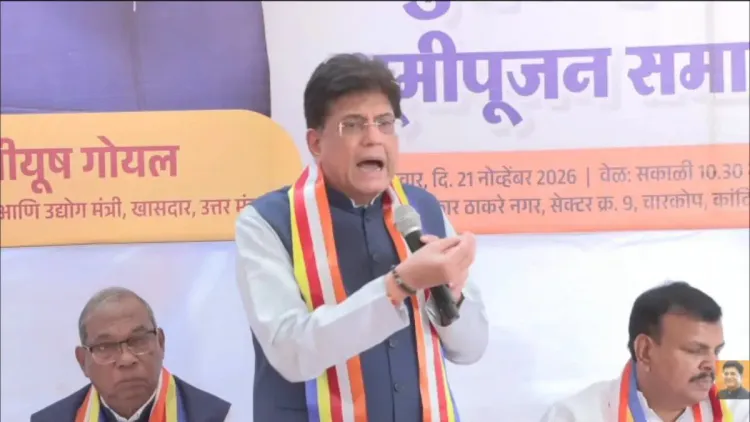
A simple request — but one with a decade of policy weight behind it. Union Commerce and Industry Minister Piyush Goyal on Saturday, 21 November 2026, took to X to personally urge citizens to visit a Skill Development Centre at least once, posting in Hindi: 'मेरा आप सबसे अनुरोध है कि आप एक बार कौशल विकास केंद्र को जाकर अवश्य देखें...' — 'I request all of you to visit a Skill Development Centre at least once.'
What Goyal wants citizens to see for themselves
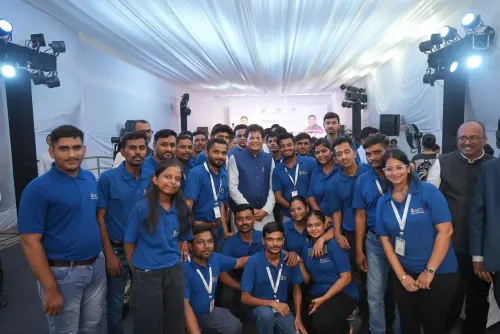
The appeal is direct and personal — not a policy directive, but an invitation. By asking the public to witness these centres firsthand, Goyal is leaning on the oldest form of political persuasion: show, don't tell. The post, accompanied by a video, frames the Skill Development Centres as something worth experiencing rather than simply reading about in a government report.
Skill India's decade-long push behind the centres
The centres Goyal references are part of the Skill India Mission, launched in 2015 with an ambitious target of training over 400 million people across sectors by 2022. Vocational training facilities under the initiative were designed to deliver industry-relevant skills to youth job seekers — bridging the gap between classroom education and the demands of manufacturing, services, and the MSME sector.
The Commerce Ministry has periodically linked skilling outcomes to export competitiveness, arguing that a trained workforce directly feeds India's ability to scale production and meet global supply-chain demands. For Goyal, who oversees trade and industry, the connection between a skilled young worker and a stronger export basket is not abstract — it is arithmetic.
Routine outreach or a signal of renewed focus?
Posts of this nature from senior ministers typically form part of ongoing public awareness drives rather than fresh policy announcements. Yet the timing matters: with Production Linked Incentive schemes maturing across sectors and state-level reviews of skill centre utilisation on the horizon, a push to rebuild public familiarity with these facilities could foreshadow deeper integration of skilling with industrial policy in upcoming budget consultations.
The ask is modest — visit once. But the implication is larger: if more Indians see what these centres offer, demand for vocational pathways may grow organically, reducing the perennial gap between training capacity and enrolment.
One visit. That is all Goyal is asking. Whether enough people take him up on it may quietly shape the next chapter of India's skilling story.
Point of View
And a 'see it for yourself' message is a soft but deliberate rebuttal to that scepticism. For the Commerce Ministry, skilling is not just a social policy — it is an industrial competitiveness argument, and reinforcing public trust in these centres ahead of PLI scheme reviews and budget season is strategically timed. Whether the outreach translates into measurable enrolment upticks will be the real test.
NationPress
21 Nov 2026
Frequently Asked Questions
What did Piyush Goyal say about Skill Development Centres?
Goyal urged all citizens to visit a Skill Development Centre at least once, posting in Hindi on X on 21 November 2026 alongside a video highlighting the centres.
What is the Skill India Mission?
The Skill India Mission was launched in 2015 with a goal of training over 400 million people across various sectors, using vocational training centres to deliver industry-relevant skills to youth.
What are Skill Development Centres in India?
Skill Development Centres are vocational training facilities set up under the Skill India initiative to equip job seekers with practical, industry-aligned skills in manufacturing, services, and other sectors.
Why is the Commerce Ministry interested in skilling?
The Commerce Ministry links a trained workforce to stronger export competitiveness and MSME growth, arguing that skilled workers directly support India's ability to scale production for global markets.
Is this a new government scheme or existing policy?
This is not a new scheme announcement. Goyal's post is public outreach for the existing Skill India Mission infrastructure, encouraging citizens to engage with centres already operational across the country.