Goyal hails Indonesia Open Network built on ONDC blueprint

Synopsis
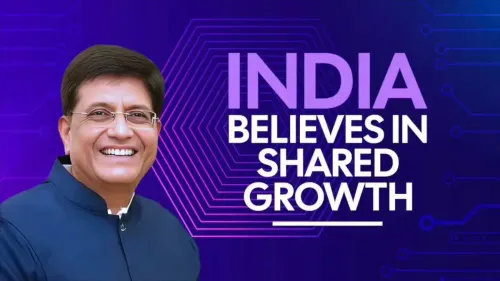
Commerce Minister Piyush Goyal welcomed the launch of Indonesia's Open Network modelled on India's ONDC, calling it a proud moment for India and a milestone in bilateral ties. The development underscores India's growing role as an exporter of open digital public infrastructure to Global South economies.
Key Takeaways
Union Commerce Minister Piyush Goyal on 7 July 2026 hailed the launch of the Indonesia Open Network built on India's ONDC architecture.
ONDC was piloted in 2022 by DPIIT to create an open, interoperable e-commerce network reducing dependence on large aggregator platforms.
Minister Goyal described the development as 'not merely an export of a platform' but a reflection of India's commitment to democratising e-commerce.
India has promoted its DPI stack — Aadhaar, UPI, ONDC — as open-source public goods to partner nations as part of technology diplomacy.
Indonesia , with over 270 million people , becomes one of the first countries to adopt the ONDC architecture for national digital commerce infrastructure.
The move is expected to deepen India-Indonesia bilateral ties and may encourage other Global South economies to adopt India-origin DPI models.
Union Commerce and Industry Minister Piyush Goyal on Tuesday, 7 July 2026, described the launch of the Indonesia Open Network — modelled on the architecture of India's Open Network for Digital Commerce (ONDC) — as 'an incredibly proud moment for India' and a significant milestone in bilateral ties with Indonesia.
Context
Posting on X, Minister Goyal said India's digital public infrastructure has become 'a blueprint for building open, inclusive and trusted digital economies across the world.' He framed the Indonesia Open Network not as a mere platform export but as 'a reflection of India's commitment to democratising e-commerce by empowering every buyer and seller through a fair and inclusive way.'
The minister credited Prime Minister Narendra Modi's 'visionary leadership' for positioning India's digital public infrastructure as a global model, adding that the development would 'strengthen Indonesia's digital commerce journey as well.'
Policy Backdrop
ONDC was piloted in 2022 by the Department for Promotion of Industry and Internal Trade (DPIIT) under the Ministry of Commerce to create an interoperable, platform-agnostic e-commerce network. Its core objective is to reduce the dominance of large aggregator platforms and provide fair market access to micro, small and medium enterprises (MSMEs).
India has systematically promoted its Digital Public Infrastructure (DPI) stack — which includes Aadhaar, UPI, and ONDC — as open-source public goods to partner nations, particularly in the Global South. This approach has come to be recognised as a form of technology diplomacy that strengthens bilateral economic ties outside traditional aid frameworks.
Indonesia, a key ASEAN partner, becomes among the first countries to adapt the ONDC architecture for its own national digital commerce infrastructure, signalling growing appetite for India-origin DPI models in Southeast Asia.
Stakeholders and Impact
For Indian MSMEs and technology developers, the Indonesia adoption validates ONDC's scalability and global relevance beyond domestic use cases. It opens potential pathways for Indian fintech and commerce-technology firms to participate in Indonesia's expanding digital economy.
On the Indonesian side, the open-network model promises to give smaller sellers and buyers access to a fair digital marketplace, mirroring the democratisation goals ONDC set out to achieve in India. Indonesian digital commerce users — in a market of over 270 million people — stand to benefit from increased competition and reduced platform dependency.
The development also carries diplomatic weight, reinforcing the India-Indonesia bilateral relationship at a time when both nations are deepening engagement on trade, technology, and connectivity under broader India-ASEAN frameworks.
What's Next
Observers will watch closely for adoption metrics on the Indonesia Open Network — including the number of sellers onboarded and transaction volumes — as an early indicator of whether the ONDC model translates effectively to a different regulatory and market environment.
Any follow-on provisions in India-ASEAN or India-Indonesia bilateral trade agreements that reference digital commerce interoperability could further institutionalise this DPI export model. India's success in Indonesia may also encourage other Global South economies to explore similar adoptions, cementing the country's role as a provider of open digital infrastructure rather than a consumer of proprietary foreign platforms.
Point of View
Moving ONDC from a domestic reform tool to a recognised international standard. For Minister Goyal and the Commerce Ministry, it offers a high-visibility proof point that Indian technology governance models can compete with Western and Chinese digital infrastructure offerings in the Global South. The framing — 'democratising e-commerce' rather than 'exporting technology' — is deliberate, positioning India as a values-aligned partner rather than a vendor. If Indonesia's adoption gains traction, it could accelerate similar conversations with other ASEAN and African economies already engaged with India's DPI mission.
NationPress
6 Oct 2026
Frequently Asked Questions
What is the Indonesia Open Network and how is it related to India?
The Indonesia Open Network is a new Indonesian digital commerce platform modelled on the architecture of India's Open Network for Digital Commerce (ONDC). It aims to create an open, interoperable e-commerce ecosystem in Indonesia, similar to ONDC's goal of reducing platform monopolies in India.
What is ONDC and when was it launched in India?
ONDC, or Open Network for Digital Commerce, is an Indian government initiative under the Department for Promotion of Industry and Internal Trade (DPIIT). It was piloted in 2022 to build a platform-agnostic, interoperable e-commerce network that empowers MSMEs and reduces dependence on large aggregator platforms.
Why did Piyush Goyal comment on the Indonesia Open Network?
As Union Commerce and Industry Minister, Piyush Goyal oversees India's trade and digital commerce policy, including ONDC. He welcomed Indonesia's adoption of the ONDC architecture as a proud moment for India and a milestone in India-Indonesia bilateral ties.
How does India use digital public infrastructure as diplomacy?
India has promoted its DPI stack — including Aadhaar, UPI, and ONDC — as open-source public goods to partner countries, particularly in the Global South. This positions India as a provider of trusted, inclusive digital infrastructure and strengthens bilateral economic relationships outside traditional aid frameworks.
What does the Indonesia Open Network mean for India-Indonesia relations?
The adoption of an ONDC-based network by Indonesia signals deepening technology and trade cooperation between the two countries. It reinforces India's role as a digital infrastructure partner for ASEAN nations and may pave the way for further provisions in India-Indonesia or India-ASEAN bilateral agreements.