Goyal meets Canada's Trade Minister, pushes India-Canada CEPA
Synopsis
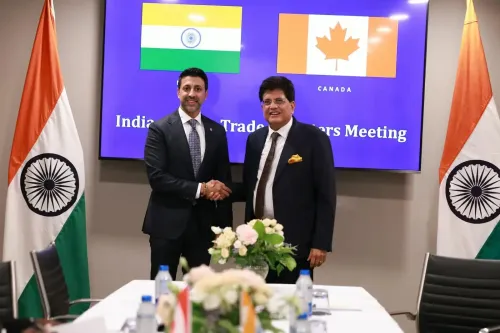
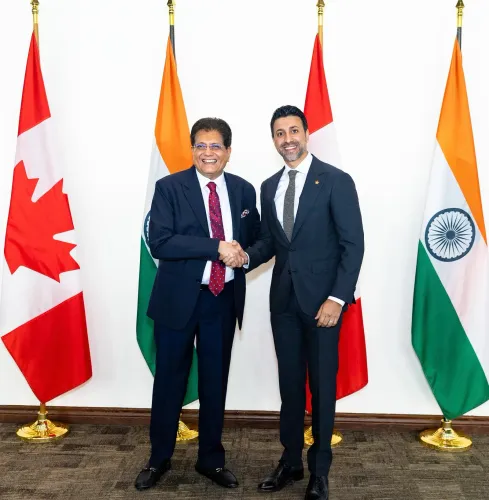
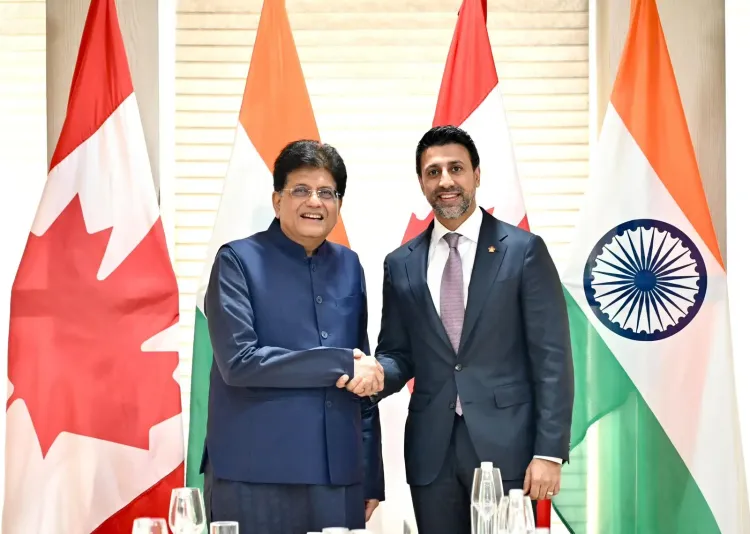
Union Commerce Minister Piyush Goyal met Canada's Trade Minister Maninder Sidhu on October 13, 2026, to advance long-stalled India-Canada CEPA talks, aiming for a balanced deal that boosts market access and investment between the two nations.
Key Takeaways
Piyush Goyal and Canada's Maninder Sidhu held a bilateral meeting on October 13, 2026 focused on India-Canada CEPA negotiations.
Both sides discussed a 'balanced, mutually beneficial agreement' to enhance market access and unlock trade and investment opportunities.
India-Canada CEPA negotiations were first formally launched in 2010 and have seen intermittent progress over sixteen years.
India has concluded recent trade deals with the UAE , Australia , and the UK , making Canada a key next target in its bilateral trade strategy.
Key sectors of mutual interest include energy, agriculture, technology, services, and critical minerals.
The next milestone is scheduling a formal negotiation round and tabling sector-specific market access offers.
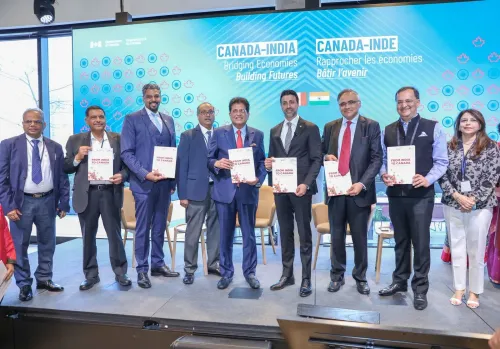
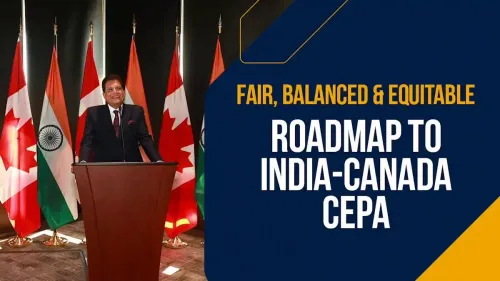
A trade conversation more than a decade in the making got a fresh push on Tuesday, October 13, 2026, when Union Commerce and Industry Minister Piyush Goyal held a bilateral meeting with Maninder Sidhu, Canada's Minister of International Trade, to advance negotiations on a Comprehensive Economic Partnership Agreement (CEPA) between the two countries.
What Goyal and Sidhu put on the table
The two ministers focused their discussion on crafting a 'balanced, mutually beneficial agreement' — Goyal's own framing — that would widen market access and unlock fresh trade and investment flows in both directions. Goyal expressed confidence that a concluded CEPA would inject 'fresh momentum to bilateral trade and strengthen the economic partnership for shared prosperity.'
The emphasis on balance is deliberate. Both sides bring asymmetric strengths: India is a large, fast-growing consumer market and services powerhouse; Canada is a complementary economy with depth in energy, agricultural products, critical minerals, and technology — sectors where Indian demand is structurally high.
Sixteen years of negotiation — and why 2026 matters
India and Canada formally launched CEPA talks in 2010, yet the agreement has spent more years in limbo than in active progress. Multiple rounds of negotiation stalled over sensitive issues including market access for Canadian dairy and agricultural exports, and mobility provisions for Indian professionals — a recurring flashpoint in India's trade deals with developed economies.
India's recent track record, however, suggests renewed urgency. New Delhi has concluded landmark economic partnership agreements with the UAE, Australia, and advanced a framework deal with the UK — all aimed at diversifying export markets and pulling in investment. A Canada CEPA would extend that corridor into North America, giving Indian exporters a strategic toehold alongside an existing trade relationship with the United States.
What Indian exporters and Canadian investors stand to gain
For Indian exporters, the prize is preferential access for goods — textiles, pharmaceuticals, engineering products — and, critically, greater recognition for services and skilled professionals. For Canadian investors, India's infrastructure build-out and digital economy represent a multi-decade opportunity that a legally binding framework would make significantly less risky to pursue at scale.
The next milestone to watch is the scheduling of a formal negotiation round and whether sector-specific market access offers surface in its wake — the granular 'give and take' that separates a political handshake from a signed agreement.
If the CEPA crosses the finish line, it would be the most consequential India–North America trade architecture since NAFTA reshaped the continent — and the clearest signal yet that India's economic diplomacy has moved from aspiration to execution.
Point of View
Not a perennial agenda item. Coming on the heels of concluded deals with the UAE, Australia, and the UK, it fits a clear pattern: New Delhi is methodically building a ring of preferential trade architecture around its fastest-growing export corridors. Canada, with its critical minerals, agri-surplus, and North American gateway status, fills a strategic gap that no other partner currently occupies. The real test will be whether both governments have the political capital to move past the historically sensitive sticking points — Canadian dairy access and Indian professional mobility — that have defeated this negotiation before.
NationPress
13 Oct 2026
Frequently Asked Questions
What is the India-Canada CEPA?
The India-Canada Comprehensive Economic Partnership Agreement (CEPA) is a proposed bilateral trade deal, formally under negotiation since 2010, aimed at expanding market access, boosting trade in goods and services, and increasing investment flows between the two countries.
What did Piyush Goyal discuss with Canada's trade minister?
On October 13, 2026, Goyal met Canadian Trade Minister Maninder Sidhu to advance CEPA negotiations, focusing on a balanced, mutually beneficial agreement that enhances market access and unlocks new trade and investment opportunities.
Why have India-Canada trade talks stalled in the past?
Negotiations launched in 2010 slowed over sensitive issues including market access for Canadian agricultural and dairy products and provisions for the movement of Indian skilled professionals — areas where the two sides have historically struggled to find common ground.
Which countries has India signed trade deals with recently?
India has concluded Comprehensive Economic Partnership Agreements with the UAE and Australia, and has advanced a framework deal with the UK, as part of a broader strategy to diversify export markets and attract investment.
What sectors would benefit most from an India-Canada CEPA?
Key sectors include energy and critical minerals, agricultural products, technology, pharmaceutical exports from India, and services — particularly for Indian professionals seeking greater mobility to Canada.