Goyal meets Fraunhofer heads, pitches India-EU FTA tech edge
Synopsis
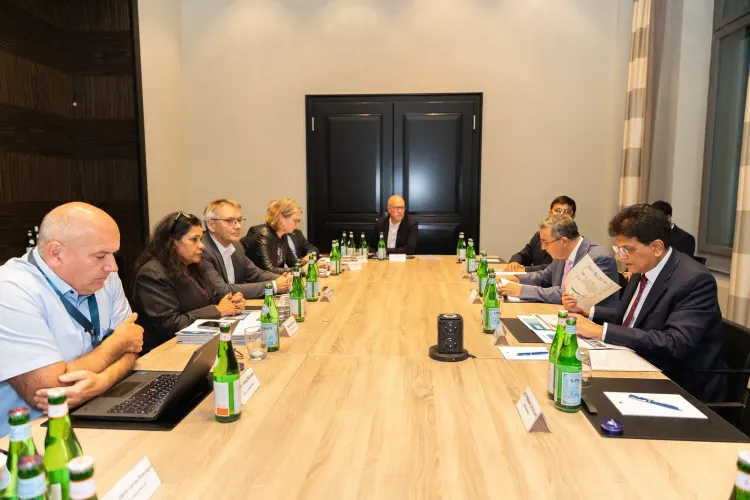
Commerce Minister Piyush Goyal met heads of select Fraunhofer Institutes on 24 October 2026, pitching India's skilled talent against German engineering precision and citing the India-EU FTA as the commercial framework to deepen joint R&D in advanced manufacturing, IT, and technology-enabled services.
Key Takeaways
Piyush Goyal engaged Fraunhofer Institute heads on 24 October 2026 to explore joint industrial technology partnerships.
He highlighted that Germany's precision technology combined with India's Skill India-backed talent pool can drive affordable innovation.
The minister called for collaboration spanning researchers, academia and industry — not just government agencies.
The India-EU Free Trade Agreement (BTIA), whose negotiations resumed in 2022 , was positioned as the commercial chassis for these ties.
Key sectors identified: advanced manufacturing, engineering, IT and telecom, and technology-enabled services .
Formal MoUs between Indian institutions and Fraunhofer, and the next FTA negotiating round, are the immediate milestones to watch.
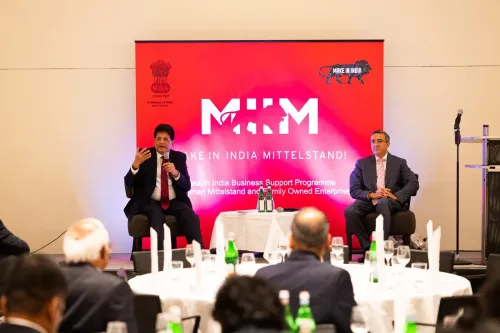
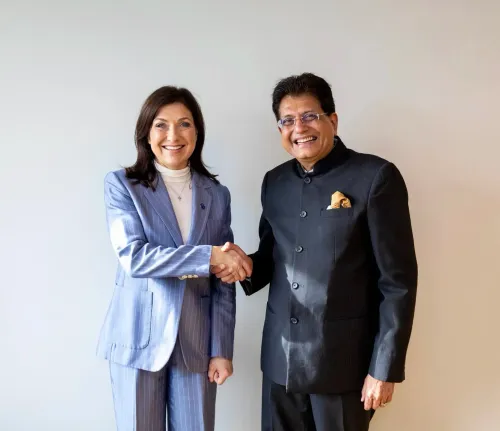
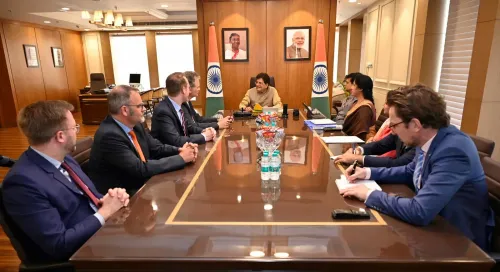
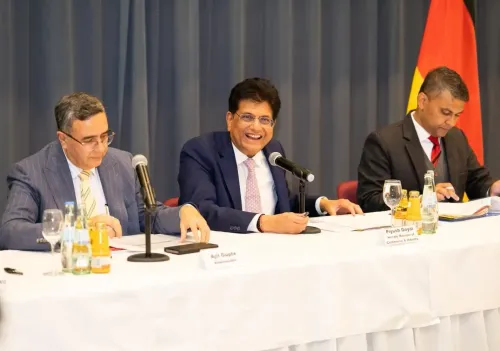
German engineering precision meeting Indian talent at an affordable scale — that is the proposition Union Commerce and Industry Minister Piyush Goyal put before the heads of selected Fraunhofer Institutes on Saturday, 24 October 2026, in a high-level engagement focused on new and emerging industrial technologies.
The Fraunhofer pitch: precision meets scale
The Fraunhofer Institutes, Germany's premier network of applied research organisations, represent decades of precision engineering and industrial technology development. Goyal's message to their leadership was direct: India's rapidly expanding skilled workforce, built on the back of the Skill India programme launched in 2015, can complement Fraunhofer's technological depth to produce innovation that is both cutting-edge and cost-competitive.
He underlined 'immense potential to strengthen collaboration among researchers, academia and industry' — a deliberate triangulation that goes beyond government-to-government diplomacy and pulls in universities and the private sector as co-architects of any future partnership.
India-EU FTA as the commercial chassis
The minister also pointed to the India-EU Free Trade Agreement — formally the Broad-Based Trade and Investment Agreement — as the framework that can convert these research synergies into real commercial flows. Negotiations on the pact, which first began in 2007 and were relaunched in 2022, have placed technology, services and investment chapters at their core.
Goyal specifically named advanced manufacturing, engineering, IT and telecom, and technology-enabled services as the sectors where India's and Europe's complementary strengths can be bundled together under a preferential trade regime. The argument is structural: the FTA removes friction precisely where the two sides already have the most to offer each other.
Why the Fraunhofer connection matters for Indian R&D
India has increasingly looked to European applied-research institutions to bridge the gap between laboratory innovation and shop-floor deployment — a gap that has historically slowed the country's manufacturing ambitions. The Fraunhofer Society runs more than 70 institutes across Germany, each embedded in an industrial cluster, making it one of the world's most effective models for translating research into product.
A formal R&D partnership with Fraunhofer could accelerate Indian capability in areas such as smart manufacturing, industrial automation and deep-tech engineering — sectors central to the government's 'Make in India' and production-linked incentive push. The next signpost to watch: whether this ministerial-level engagement crystallises into memoranda of understanding between Indian institutions and specific Fraunhofer institutes.
The India-EU FTA negotiating calendar and any formal MoU signings will now be the concrete measures against which this conversation is judged.
Point of View
And the India-EU BTIA's potential to give that advantage a preferential market. By invoking both in the same breath, the minister is effectively signalling that India sees the FTA not merely as a trade deal but as a research-and-manufacturing integration pact. The choice of Fraunhofer — an institution synonymous with applied, industry-embedded research — also reflects a deliberate move away from purely academic exchanges toward partnerships that have a direct production payoff. If MoUs follow this meeting, it would mark a qualitative upgrade in India-Germany technology diplomacy.
NationPress
24 Oct 2026
Frequently Asked Questions
What are the Fraunhofer Institutes and why does India want to partner with them?
The Fraunhofer Society runs over 70 applied research institutes across Germany, each closely linked to industrial clusters. India wants to partner with them to bridge the gap between laboratory research and factory-floor application, particularly in advanced manufacturing and deep-tech engineering.
What is the India-EU FTA and where do negotiations stand?
The India-EU Free Trade Agreement, formally called the Broad-Based Trade and Investment Agreement (BTIA), was first launched in 2007. Negotiations were paused for years and resumed in 2022, with technology, services and investment among the key chapters under discussion.
How does Skill India relate to the India-Germany technology partnership?
Skill India, launched in 2015, is the government's flagship programme to scale vocational and technical training. Goyal cited it as the foundation that makes India's talent pool an attractive complement to German precision technology for cost-effective innovation.
Which sectors did Piyush Goyal highlight for India-EU collaboration?
Goyal specifically named advanced manufacturing, engineering, IT and telecom, and technology-enabled services as sectors where India and the EU have complementary strengths that the FTA can help unlock.
What are the next steps after Goyal's Fraunhofer meeting?
The immediate milestones to watch are formal MoUs between Indian academic or research institutions and specific Fraunhofer institutes, and the next round of India-EU FTA negotiations where technology and services chapters are central.