Piyush Goyal meets Mastercard CEO on digital payments
Synopsis
Commerce Minister Piyush Goyal met Mastercard CEO Michael Miebach on 29 May 2026, discussing digital commerce, security, and payment innovation. The talks centred on India's DPI stack and its growing stature as a global fintech hub, signalling deeper public-private collaboration in the payments ecosystem.
Key Takeaways
Piyush Goyal met Mastercard CEO Michael Miebach on 29 May 2026 to discuss digital commerce and payment solutions.
Discussions covered India's Digital Public Infrastructure , including the Unified Payments Interface (UPI) , launched in 2016 .
Digital security and next-generation payment solutions were key agenda items alongside digital commerce.
India's Digital India programme, launched in 2015 , underpins the DPI ecosystem that global firms like Mastercard are engaging with.
The meeting reflects India's strategy of combining open public infrastructure with private-sector innovation to grow the digital economy.
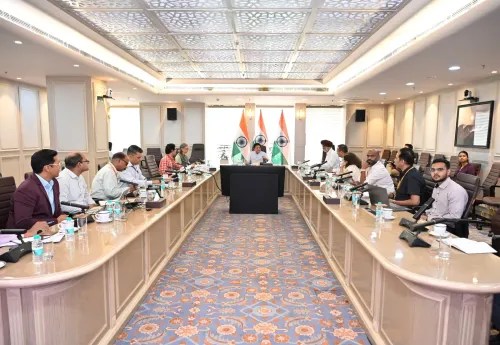
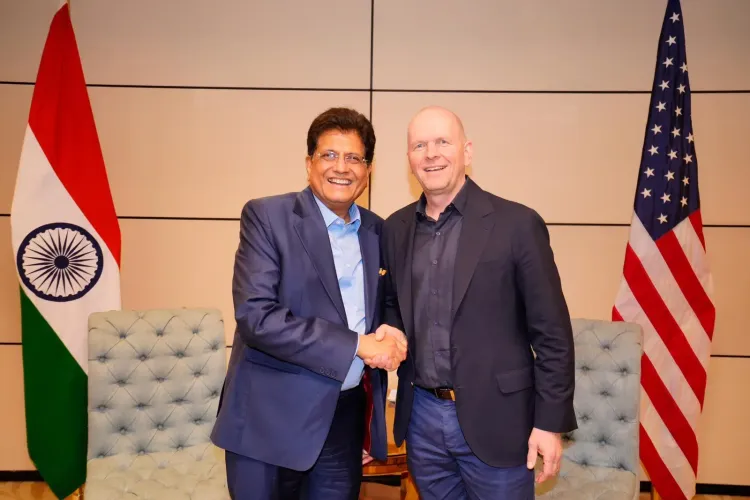
Union Commerce and Industry Minister Piyush Goyal met Mastercard CEO Michael Miebach on Friday, 29 May 2026, to discuss deepening collaboration in digital commerce, digital security, and next-generation payment solutions, with India's expanding digital economy at the centre of the conversation.
Context
The meeting between Minister Goyal and Miebach focused on India's emergence as a trusted global hub for fintech innovation. Discussions covered the country's robust Digital Public Infrastructure (DPI) stack, which underpins billions of real-time transactions monthly through platforms such as the Unified Payments Interface (UPI).
Goyal noted that conversations 'centred around India's growing digital economy, robust digital public infrastructure, and its emergence as a trusted global hub for fintech innovation,' reflecting the government's consistent push to attract global technology partners to co-build on public rails.
Policy Backdrop
India's Digital India programme, launched in 2015, laid the foundation for the country's DPI ecosystem — spanning broadband expansion, e-governance, and digital identity infrastructure anchored by Aadhaar. Since 2016, successive layers including UPI, the Account Aggregator framework, and consent-based data-sharing protocols have been progressively rolled out.
Mastercard, a global payments technology company that processes transactions across multiple countries, has integrated with India's public payment rails and expanded local product development in recent years. The company's CEO Michael Miebach, who has led the firm since 2021 with a focus on digital payments strategy, brings a strategic lens to partnerships involving public infrastructure.
India's DPI model — combining open public infrastructure with private-sector innovation — has drawn consistent interest from global fintech and payments firms seeking to layer security, analytics, and value-added services atop government-built systems.
Stakeholders and Impact
The dialogue holds significance for a broad range of stakeholders: fintech companies, digital payment users, and cross-border commerce participants all stand to benefit from tighter collaboration between India's public payment infrastructure and global players like Mastercard.
Digital security was a key theme in the discussions, reflecting growing policy attention to fraud prevention and data protection as India's transaction volumes scale. The inclusion of 'next-generation payment solutions' signals potential interest in areas such as tokenisation, real-time cross-border transfers, and emerging Central Bank Digital Currency (CBDC) pilots.
What's Next
The Reserve Bank of India's evolving data protection rules for payment systems and any new cross-border linkage announcements involving UPI or CBDC pilots will be closely watched as follow-through indicators from engagements such as this one.
As India positions itself as a global fintech hub, high-level ministerial meetings with the leadership of global payments giants signal that the government is actively seeking to translate its DPI advantage into durable international partnerships — with concrete collaboration frameworks likely to follow.
Point of View
Deepening ties with New Delhi is strategically important given the scale of India's transaction volumes and the regulatory environment governing foreign payment networks. The emphasis on 'digital security' alongside commerce hints at a policy conversation that extends beyond growth metrics to governance and data-protection frameworks. Taken together, such engagements build the scaffolding for cross-border payment linkages and potential CBDC interoperability arrangements that could reshape how India connects to global financial flows.
NationPress
12 Oct 2026
Frequently Asked Questions
Why did Piyush Goyal meet Mastercard CEO Michael Miebach?
Commerce Minister Piyush Goyal met Mastercard CEO Michael Miebach to discuss deepening collaboration in digital commerce, digital security, and next-generation payment solutions, with India's digital economy and public infrastructure as the central themes.
What is India's Digital Public Infrastructure (DPI)?
India's DPI is a layered ecosystem of government-built digital systems including Aadhaar-based identity, the Unified Payments Interface (UPI) for real-time payments, and the Account Aggregator framework for consent-based data sharing, progressively built since 2015.
What is UPI and how big is it?
UPI, or Unified Payments Interface, is India's real-time inter-bank payment system launched by the National Payments Corporation of India (NPCI) in 2016. It has scaled to billions of monthly transactions and is a cornerstone of India's fintech ecosystem.
What role does Mastercard play in India's payments ecosystem?
Mastercard is a global payments technology company that has integrated with India's public payment rails and expanded local product development, partnering on digital infrastructure, security, and analytics solutions built atop government systems.
What could come out of the Goyal-Mastercard talks?
Potential outcomes include new frameworks for digital security collaboration, next-generation payment product development, and possible linkages involving cross-border UPI transfers or Central Bank Digital Currency (CBDC) pilot programmes, subject to RBI regulatory guidance.