Goyal: Modi govt's tenure defined by structural reforms
Synopsis
Commerce Minister Piyush Goyal on 8 June 2026 declared the Modi government's tenure 'one of structural reforms,' pointing to landmark overhauls including GST, the Insolvency and Bankruptcy Code, Make in India, and PLI schemes that have reshaped India's economic architecture since 2014.
Key Takeaways
Piyush Goyal , Union Commerce and Industry Minister and Rajya Sabha Leader of the House, on 8 June 2026 described the Modi government's tenure as 'one of structural reforms.' The Goods and Services Tax (GST) , launched 1 July 2017 , replaced multiple indirect levies with a unified national tax system.
The Insolvency and Bankruptcy Code (IBC) , enacted in May 2016 , introduced time-bound insolvency resolution and strengthened creditor rights.
Production-Linked Incentive (PLI) schemes covering 14 sectors have been operational since 2020 to boost domestic manufacturing.
Four labour codes consolidating 29 central laws were passed in 2019-2020 but await full state-level implementation.
Upcoming bilateral trade deals with the UK , EU , and EAEU will be a key test of the reform framework's durability.
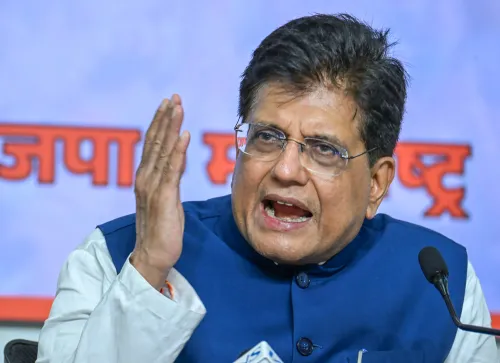
Union Commerce and Industry Minister Piyush Goyal on Monday, 8 June 2026 took to X to assert that the Modi government's tenure has been characterised by structural reforms, framing the administration's economic record as transformative in nature.
Context
Minister Goyal's post — 'Modi government's tenure has been one of structural reforms' — is a pointed characterisation of the Narendra Modi-led administration's legislative and regulatory record since May 2014. As Leader of the House in the Rajya Sabha and a senior BJP leader, Goyal frequently serves as the government's principal voice on economic governance and trade policy. The statement comes as India's economic policy community continues to assess the cumulative impact of more than a decade of legislative overhauls.
The remark is broad in scope but clearly anchored in a series of landmark policy actions that reshaped India's economic architecture — from taxation and insolvency law to manufacturing incentives and labour regulation.
Policy Backdrop
The reform sequence the minister alludes to spans multiple domains. The Goods and Services Tax (GST), rolled out on 1 July 2017 after a constitutional amendment and extensive negotiations between the Centre and states, replaced a fragmented web of indirect levies with a unified, destination-based system — one of the most consequential tax overhauls in independent India's history.
The Insolvency and Bankruptcy Code (IBC), enacted in May 2016, introduced time-bound resolution processes for stressed assets and significantly strengthened creditor rights, addressing a long-standing weakness in India's credit ecosystem. Separately, Make in India, launched in September 2014, sought to raise domestic manufacturing's share of GDP and attract foreign direct investment across sectors.
More recently, Production-Linked Incentive (PLI) schemes announced from 2020 onward across 14 sectors have aimed to deepen domestic value chains and position India within shifting global supply networks. Parliament also passed four labour codes in 2019-2020, consolidating 29 central laws, though full state-level implementation rules are still pending in several states.
Stakeholders and Impact
The business community, the MSME sector, and foreign investors have been the primary constituencies cited by the government in justifying these changes. Proponents argue that the combined effect of GST, IBC, and PLI schemes has formalised large segments of the economy, improved contract enforcement, and made India a more attractive destination for global manufacturers reconfiguring supply chains away from single-country dependence.
Critics, however, have pointed to the uneven pace of implementation — particularly the labour codes — and to disruptions in the MSME sector during the transition to GST. The government's position, as articulated repeatedly by ministers including Goyal, is that short-term adjustment costs are outweighed by the structural gains in competitiveness and fiscal transparency.
What's Next
Attention in policy circles is now on the next Union Budget session and whether fresh implementation rules for the four labour codes will be notified. Simultaneously, India is engaged in active negotiations on bilateral trade agreements with the United Kingdom, the European Union, and the EAEU — deals that, if concluded, would test the durability of the structural reforms Goyal references. The minister's statement may also be read as a signal that the government intends to keep its reform record at the centre of its political and economic messaging in the months ahead.
Point of View
The BJP is framing the government's decade-plus record as coherent and transformative rather than episodic. The timing — mid-2026, with budget deliberations approaching and trade negotiations at a sensitive juncture — suggests an effort to consolidate the economic narrative ahead of potential policy announcements. The reference to reforms also implicitly responds to opposition critiques about implementation gaps, particularly on the labour codes, by elevating the legislative achievement over the rollout pace. It fits a broader pattern in which senior ministers use social media to set the interpretive frame for economic policy debates before they crystallise in parliamentary or public discourse.
NationPress
23 Oct 2026
Frequently Asked Questions
What structural reforms has the Modi government introduced?
The Modi government's major structural reforms include the Goods and Services Tax (GST) in 2017, the Insolvency and Bankruptcy Code (IBC) in 2016, the Make in India initiative from 2014, Production-Linked Incentive (PLI) schemes across 14 sectors from 2020, and four labour codes consolidating 29 central laws passed in 2019-2020.
What did Piyush Goyal say about the Modi government on 8 June 2026?
Commerce and Industry Minister Piyush Goyal posted on X on 8 June 2026 that 'Modi government's tenure has been one of structural reforms,' highlighting the administration's legislative and regulatory record since 2014.
What is the Insolvency and Bankruptcy Code and when was it passed?
The Insolvency and Bankruptcy Code (IBC) was enacted in May 2016 to establish time-bound resolution processes for stressed assets and strengthen creditor rights, addressing a key weakness in India's credit ecosystem.
What are India's PLI schemes and which sectors do they cover?
Production-Linked Incentive (PLI) schemes, announced from 2020 onward, provide financial incentives to manufacturers across 14 sectors to boost domestic production and integrate India into global supply chains.
Have India's four labour codes been implemented?
Parliament passed four labour codes consolidating 29 central laws in 2019-2020, but as of mid-2026 full implementation awaits notification of state-level rules in several states.