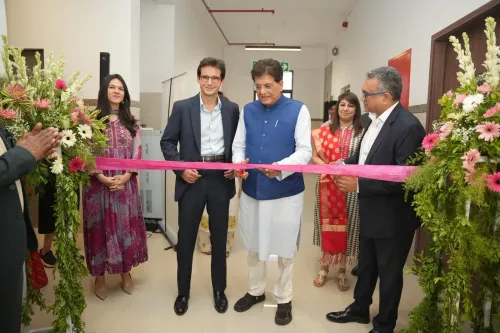
Goyal inaugurates first HUL facility centre in North Mumbai
Synopsis
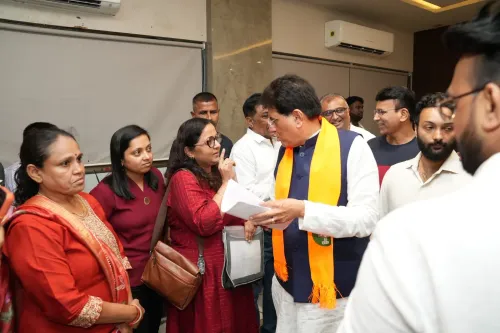
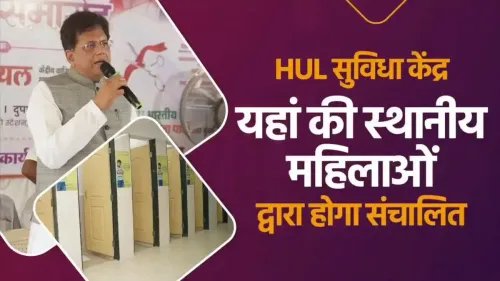
Union Minister Piyush Goyal inaugurated the first HUL Suvidha Kendra in North Mumbai on June 7, 2026, with BJP leader Manisha Tai. The women-operated centre provides sanitation, safe drinking water and hygiene services under the Swachh Bharat Mission's public-private partnership model.
Key Takeaways
Union Commerce and Industry Minister Piyush Goyal inaugurated the first HUL Suvidha Kendra in North Mumbai on June 7, 2026 .
BJP leader Manisha Tai co-inaugurated the facility, underscoring local political backing for the project.
The centre is operated and maintained by local women , providing them with livelihood opportunities alongside sanitation services.
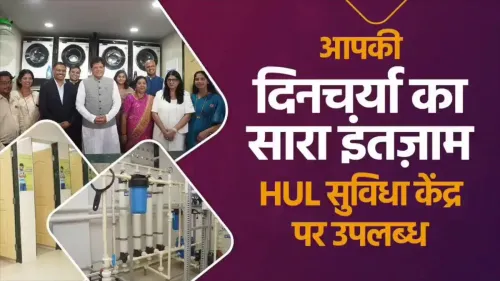
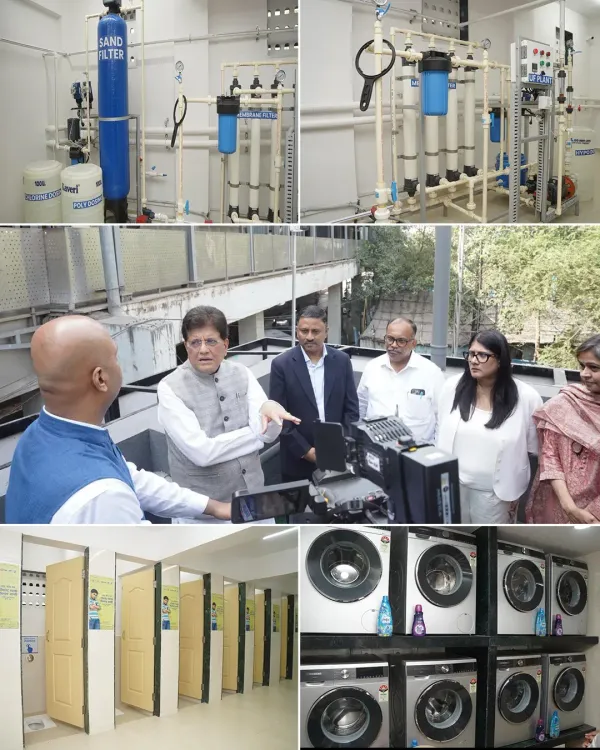
The facility offers toilet access, safe drinking water and hygiene services , described by Goyal as an izzat ghar (house of dignity).
The project is part of the Swachh Bharat Mission-Urban public-private partnership model, with Hindustan Unilever Limited (HUL) deploying CSR funds.
The 'first' designation signals a planned rollout of similar centres across other Mumbai wards.
Union Commerce and Industry Minister Piyush Goyal on Sunday, June 7, 2026, inaugurated the first HUL Suvidha Kendra in North Mumbai alongside BJP leader Manisha Tai, marking what he described as a new chapter in sanitation, dignity and women's empowerment for the area.
Posting on X, Goyal wrote: 'Uttar Mumbai mein Manisha BJP Tai ke saath kiye pehle HUL Suvidha Kendra ke udghatan se swachhata, samman aur sashaktikaran ke naye adhyay ki shuruaat hui' — 'The inauguration of the first HUL Suvidha Kendra in North Mumbai, done alongside Manisha Tai, has begun a new chapter of cleanliness, dignity and empowerment.' He added that these centres, run by local women, are not merely toilets but 'izzat ghar' — houses of dignity — that will ensure sanitation, safe drinking water and improved quality of life for residents.
Context
The HUL Suvidha Kendra is a community facility block combining toilet access, safe drinking water and hygiene services. Hindustan Unilever Limited (HUL), one of India's largest fast-moving consumer goods companies, has channelled corporate social responsibility funds into such infrastructure projects across urban India. The distinguishing feature of this model is that the centres are operated and maintained by local women, creating both a livelihood opportunity and a community ownership stake in upkeep.
Policy Backdrop
The inauguration sits squarely within the framework of the Swachh Bharat Mission, launched in 2014, which set out to eliminate open defecation and upgrade sanitation infrastructure through community participation across urban and rural India. The urban component of the mission has actively encouraged public-private partnerships in which companies deploy CSR funds to build and hand over community toilet and water blocks to local bodies or self-help groups. Women-led operation and maintenance of such facilities has been a promoted model since the mid-2010s, recognised for improving cleanliness standards while generating income for women from low-income neighbourhoods.
North Mumbai is a densely populated urban constituency where access to clean, safe public sanitation facilities remains a civic priority. The involvement of BJP leader Manisha Tai, associated with local welfare and women's initiatives in the area, signals a political commitment to ground-level delivery alongside the corporate partnership.
Stakeholders and Impact
The primary beneficiaries are urban residents of North Mumbai, particularly those in localities with limited access to private or municipal sanitation. Women from the local community stand to gain both as operators — earning a livelihood through running the centre — and as users who gain access to safe, dignified sanitation. The model also reduces the burden on Brihanmumbai Municipal Corporation (BMC) infrastructure by adding a privately funded, community-maintained facility to the public sanitation network.
HUL's participation reflects a broader corporate trend of aligning CSR spending with government flagship schemes, allowing companies to demonstrate measurable social impact. For Goyal, the inauguration reinforces the government's narrative of combining private capital with public mission to deliver last-mile services.
What's Next
The framing of this as the 'first' HUL Suvidha Kendra in North Mumbai suggests a planned rollout, with potential replication across other Mumbai wards. Integration with BMC maintenance contracts and monitoring frameworks could determine the long-term sustainability of the model. The success of women-led operations here may also inform similar deployments in other metropolitan areas where Swachh Bharat Mission-Urban targets remain active.
Point of View
Allowing ministers to claim visible welfare delivery without direct public expenditure. Goyal's personal presence at a ward-level facility in North Mumbai — a politically significant constituency — suggests the party is keen to maintain grassroots visibility ahead of future electoral cycles. The women-as-operators model is a well-tested mechanism that simultaneously addresses livelihood and sanitation metrics, giving the initiative cross-portfolio appeal. Whether this scales meaningfully will depend on BMC integration and sustained HUL commitment beyond the inauguration optics.
NationPress
23 Oct 2026
Frequently Asked Questions
What is the HUL Suvidha Kendra inaugurated in North Mumbai?
The HUL Suvidha Kendra is a community facility block providing toilet access, safe drinking water and hygiene services, funded by Hindustan Unilever Limited through its CSR programme and operated by local women in North Mumbai.
Who inaugurated the HUL Suvidha Kendra in Mumbai?
Union Commerce and Industry Minister Piyush Goyal inaugurated the centre on June 7, 2026, alongside BJP leader Manisha Tai in North Mumbai.
What does 'izzat ghar' mean in the context of this facility?
'Izzat ghar' literally means 'house of dignity' in Hindi. Goyal used the term to emphasise that the centre is more than a public toilet — it is a space that provides safe sanitation and upholds the dignity of residents.
How does the HUL Suvidha Kendra connect to the Swachh Bharat Mission?
The centre is part of the Swachh Bharat Mission-Urban's public-private partnership model, where companies like HUL deploy CSR funds to build community sanitation infrastructure that supplements municipal facilities.
Will more HUL Suvidha Kendras be opened in Mumbai?
The inauguration was described as the 'first' such centre in North Mumbai, indicating a planned expansion. Replication across other Mumbai wards and integration with Brihanmumbai Municipal Corporation contracts is anticipated.