Goyal highlights HUL Suvidha Kendra run by local women
Synopsis
Commerce Minister Piyush Goyal has highlighted an HUL Suvidha Kendra to be run by local women, spotlighting a community-owned enterprise model rooted in HUL's two-decade Project Shakti legacy and aligned with India's push for women-led rural economic participation.
Key Takeaways
Commerce Minister Piyush Goyal posted on 7 June 2026 about an HUL Suvidha Kendra that will be operated by local women.
Hindustan Unilever Limited has run women micro-entrepreneur programmes since launching Project Shakti in 2001 .
Suvidha Kendras serve as community service and distribution points, creating livelihoods for women through self-help group networks.
The initiative aligns with government-backed frameworks such as DAY-NRLM that promote women's economic participation.
Minister Goyal's endorsement signals government interest in public-private models that embed women as operators, not just beneficiaries.
Formal linkage between HUL centres and central or state livelihood schemes could significantly scale the model across rural India.
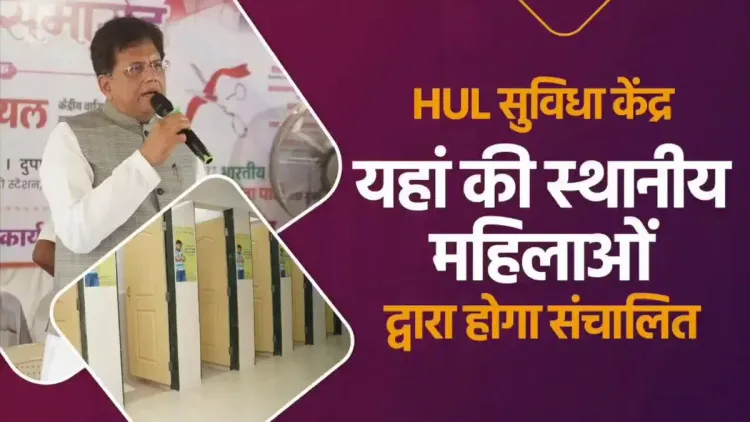
Union Commerce and Industry Minister Piyush Goyal on Sunday, 7 June 2026 drew attention to a Hindustan Unilever Limited (HUL) Suvidha Kendra that will be operated by local women from the community, highlighting the initiative as a model of women-led enterprise at the grassroots level.
Context
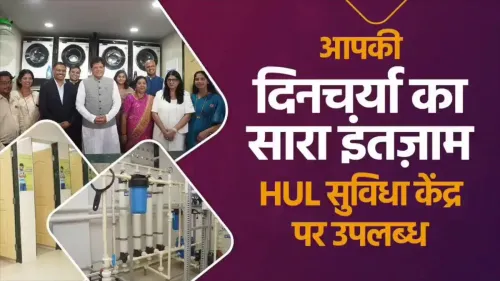
In his post on X, Minister Goyal noted — 'HUL Suvidha Kendra yahan ki sthaniya mahilaon dwara hoga sanchaalit' ('The HUL Suvidha Kendra here will be operated by local women') — underscoring the community-ownership dimension of the centre. The post was accompanied by a video, suggesting an on-ground visit or an event where the initiative was showcased.
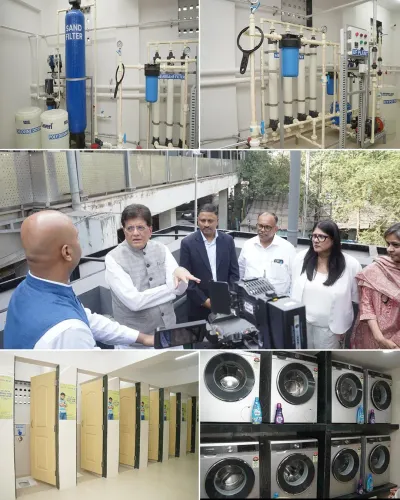
Suvidha Kendras are service and distribution points set up under HUL's rural outreach model, providing households access to consumer goods and hygiene products while simultaneously creating livelihood opportunities for women entrepreneurs.
Policy Backdrop
Hindustan Unilever Limited has been running women-entrepreneurship programmes in rural India since it launched Project Shakti in 2001, training rural women as micro-entrepreneurs who distribute its products through self-help groups (SHGs). The Suvidha Kendra model builds on this two-decade-old foundation by embedding service centres directly within communities.
Successive Indian governments have encouraged public-private partnerships to expand women's economic participation, particularly through SHG models linked to the Deendayal Antyodaya Yojana – National Rural Livelihoods Mission (DAY-NRLM). Commerce and industry ministries have periodically spotlighted such private initiatives as examples of inclusive growth aligned with domestic market and export objectives.
Stakeholders and Impact
The primary beneficiaries are rural and semi-urban women, especially SHG members, who gain a structured income stream and entrepreneurial identity through operating these centres. Consumers in underserved localities benefit from improved access to daily-use products and services.
For HUL, the Suvidha Kendra network deepens last-mile distribution while generating measurable social impact data that supports its sustainability commitments. Minister Goyal's public endorsement signals that the government views such corporate-community partnerships as complementary to state-run livelihood schemes.
What's Next
Observers will watch for any formal announcement linking HUL's Suvidha Kendra network with central schemes such as DAY-NRLM or state-level women entrepreneurship programmes, which could significantly scale the model. Should the Commerce Ministry formalise a framework recognising such centres within its inclusive-trade agenda, it could encourage other FMCG companies to replicate the structure across India's rural hinterland.
The minister's spotlight on women-operated enterprise centres reinforces a broader policy direction: positioning women-led micro-businesses not merely as welfare recipients but as active drivers of India's consumption economy.
Point of View
Not peripheral CSR. By amplifying HUL's Suvidha Kendra model, he implicitly nudges other large FMCG players to adopt similar structures. This fits a broader pattern of the BJP government leveraging ministerial social-media reach to validate private-sector welfare initiatives without direct fiscal outlay. The key question is whether this remains a rhetorical endorsement or translates into a formal policy framework that ties such centres to national livelihood missions.
NationPress
22 Oct 2026
Frequently Asked Questions
What is an HUL Suvidha Kendra?
An HUL Suvidha Kendra is a community service and distribution point set up by Hindustan Unilever Limited that provides households access to consumer and hygiene products while creating livelihood opportunities for local women entrepreneurs.
What did Piyush Goyal say about the HUL Suvidha Kendra?
Minister Piyush Goyal posted on X on 7 June 2026 highlighting that the HUL Suvidha Kendra will be operated by local women from the community, framing it as a model of women-led grassroots enterprise.
What is HUL Project Shakti?
Project Shakti is a programme launched by Hindustan Unilever Limited in 2001 that trains rural women as micro-entrepreneurs to distribute its products through self-help groups, forming the foundation for initiatives like the Suvidha Kendra network.
How does the HUL Suvidha Kendra relate to government schemes?
The model aligns with government-backed frameworks such as DAY-NRLM, which promotes women's economic participation through self-help groups, and observers are watching for any formal linkage between HUL centres and central or state livelihood programmes.
Why is the Commerce Ministry highlighting women-run enterprise centres?
Successive Indian governments and the Commerce Ministry have encouraged public-private partnerships for women's economic inclusion, viewing women-led micro-businesses as drivers of India's consumption economy and inclusive growth.