Gujarat CM Bhupendra Patel at WCEF 2026: Growth and ecology must go together
Synopsis
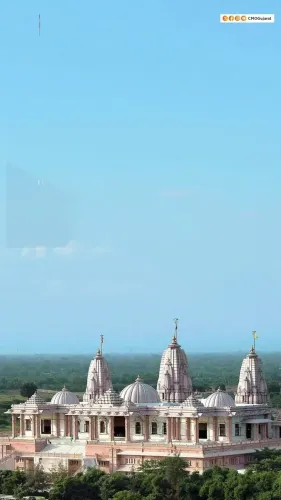
At the World Circular Economy Forum 2026 in Gandhinagar, Gujarat CM Bhupendra Patel cited the Somnath Temple — where devotee offerings are converted into Som-Ganga Jal, manure, and paver blocks — as a live model of circular principles, arguing that India's traditional reuse ethos can now be scaled with modern policy and technology.
Key Takeaways
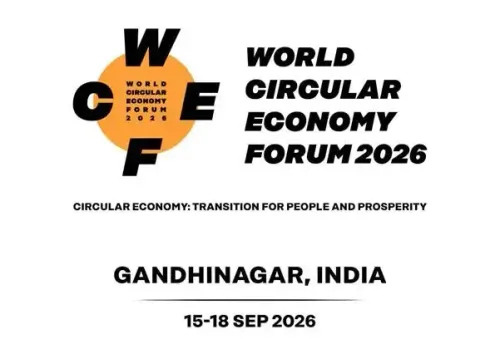
Gujarat CM Bhupendra Patel addressed the World Circular Economy Forum (WCEF) 2026 in Gandhinagar on 15 September 2026 .
He argued that development and environmental protection are complementary, not competing, priorities.
The Somnath Temple was cited as a working circular economy model — converting offerings into Som-Ganga Jal , manure, and paver blocks made by Sakhi Mandal women.
CM Patel linked the 'Waste to Wealth' approach to rural livelihoods and energy security.
He called on the four-day forum to produce practical, cross-country solutions rooted in the principle of 'Vasudhaiva Kutumbakam' .
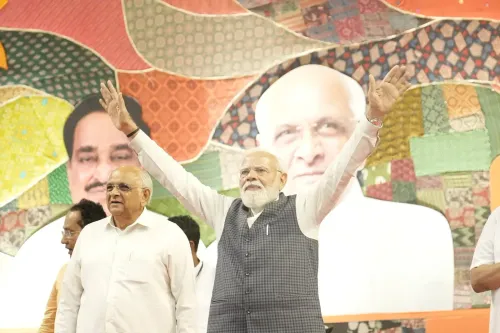
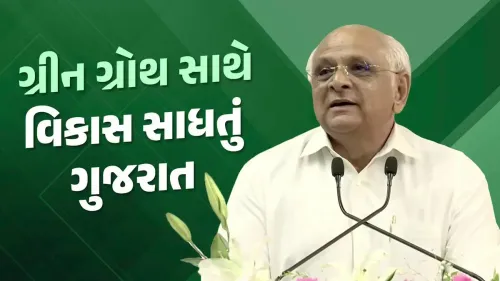
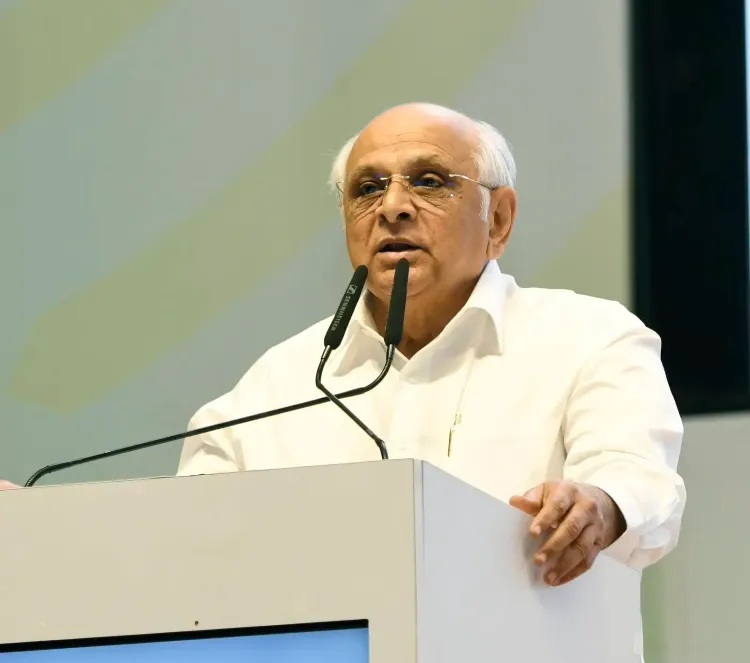
Gujarat Chief Minister Bhupendra Patel on Tuesday, 15 September 2026, called for industrial growth that does not come at the cost of ecological resources, asserting that development and environmental protection are complementary — not competing — priorities. He made these remarks while addressing the World Circular Economy Forum (WCEF) 2026 in Gandhinagar.
Key Message at WCEF 2026
Speaking to an international audience at the four-day forum, CM Patel framed the core challenge as achieving economic expansion while utilising natural resources efficiently and responsibly. 'Development and environment are not contradictory. We need growth as well as greenery, industry as well as ecology, prosperity as well as sustainability,' he said.
He highlighted Gujarat's track record in maintaining this balance through efforts spanning industrial development, renewable energy, waste and water management, and resource efficiency. The forum, he noted, offered the state a platform to share its experience globally while drawing lessons from international best practices.
Somnath Temple as a Circular Economy Model
In a notable illustration, CM Patel cited the Somnath Temple as a working example of circular economy principles in an institutional and religious context. He explained that offerings made by devotees — including flowers, bel patra, milk, water, panchamrit, and clothes — are processed rather than simply discarded.
The sacred liquid produced during the temple's abhishek ritual is scientifically purified and made available as 'Som-Ganga Jal', while organic waste including flowers, bel patra, and food waste is converted into manure. 'Plastic waste is used to make paver blocks, with women from local Sakhi Mandals trained and involved in the activity,' he noted.
Waste to Wealth and Rural Livelihoods
The Chief Minister argued that such practices demonstrate how converting waste into resources carries both economic and environmental dividends. He emphasised that the 'Waste to Wealth' approach could support rural livelihoods and inject greater momentum into the rural economy.
He further linked the circular economy to India's traditional ethos of reuse and recycling, arguing that these principles — long embedded in everyday life — could now be amplified through modern technology, policy frameworks, and industrial systems.
Call for Practical Global Solutions
CM Patel urged the forum to move beyond dialogue and generate actionable solutions applicable across nations, expressing confidence that the deliberations would contribute to global welfare. He invoked the principle of 'Vasudhaiva Kutumbakam' — the world as one family — as the philosophical foundation for international cooperation on circularity. He also noted that the circular economy could play a significant role in strengthening energy security as countries navigate shifting global conditions.
Point of View
But the harder test is whether Gujarat's industrial corridor — one of India's most carbon-intensive — is actually decarbonising at a pace consistent with the messaging. The 'Waste to Wealth' framing is sound in principle, yet state-level data on waste diversion rates and renewable energy transition remain patchy. International forums like WCEF are valuable for norm-setting, but the gap between platform pledges and ground-level enforcement in rapidly industrialising states like Gujarat deserves scrutiny that the summit's celebratory tone rarely provides.
NationPress
15 Sept 2026
Frequently Asked Questions
What is the World Circular Economy Forum 2026?
The World Circular Economy Forum (WCEF) 2026 is a four-day international event held in Gandhinagar, Gujarat, focused on accelerating the global shift from a linear to a circular economy. It brings together governments, industry, and civil society to share practices and develop actionable solutions on resource efficiency and sustainability.
What did Gujarat CM Bhupendra Patel say at WCEF 2026?
CM Patel stressed that industrial growth and ecological protection are complementary, not contradictory, and urged the forum to generate practical solutions beyond discussion. He highlighted Gujarat's initiatives in renewable energy, waste management, and resource efficiency, and cited the Somnath Temple as a model of circular economy principles in practice.
How is the Somnath Temple linked to the circular economy?
CM Patel explained that devotee offerings at the Somnath Temple — flowers, bel patra, milk, clothes, and food — are processed rather than discarded. The sacred liquid from the abhishek ritual is purified into 'Som-Ganga Jal', organic waste is converted into manure, and plastic waste is used to make paver blocks by women from local Sakhi Mandals.
What is the 'Waste to Wealth' approach mentioned by CM Patel?
The 'Waste to Wealth' approach refers to converting discarded materials into usable resources — economically and environmentally. CM Patel argued this model can support rural livelihoods, strengthen energy security, and give greater momentum to the rural economy when combined with modern technology and policy systems.
Why did CM Patel invoke 'Vasudhaiva Kutumbakam' at the forum?
CM Patel used the Sanskrit principle 'Vasudhaiva Kutumbakam' — meaning the world is one family — to call for deeper international cooperation on circular economy practices. He expressed confidence that WCEF 2026's deliberations would contribute to global welfare through shared, practical solutions.