Gujarat drought: 4 districts declared affected, opposition slams ₹8,500/hectare aid
Synopsis
Gujarat has declared four districts drought-hit, but the ₹8,500-per-hectare relief has ignited a cross-party fight: Congress says it covers barely a bag of fertiliser, AAP demands ₹50,000 citing Punjab's benchmark, and the BJP insists fodder distribution started months ago. The gap between what the state has offered and what opposition parties are demanding is stark — and the rabi season is weeks away.
Key Takeaways
CM Bhupendra Patel declared Devbhumi Dwarka, Porbandar, Jamnagar , and Kutch drought-affected on 26 October 2026 .
State relief package offers ₹8,500 per hectare (capped at 2 hectares ), subsidised fodder, livestock support, and 150 person-days of employment; effective 1 November 2026 .
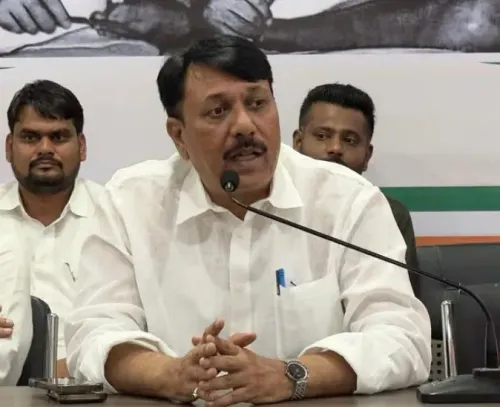
Congress president Amit Chavda called ₹8,500/hectare inadequate, noting it equals just ₹85 per guntha — less than half the cost of one DAP fertiliser bag.
AAP's Isudan Gadhvi demanded ₹50,000 per hectare (citing Punjab) or at least ₹44,000 , and sought the declaration extended to parts of Banaskantha .
1.21 crore kg of fodder distributed at ₹2/kg ; water storage in 206 major dams at 66% , reserved for drinking until 30 June 2027 .
Irrigation planned for command areas of 76 dams in the upcoming rabi season .
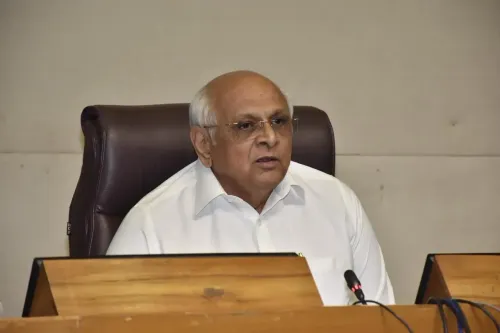
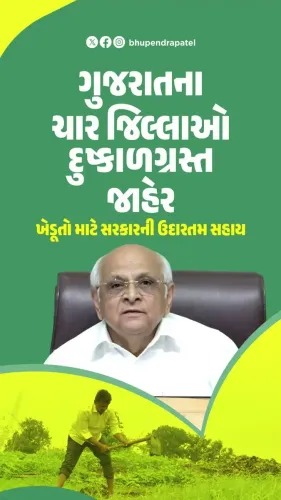
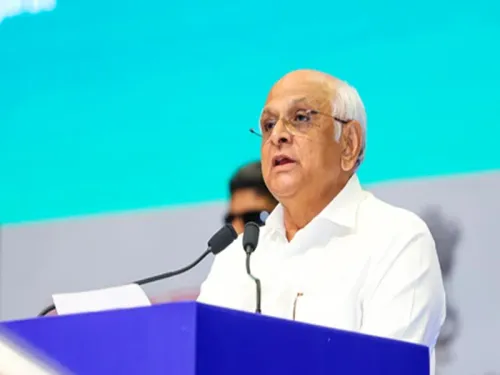
Gujarat Chief Minister Bhupendra Patel on Monday, 26 October 2026, declared four districts — Devbhumi Dwarka, Porbandar, Jamnagar, and Kutch — drought-affected following deficient and delayed rainfall, triggering a sharp political dispute over the adequacy of relief measures. The announcement has drawn criticism from both the Indian National Congress (Congress) and the Aam Aadmi Party (AAP), while the ruling Bharatiya Janata Party (BJP)'s Kisan Morcha has defended the government's response.
What the Relief Package Includes
The state government has announced crop assistance of ₹8,500 per hectare, capped at two hectares per farmer. The package also covers subsidised fodder, livestock support, and 150 person-days of employment in affected areas. All measures are set to take effect from 1 November 2026.
On the fodder front, the government stated that 1.21 crore kg of fodder has already been distributed at ₹2 per kg, with 3 crore kg currently available and additional procurement under way. Livestock camp assistance will be provided for two months, after which the state will bear the cost of continuing support.
Congress Demands Revised Compensation Norms
State Congress president Amit Chavda said the drought declaration came only after sustained farmer protests and repeated interventions by the Opposition in the state Assembly. He questioned the quantum of aid, arguing: 'Assistance of Rs 8,500 per hectare amounted to only Rs 85 per guntha, while a bag of diammonium phosphate (DAP) fertiliser cost around Rs 2,000.'
Chavda urged the government to assess actual crop losses, revise the prescribed drought relief norms, and ensure adequate compensation. He also called for immediate fodder and drinking water supplies for livestock, sufficient water for people, and employment-generating works in drought-hit areas.
AAP Demands ₹50,000 Per Hectare, Cites Punjab Benchmark
AAP state president Isudan Gadhvi described the drought declaration as a victory for farmers and their sustained agitation, including an indefinite protest, while crediting farmers, labourers, and agricultural workers rather than his party. However, he sharply criticised the compensation figure.
Gadhvi argued: 'The government had provided Rs 22,000 per hectare, subject to a two-hectare limit, under relief norms during unseasonal rain, whereas the drought package offered only Rs 8,500 per hectare.' He demanded assistance of ₹50,000 per hectare, citing the Punjab government's approach, or at least ₹44,000 in line with what he described as Gujarat's own norms. He also questioned the provision of ₹80 per animal per day for two months, alleging that workers and sharecroppers had been neglected, and called for the drought declaration to be extended to other affected areas, including parts of Banaskantha.
BJP Kisan Morcha Backs Government's Approach
The BJP's Kisan Morcha welcomed the relief measures. Its state president, Hiren Hirpara, noted that fodder distribution had begun across the state in June–July, ahead of the formal drought declaration, in anticipation of delayed rainfall. The Kisan Morcha described the package — covering crop assistance, fodder, livestock camps, employment, and irrigation — as reflecting the government's commitment to farmers and livestock breeders.
Water Reserves and Irrigation Outlook
Water storage across the state's 206 major dams currently stands at 66 per cent, and drinking water has been reserved until 30 June 2027. The government has planned irrigation supply to the command areas of 76 dams for the upcoming rabi season, following supply to 44 dams during the kharif season — a signal that agriculture support will extend beyond the immediate relief window.
The political dispute over the relief quantum is likely to intensify as farmers assess actual crop losses ahead of the rabi sowing cycle.
Point of View
500-per-hectare figure sits at the lower end of state drought relief norms and compares poorly with the ₹22,000 the same government offered under unseasonal-rain relief — an inconsistency the opposition has correctly flagged. Gujarat is a BJP flagship state, which makes the political optics of farmer distress ahead of a rabi cycle particularly sensitive. The real question is not whether a drought was declared — it was overdue — but whether the relief architecture is calibrated to actual input costs, which have risen sharply since the norms were last revised. AAP's Punjab benchmark of ₹50,000 may be aspirational, but the internal contradiction within Gujarat's own relief tiers is harder to dismiss.
NationPress
27 Oct 2026
Frequently Asked Questions
Which Gujarat districts have been declared drought-affected in 2026?
The four districts declared drought-affected are Devbhumi Dwarka, Porbandar, Jamnagar, and Kutch. Chief Minister Bhupendra Patel made the announcement on 26 October 2026, citing deficient and delayed rainfall across these areas.
What relief has the Gujarat government announced for drought-affected farmers?
The government has announced crop assistance of ₹8,500 per hectare, capped at two hectares per farmer, along with subsidised fodder, livestock support at ₹80 per animal per day for two months, and 150 person-days of employment. The measures take effect from 1 November 2026.
Why are Congress and AAP criticising the drought relief package?
Congress argues that ₹8,500 per hectare works out to just ₹85 per guntha — less than the cost of a single bag of DAP fertiliser — and has demanded compensation based on actual crop losses. AAP has demanded ₹50,000 per hectare citing Punjab's norms, pointing out that Gujarat itself offered ₹22,000 per hectare under unseasonal-rain relief.
How does Gujarat's current drought relief compare with its own past norms?
AAP's Isudan Gadhvi noted that Gujarat provided ₹22,000 per hectare under unseasonal-rain relief norms, compared to the ₹8,500 per hectare now being offered for the drought package — a gap of ₹13,500 per hectare on the government's own benchmark.
What is the state's water and irrigation position ahead of the rabi season?
Water storage in Gujarat's 206 major dams stands at 66 per cent, with drinking water reserved until 30 June 2027. The state has planned irrigation supply to command areas of 76 dams for the rabi season, up from 44 dams covered during the kharif season.