Gujarat AAP demands ₹50,000/hectare drought relief, farm loan waiver for 4 districts
Synopsis
Gujarat's AAP chief Isudan Gadhvi has called the state's ₹8,500-per-hectare drought relief a fraction of what farmers actually spend — and is pointing to Punjab's ₹50,000-per-hectare benchmark to shame the BJP government into a bigger package for Devbhoomi Dwarka, Porbandar, Jamnagar, and Kutch.
Key Takeaways
AAP Gujarat President Isudan Gadhvi on 28 October 2026 demanded ₹50,000 per hectare drought compensation and a full farm loan waiver for four affected districts.
The state government announced ₹8,500 per hectare , capped at two hectares, giving a maximum of ₹17,000 per farmer — the package kicks in from 1 November .
Chief Minister Bhupendra Patel declared Devbhoomi Dwarka , Porbandar , Jamnagar , and Kutch drought-affected after deficient monsoon rainfall.
Gadhvi cited Punjab's ₹50,000/hectare standard and noted Gujarat itself paid ₹22,000/hectare for unseasonal rain damage last year.
The government says 1.21 crore kg of fodder has been distributed and drinking water reserves are secured until 30 June 2027 .
Livestock at designated camps will receive ₹80 per animal per day for two months under the current package.
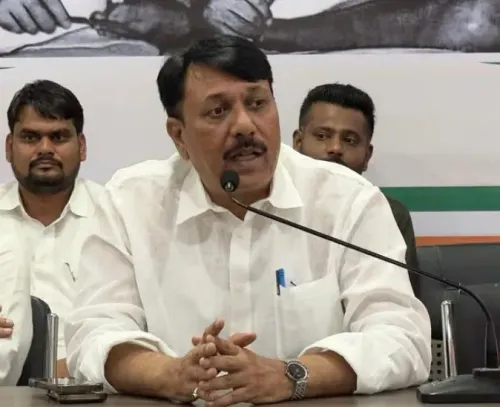
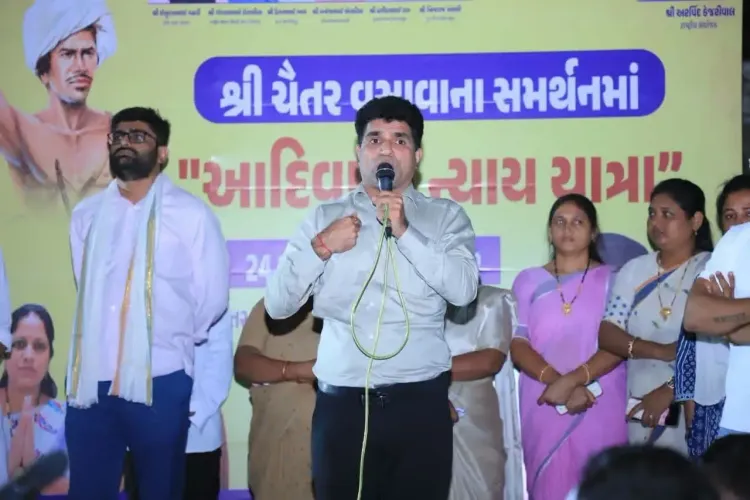
Aam Aadmi Party (AAP) Gujarat President Isudan Gadhvi on Wednesday, 28 October 2026, demanded that the Gujarat state government raise drought compensation to ₹50,000 per hectare and waive farmers' loans, arguing that the relief package announced for four drought-affected districts was grossly inadequate to cover cultivation costs and address mounting rural distress.
What AAP Is Demanding
Addressing a press conference in Ahmedabad, Gadhvi criticised the government's announced assistance of ₹8,500 per hectare, capped at a maximum of two hectares — translating to a ceiling of ₹17,000 per eligible farmer. He called the figure a fraction of actual farming costs, estimating that expenditure on seeds, fertilisers, tractors, weeding and electricity alone amounts to ₹20,000–₹21,000 per bigha.
Gadhvi further demanded a comprehensive relief package covering not only cultivating farmers but also livestock breeders, agricultural labourers, and sharecroppers. He questioned the adequacy of arrangements for irrigation water, drinking water, and fodder supplies for each of these groups.
The Drought Declaration and Government's Package
The demands came two days after Chief Minister Bhupendra Patel announced that Devbhoomi Dwarka, Porbandar, Jamnagar, and Kutch would be declared drought-affected following deficient and delayed monsoon rainfall. The government's relief package, scheduled to take effect from 1 November, includes crop-loss assistance under State Disaster Response Fund (SDRF) norms, subsidised fodder, support for livestock camps, and 150 days of employment in affected areas.
The state government has stated that irrigation water was supplied to the command areas of 44 dams during the kharif season, with supply planned for 76 dams during the upcoming rabi season depending on water availability. Drinking water reserves have been planned until 30 June 2027. Around 1.21 crore kg of fodder has reportedly been distributed at a subsidised rate of ₹2 per kg, with 3 crore kg currently available and additional procurement under way. Livestock at designated camps will receive ₹80 per animal per day for two months.
Comparing Relief Across States
Gadhvi cited the Punjab government's drought assistance of ₹50,000 per hectare as a benchmark, and also referenced farm loan waivers and cash assistance in Maharashtra and Rajasthan to press for a larger package in Gujarat. He also noted that after unseasonal rainfall last year, the state itself had reportedly provided ₹22,000 per hectare — more than double the current announced amount — subject to a two-hectare limit.
Allegations Over Funds and Irrigation
The AAP leader alleged that the government had funds available from Minimum Support Price procurement of groundnut and earlier relief packages but was not deploying them adequately for distressed farmers. He further alleged that farmers in the four affected districts were struggling to meet basic household expenses, while industries continued to receive irrigation water at the expense of agriculture.
Gadhvi also criticised the Sauni irrigation scheme, claiming that insufficient dam development had undermined its effectiveness — a charge the state government has not directly addressed as of this report.
What Comes Next
With the relief package set to roll out from 1 November, the political pressure on the Bharatiya Janata Party (BJP)-led Gujarat government is likely to intensify as kharif losses are assessed on the ground. Whether the state revises the per-hectare compensation or announces supplementary support will be closely watched by farming communities across the four affected districts.
Point of View
500 and ₹50,000 per hectare is not merely political theatre — it reflects a structural problem with SDRF-linked relief, which has not been revised in line with rising input costs for years. Gadhvi's invocation of Gujarat's own ₹22,000-per-hectare payout after unseasonal rains last year is the sharpest point in his argument: the state has precedent for higher compensation but has chosen a lower floor for a drought that affects four entire districts. The BJP government's rebuttal on fodder stocks and rabi dam coverage is operationally credible, but it sidesteps the core question of per-hectare equity. With assembly elections eventually on the horizon, how the Patel government responds to farmer distress in Saurashtra and Kutch — historically volatile constituencies — will matter well beyond this relief cycle.
NationPress
28 Oct 2026
Frequently Asked Questions
What has AAP demanded for Gujarat drought-affected farmers?
AAP Gujarat President Isudan Gadhvi has demanded that the state raise crop-loss compensation to ₹50,000 per hectare and waive farmers' loans. He also called for comprehensive relief for livestock breeders, sharecroppers, and agricultural labourers in the four drought-declared districts.
Which districts have been declared drought-affected in Gujarat?
Chief Minister Bhupendra Patel announced that Devbhoomi Dwarka, Porbandar, Jamnagar, and Kutch would be declared drought-affected following deficient and delayed monsoon rainfall. The relief package is scheduled to take effect from 1 November.
How much drought compensation has the Gujarat government announced?
The state announced ₹8,500 per hectare under SDRF norms, subject to a two-hectare limit, giving a maximum of ₹17,000 per eligible farmer. The package also includes subsidised fodder, livestock camp support, and 150 days of employment in affected areas.
Why does AAP say the Gujarat relief is insufficient?
Gadhvi estimated cultivation costs at ₹20,000–₹21,000 per bigha for seeds, fertilisers, tractors, weeding, and electricity — far exceeding the announced per-hectare aid. He also noted that Gujarat itself paid ₹22,000 per hectare for unseasonal rain damage last year, and Punjab currently offers ₹50,000 per hectare.
What fodder and water arrangements has the Gujarat government made?
The state says around 1.21 crore kg of fodder has been distributed at ₹2 per kg, with 3 crore kg available and more procurement under way. Drinking water reserves have been secured until 30 June 2027, and irrigation supply is planned for 76 dams in the rabi season depending on availability.