Gujarat CM Office Lauds Navsari's Welfare Drive for Women and Elderly
Synopsis
The Chief Minister's Office of Gujarat commended Navsari district's administration on 11 August 2026 for running special welfare camps and Seva Setu programmes that deliver government scheme benefits directly to women and elderly citizens, calling it a model of sensitive governance.
Key Takeaways
The Chief Minister's Office of Gujarat publicly praised Navsari district administration on 11 August 2026 for its welfare outreach initiative.
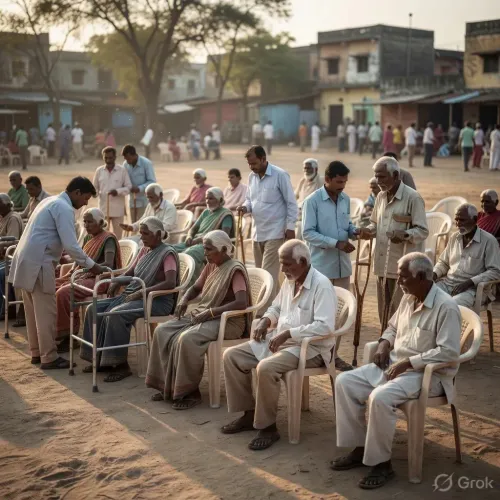
The initiative targets Ganga Swarupa women and elderly citizens, aiming to provide both self-reliance and dignity.
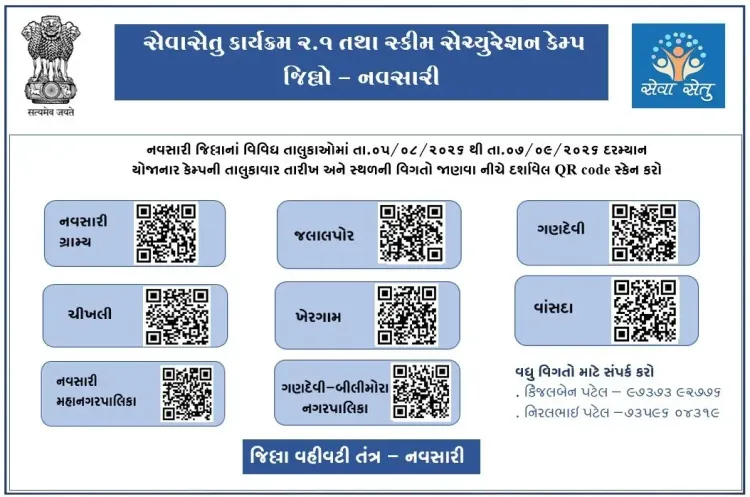
Seva Setu , a Gujarat government programme, is being used to deliver government services and scheme benefits directly to citizens through camps.
The CMO described the effort as an example of 'sensitive governance' focused on empowering marginalised communities.
Navsari's model could serve as a template for similar outreach drives across other Gujarat districts.
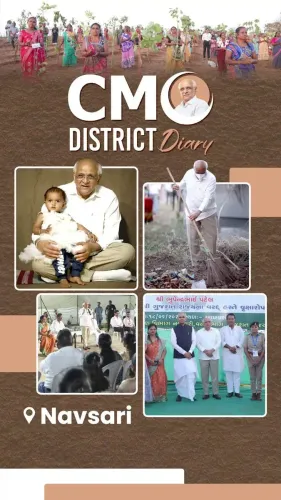
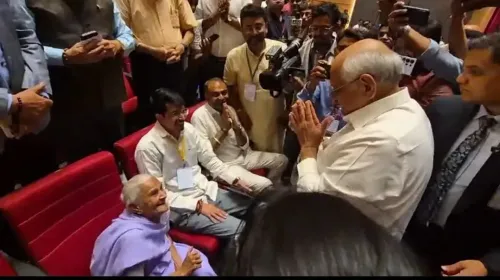
In southern Gujarat's Navsari district, a quiet administrative push is delivering government schemes directly to the doorsteps of women and senior citizens — and the Chief Minister's Office of Gujarat took notice on Tuesday, 11 August 2026.
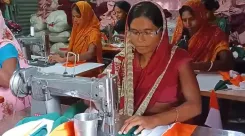
The CMO's post, written in Gujarati, praised the Navsari district administration for an initiative described as providing both self-reliance (swavalamban) and dignity (swabhiman) to Ganga Swarupa mothers and sisters — a respectful honorific for women — as well as to elderly citizens. The post specifically called out the organisation of special welfare camps and programmes like Seva Setu as exemplary models of 'sensitive governance.'
What Seva Setu Brings to the Last Mile
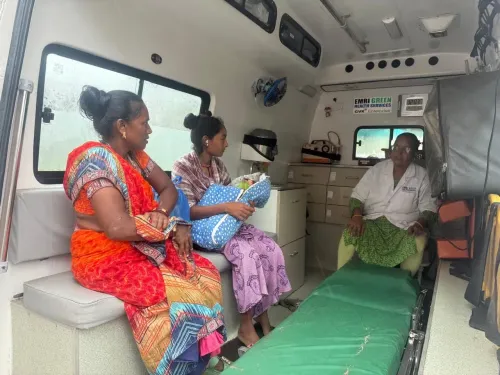
Seva Setu is a Gujarat government outreach programme designed to cut through the friction of bureaucracy by bringing services and scheme benefits directly to citizens, rather than requiring them to navigate offices. For women and the elderly — groups that often face mobility barriers or information gaps — this kind of doorstep delivery is not a convenience; it is access itself.
The Navsari administration's use of special camps alongside Seva Setu reflects a model that Gujarat has been refining at the district level: localised, camp-based delivery of state and central welfare schemes, targeted at communities that typically fall at the farthest end of the administrative reach.
Navsari as a Template for Last-Mile Governance
The CMO's public commendation signals more than routine appreciation. When the Chief Minister's Office highlights a specific district's administrative initiative by name, it functions as an implicit endorsement — a signal to other district administrations across the state that this is the model to replicate. Navsari, a district in southern Gujarat with a significant tribal and agrarian population, becomes, in this framing, a proof-of-concept for sensitive, citizen-first governance.
The broader pattern in Gujarat has been consistent: district-level camps are increasingly the preferred vehicle for scheme delivery, with the state watching closely for programmes that bridge the gap between policy design and actual beneficiary reach. Whether similar drives expand to other districts — and whether they link with digital platforms for benefit tracking — is the next question this model raises.
Point of View
Nudging other district collectors toward replication. This fits Gujarat's broader administrative playbook of using public praise and competitive district-level performance to drive last-mile scheme delivery. The focus on women and the elderly also aligns with the state's stated priority of targeting welfare at groups most likely to be excluded from formal benefit channels. The real test will be whether this spotlight translates into structured rollout across districts or remains an isolated commendation.
NationPress
12 Aug 2026
Frequently Asked Questions
What is the Seva Setu programme in Gujarat?
Seva Setu is a Gujarat government outreach programme that organises camps to deliver government services and welfare scheme benefits directly to citizens, reducing the need for them to visit offices.
Why did Gujarat CMO praise Navsari district administration?
The Chief Minister's Office of Gujarat praised Navsari district for organising special welfare camps and Seva Setu programmes that provide government scheme benefits to women and elderly citizens, calling it a model of sensitive governance.
Who are the beneficiaries of Navsari's welfare camps?
The primary beneficiaries are women — referred to as Ganga Swarupa mothers and sisters — and elderly citizens, along with marginalised communities in Navsari district.
What does 'Ganga Swarupa' mean in the context of this post?
'Ganga Swarupa' is a respectful Gujarati honorific used to address women, evoking reverence and dignity, similar to calling them 'revered mothers and sisters.'
Will Seva Setu camps be expanded to other Gujarat districts?
The CMO's commendation of Navsari suggests the model may be encouraged across other districts, though no formal statewide expansion announcement has been made.