Gujarat CM urges new Talatis to serve as backbone of Revenue Dept
Synopsis
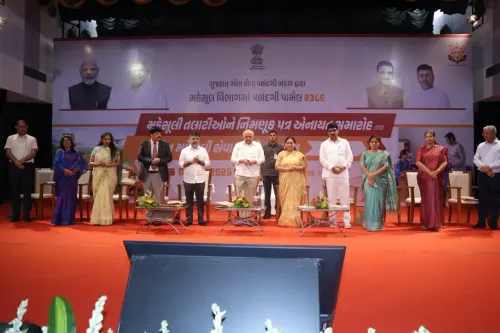
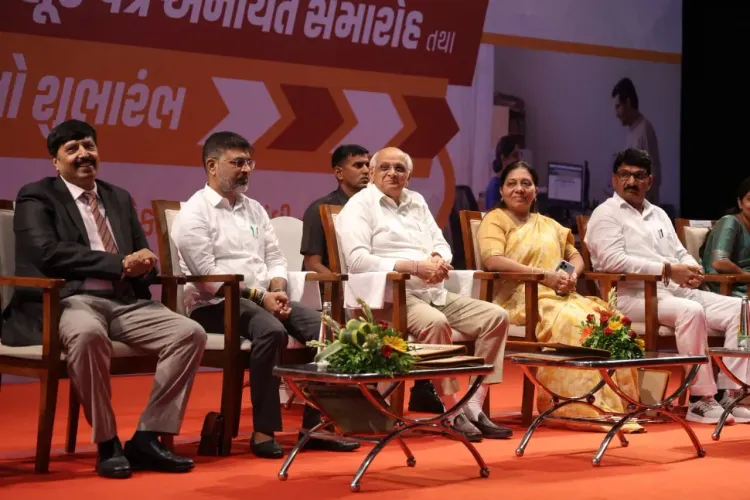
Gujarat's Chief Minister on 2 July 2026 welcomed newly appointed Talatis, calling them the backbone of the Revenue Department and invoking 'Jan Seva e j Prabhu Seva'. He urged them to treat their duties as an ethical responsibility and contribute to 'Viksit Gujarat' in line with PM Modi's Viksit Bharat @ 2047 vision.
Key Takeaways
Gujarat's Chief Minister addressed newly appointed Talatis on 2 July 2026 , congratulating them and wishing them a bright career in public service.
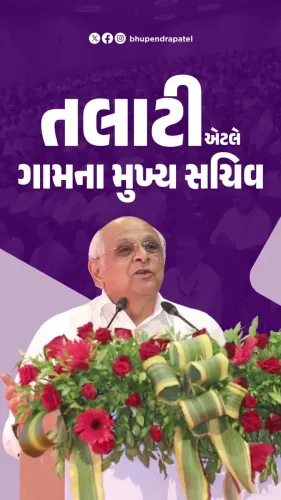
He described Talatis as the 'backbone of the Revenue Department' — the primary interface between rural citizens and state revenue machinery.
The guiding principle 'Jan Seva e j Prabhu Seva' ('Service to the people is service to God') was invoked to inspire ethical public service.
New recruits were called upon to contribute to 'Viksit Gujarat' in alignment with PM Modi's Viksit Bharat @ 2047 national development vision.
Gujarat expanded Talati recruitment as recently as 2021–22 to address vacancies and modernise grassroots administration.
Observers will watch for follow-up training modules and performance audit mechanisms from the Revenue Department for this batch.
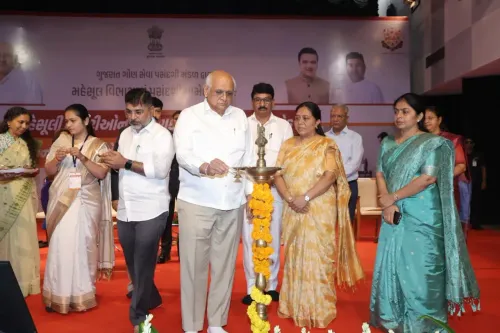
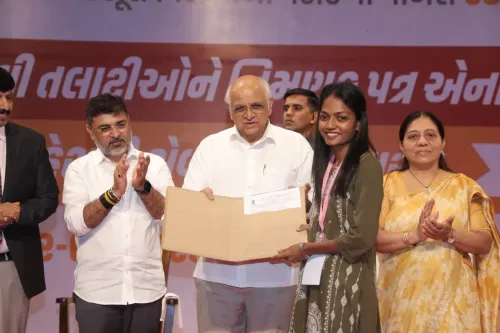
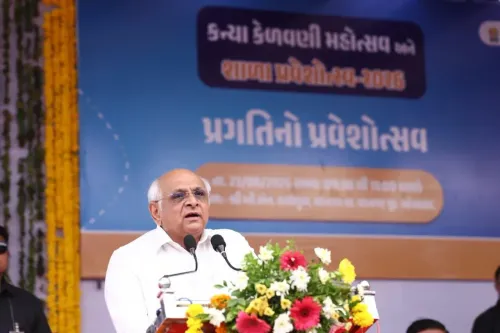
The Chief Minister's Office of Gujarat shared on Thursday, 2 July 2026 that the Chief Minister addressed newly appointed Talatis, congratulating them and invoking the guiding principle 'Jan Seva e j Prabhu Seva' ('Service to the people is service to God') as a call to dedicate themselves to citizen welfare.
Context
At the event, the Chief Minister described Talatis as the 'backbone of the Revenue Department' — the village-level officials who form the primary interface between citizens and the state's revenue machinery. He extended congratulations to the newly recruited officers and wished them a bright career in public service.
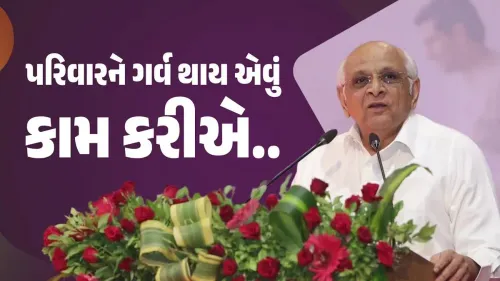
The Chief Minister also called upon the new appointees to fulfil their duties as an ethical responsibility, urging them to contribute to the building of a 'Viksit Gujarat' ('Developed Gujarat') in alignment with Prime Minister Narendra Modi's national vision of 'Viksit Bharat @ 2047'.
Policy Backdrop
The Revenue Department of Gujarat relies on Talatis for land records management, revenue collection, and day-to-day administrative delivery at the grassroots level. Gujarat has periodically expanded direct recruitment of Talatis — notably during 2021–22 — to fill vacancies and strengthen village-level governance.
Prime Minister Modi first publicly outlined the Viksit Bharat @ 2047 framework in August 2022, setting a long-term roadmap for economic, social, and governance development by the centenary of India's independence. State governments across India have since been encouraged to align their administrative programmes with this national vision.
Stakeholders and Impact
The most immediate beneficiaries of a well-staffed Talati cadre are rural citizens of Gujarat, who depend on these officials for land record corrections, revenue certificates, and access to government schemes. Strengthening this cadre directly affects the speed and quality of last-mile service delivery in villages.
For the newly appointed Talatis themselves, the Chief Minister's address frames their role not merely as a government job but as a contribution to a larger national mission — a framing successive Gujarat governments have used to instil accountability and ethical standards in fresh administrative recruits.
What's Next
Attention will now turn to whether the Revenue Department announces structured orientation and training modules for this batch of Talatis, along with any performance audit mechanisms tied to citizen service benchmarks. Parallel recruitment drives in other field-level cadres and their linkage to Gujarat's annual development plans will also be worth monitoring.
The consistent integration of routine administrative appointments with the Viksit Bharat @ 2047 narrative signals that the state intends to keep local governance reform visible as a political and policy priority heading into the next planning cycle.
Point of View
But its deliberate framing around 'Viksit Bharat @ 2047' reflects a broader state-level strategy to link grassroots governance appointments to the central government's long-term development narrative. By positioning Talatis as the 'backbone' of revenue administration, the Chief Minister is reinforcing accountability expectations at a cadre level that has historically faced scrutiny over land-record irregularities. The invocation of 'Jan Seva e j Prabhu Seva' also draws on a culturally resonant idiom to build an ethical compact with new recruits — a soft-power governance tool Gujarat has deployed across successive administrations. Taken together, the event signals that the state views Talati recruitment not merely as a staffing exercise but as a visible governance reform moment tied to both state and national political messaging.
NationPress
2 Jul 2026
Frequently Asked Questions
Who are Talatis in Gujarat?
Talatis are village-level revenue officials in Gujarat responsible for maintaining land records, collecting revenue, and serving as the primary link between rural citizens and the state's revenue administration.
What is Viksit Bharat @ 2047?
Viksit Bharat @ 2047 is a long-term national development framework articulated by Prime Minister Narendra Modi, targeting economic, social, and governance goals by the centenary of India's independence in 2047.
What did Gujarat's Chief Minister say to the new Talatis?
The Chief Minister congratulated the newly appointed Talatis, described them as the backbone of the Revenue Department, urged them to follow the principle 'Jan Seva e j Prabhu Seva' (service to the people is service to God), and called on them to contribute to 'Viksit Gujarat' aligned with the Viksit Bharat @ 2047 vision.
What is the role of the Revenue Department of Gujarat?
The Revenue Department of Gujarat oversees land records, revenue collection, and village-level administration, with Talatis acting as its frontline workforce in rural areas.
When did Gujarat last expand Talati recruitment?
Gujarat notably expanded direct recruitment of Talatis during 2021–22 to fill vacancies and strengthen grassroots administration in the Revenue Department.