Gujarat CMO: Helicopter Rescue Saves Flood-Trapped Valsad Residents
Synopsis
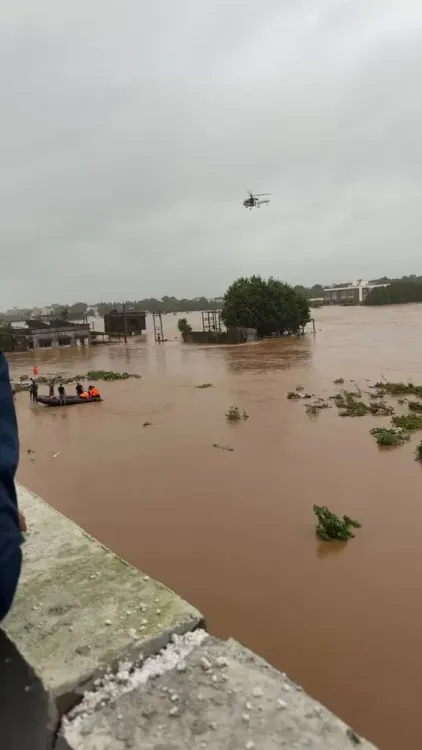
The Chief Minister's Office of Gujarat on 23 July 2026 commended the Valsad district administration for deploying helicopters to rescue residents stranded by severe monsoon flooding, calling it an outstanding example of alertness and service during a crisis.
Key Takeaways
The Chief Minister's Office of Gujarat publicly acknowledged a helicopter rescue operation in Valsad district on 23 July 2026 .
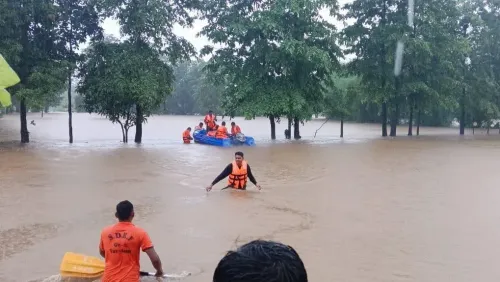
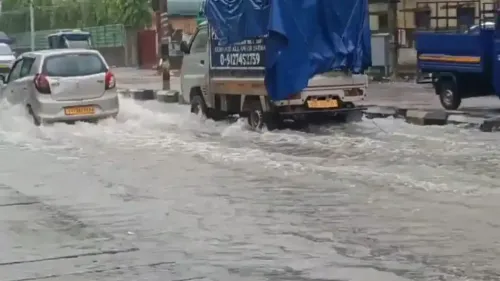
Residents were trapped in floodwaters caused by heavy monsoon rainfall in the southern coastal district.
The Valsad district administration conducted the aerial evacuation operation, bypassing inaccessible road routes.
The CMO described the response as 'an outstanding example of alertness and service in a crisis situation.' Valsad is one of Gujarat's most flood-prone districts, with aerial rescue forming a core part of the state's disaster management protocol.
Monsoon conditions are expected to persist, keeping the district on continued high alert through the season.
The Chief Minister's Office of Gujarat on Thursday, 23 July 2026 highlighted a helicopter rescue operation carried out by the Valsad district administration to evacuate residents stranded by severe monsoon flooding in the southern coastal district.
The official post stated that the district administration had rescued people trapped in floodwaters through a helicopter-based rescue operation, describing the response as 'an outstanding example of alertness and service in a crisis situation' (katakatini paristhitimaan satarkata ane sevanu uttam udaharan).
Context
Valsad, a southern coastal district of Gujarat, is among the state's most flood-prone zones, routinely receiving intense monsoon rainfall that can isolate low-lying villages and cut off road access within hours. When surface routes become impassable, aerial evacuation becomes the primary lifeline for stranded communities. The district administration's swift deployment of helicopters in this instance reflects standing emergency protocols activated when ground teams cannot reach affected areas.
Policy Backdrop
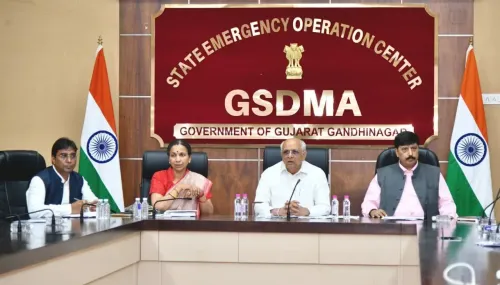
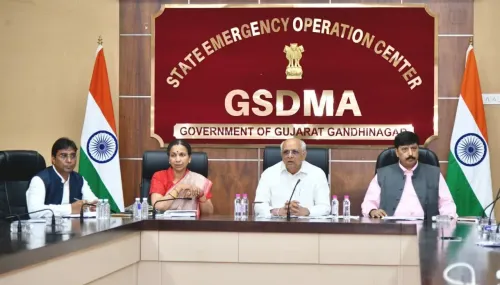
Gujarat maintains a structured disaster management framework under the Gujarat State Disaster Management Authority (GSDMA), which coordinates with district collectors, the National Disaster Response Force (NDRF), and the state's air assets to respond to monsoon emergencies. Helicopter rescue operations form a core component of this framework, particularly for coastal and hilly districts where floods can sever connectivity rapidly. The state has invested over successive years in pre-positioning resources and training district-level teams ahead of each monsoon season.
The CMO Gujarat's decision to publicly commend the Valsad district administration is consistent with a broader state practice of recognising ground-level governance performance, reinforcing accountability and visibility for district-level emergency response machinery.
Stakeholders and Impact
The immediate beneficiaries are flood-affected residents of Valsad who were stranded in rising waters and could not be reached by road. For these communities, timely aerial evacuation is the difference between safety and life-threatening exposure. District emergency teams — including the collector's office, local fire and rescue units, and helicopter crew — are the operational actors whose coordination made the rescue possible.
Beyond the immediate victims, the operation signals to other district administrations across Gujarat that rapid, visible action during monsoon crises is both expected and publicly acknowledged at the highest level of the state government.
What's Next
Monsoon conditions in southern Gujarat typically persist through September, meaning Valsad and neighbouring districts remain at continued risk of further heavy rainfall episodes. Authorities are expected to maintain heightened readiness, with the GSDMA likely to issue updated advisories on water levels, evacuation routes, and relief distribution. Infrastructure assessments — particularly of drainage systems and rural connectivity — are anticipated once floodwaters recede, as recurring inundation often prompts calls for longer-term mitigation works in the district.
Point of View
Using the state's official social media presence to set a visible benchmark for district-level disaster response. By amplifying a specific operational success, the state government reinforces a performance culture within its administrative machinery at a time when monsoon crises test local governance most acutely. The move also fits a broader pattern of Gujarat positioning its disaster management apparatus as a model of proactive, execution-first governance. Whether this translates into sustained infrastructure investment in flood-prone southern districts will be the true measure of the state's long-term commitment beyond crisis-moment optics.
NationPress
23 Jul 2026
Frequently Asked Questions
What happened in Valsad during the July 2026 floods?
Severe monsoon rainfall in Valsad district trapped residents in floodwaters. The district administration launched a helicopter rescue operation to evacuate those who could not be reached by road, an effort publicly commended by the Chief Minister's Office of Gujarat on 23 July 2026 .
Who conducted the helicopter rescue in Valsad?
The Valsad district administration coordinated and conducted the helicopter rescue operation to save flood-stranded residents, as highlighted by the official CMO Gujarat account on X.
Why is Valsad district prone to flooding?
Valsad is a southern coastal district of Gujarat that regularly receives intense monsoon rainfall. Its low-lying terrain and proximity to the coast make it vulnerable to rapid inundation that can cut off road access and strand communities.
How does Gujarat handle monsoon flood rescues?
Gujarat manages monsoon emergencies through the Gujarat State Disaster Management Authority (GSDMA) , which coordinates district collectors, NDRF teams, and air assets. Helicopter deployment is a standard protocol for districts where flooding makes road access impossible.
What will happen next in Valsad after the floods?
With the monsoon season continuing through September , Valsad remains on high alert. Authorities are expected to monitor water levels, continue relief distribution, and assess drainage and road infrastructure once floodwaters recede.