Gujarat cops turn digital arrest bust into cybercrime handbook
Synopsis
A 2024 digital arrest bust that made national headlines — and a 'Mann Ki Baat' mention from PM Modi — has produced something unusual: a 403-page police handbook on cybercrime. Authored by the very officers who cracked the case, 'Cyber Trails' is one of the rare instances where an active investigation has been turned into a public resource, covering everything from OSINT tools to NEET scam mechanics.
Key Takeaways
The Ahmedabad Cyber Crime Branch dismantled a major digital arrest fraud network in 2024 , arresting 17 accused including four Taiwanese nationals . 'Cyber Trails: Unmasking Digital Crimes' , a 403-page book co-authored by Joint Commissioner Sharad Singhal , Dr Lavina Sinha , and ACP Hardik Makadia , was released last week.
The book covers digital forensics, cryptocurrency scams, dark web investigations, OSINT tools, and digital hygiene, drawing on real case studies.
A companion volume, 'NDPS Investigation and Procedure (Ready Reckoner)' , was published in Gujarati and includes 21 procedural checklists for narcotics officers.
NEET-UG scammers extracted payments of ₹25,000 to ₹80,000 from parents via fake Telegram question-paper offers, one of the cases documented in the book.
Deputy Chief Minister Harsh Sanghavi formally released both books under the guidance of Gujarat DGP and Police Commissioner G.S.
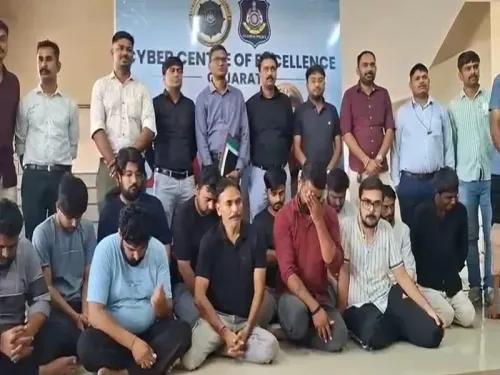
A landmark cybercrime investigation that dismantled one of India's largest alleged digital arrest fraud networks has given rise to an unlikely outcome: a 403-page police-authored handbook on modern cybercrime. The Ahmedabad Cyber Crime Branch, which cracked the case in 2024 — arresting 17 accused, including four Taiwanese nationals — has now published 'Cyber Trails: Unmasking Digital Crimes', translating hard-won investigative lessons into a resource for both law enforcement and the public.
How the Investigation Sparked a Book
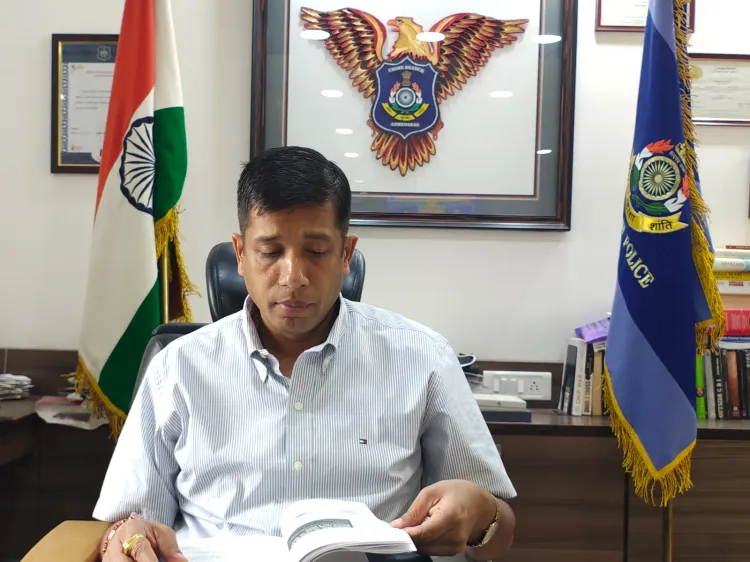
The digital arrest case drew national attention and was later referenced by Prime Minister Narendra Modi in an episode of 'Mann Ki Baat'. That spotlight prompted Ahmedabad Joint Commissioner of Police (Crime) Sharad Singhal and his colleagues to begin systematically documenting what they had learned — not just about the case, but about the broader evolution of transnational cybercrime.
'Nobody knows after two years how we detected the case, how we did the charge sheet, what tools were used and how criminals had access to the database. We should have more documentation,' Singhal said.
The result was unveiled last week alongside a companion volume, 'NDPS Investigation and Procedure (Ready Reckoner)', under the guidance of Gujarat Director General of Police and Ahmedabad Police Commissioner G.S. Malik. Deputy Chief Minister Harsh Sanghavi formally released both books.
What 'Cyber Trails' Covers
Co-authored with Deputy Commissioner of Police (Cyber Crime) Dr Lavina Sinha and Assistant Commissioner of Police Hardik Makadia, the book spans social media monitoring, digital forensics, cryptocurrency investigations, dark web activity, financial frauds, open-source intelligence (OSINT), mobile and cloud forensics, email investigations, and digital hygiene.
Crucially, the authors say the book is grounded in real cases rather than academic theory. 'This is the book in which we have case studies from real-time investigations. When we caught the gang and how we investigated, we included those learnings,' Singhal said. Cases were drawn from Ahmedabad as well as cybercrime units in other cities.
Notably, certain operational details were deliberately withheld. 'We have not put all the procedures in place — otherwise, criminals will read and know what our capabilities are,' Singhal explained.
Key Threats Documented — Including NEET Scams
The book dedicates substantial space to digital arrest scams, one of the fastest-growing categories of cyber fraud, which Singhal noted disproportionately target senior citizens through fear and deception. Other chapters examine cryptocurrency-based laundering, fake investment schemes, social media exploitation, and online financial frauds.
One case highlighted in the book involved fraudsters targeting parents of NEET-UG aspirants. Scammers falsely claimed on Telegram groups to possess question papers for a recently concluded re-examination, using fabricated success stories to extract payments ranging from ₹25,000 to ₹80,000 before disappearing. 'They did not have any paper with them, but they were showing on Telegram that they had a paper. Once payment is made, they wash out,' Singhal said.
The book also flags threats from fake profiles, spyware, and malicious APK files disguised as greeting cards or invitations. 'By just one click, you can lose your precious money in less than a minute,' he warned.
The NDPS Companion Volume
The second publication, 'NDPS Investigation and Procedure (Ready Reckoner)', co-authored with DCP (Special Operations Group) Rahul Tripathi, is designed as an operational guide for officers handling narcotics cases under the Narcotic Drugs and Psychotropic Substances Act. Singhal noted that NDPS investigations are procedure-intensive: 'NDPS Act specifies that there are 21 checklists which every investigating officer has to do for making a case.'
The volume includes judicial precedents, procedural checklists, and ready-to-use forms for actions such as freezing bank accounts, attaching properties, and filing court documents. A deliberate choice was to publish it in Gujarati, a language in which policing manuals are relatively scarce. 'A lot of books are available in English, but very few in Gujarati. We thought it better to publish it in Gujarati,' Singhal said.
A Year of Work — and a Broader Message
Both books took roughly a year to complete, with authors dividing chapters by expertise. Singhal personally handled digital forensics and cybercrime investigations; Dr Sinha contributed sections on social media monitoring and the dark web; Makadia focused on cryptocurrency. Singhal said he carved out at least four hours a week — typically late at night — to write and research.
For Singhal, the publications address a fundamental shift in crime patterns. 'Everybody is mastered in property offences and physical offences. But now cybercrime is increasing. We need trained staff in police stations,' he said. As digital threats continue to evolve, the authors hope the books will serve investigators and ordinary citizens alike — a rare instance of police casework becoming public knowledge.
Point of View
And this one is rarer still — it emerges directly from a live case rather than a training syllabus. The decision to withhold certain operational details is sensible, but it also underscores a tension at the heart of the project: how much can you teach without arming adversaries? More importantly, a 403-page handbook is only as useful as the training infrastructure that deploys it. With cybercrime now outpacing conventional offences in many urban districts, the real test is whether 'Cyber Trails' reaches the field officer at a district police station — or stays on a shelf in the commissioner's office.
NationPress
21 Sept 2026
Frequently Asked Questions
What is 'Cyber Trails: Unmasking Digital Crimes'?
'Cyber Trails: Unmasking Digital Crimes' is a 403-page handbook on cybercrime investigation co-authored by senior Ahmedabad police officers, including Joint Commissioner Sharad Singhal, DCP Dr Lavina Sinha, and ACP Hardik Makadia. It covers digital forensics, cryptocurrency scams, dark web activity, OSINT tools, and digital hygiene, drawing on real case studies from the Ahmedabad Cyber Crime Branch and other units.
What was the digital arrest fraud case that inspired the book?
In 2024, the Ahmedabad Cyber Crime Branch dismantled one of India's largest alleged digital arrest fraud networks, arresting 17 accused including four Taiwanese nationals. The case gained national attention and was referenced by Prime Minister Narendra Modi in an episode of 'Mann Ki Baat'.
What is the NDPS companion book about?
'NDPS Investigation and Procedure (Ready Reckoner)', co-authored with DCP Rahul Tripathi, is an operational guide for officers handling narcotics cases under the Narcotic Drugs and Psychotropic Substances Act. It includes 21 procedural checklists, judicial precedents, and ready-to-use court forms, and was published in Gujarati to fill a gap in vernacular policing literature.
Who released the books and when?
Both books were formally released last week by Gujarat Deputy Chief Minister Harsh Sanghavi, under the guidance of Gujarat Director General of Police and Ahmedabad Police Commissioner G.S. Malik.
What cybercrime threats does the book highlight for ordinary citizens?
The book warns about digital arrest scams targeting senior citizens, fake NEET question-paper offers on Telegram that extracted ₹25,000 to ₹80,000 from victims, malicious APK files disguised as greeting cards, spyware, and the risks of oversharing personal data on social media. It also covers cryptocurrency-based laundering and fake investment schemes.