Gujarat cuts 49.79 mn tonnes of carbon in FY26, renewable output hits record
Synopsis
Gujarat's FY26 carbon avoidance of 49.79 million tonnes is not just a state record — it is the clearest signal yet that India's most industrialised western state is structurally rewiring its energy mix. With 179 million tonnes cumulatively avoided over five years and a 100 GW target by 2030, Gujarat is positioning itself as the template for industrial-state decarbonisation.
Key Takeaways
Gujarat prevented 49.79 million tonnes of carbon emissions in FY2025-26 — the state's highest annual reduction ever.
Renewable energy generation reached a record 67,655 million units in the same period.
Cumulative carbon avoidance over five years stands at 179 million tonnes , equal to roughly 40% of the state's annual greenhouse gas output of 442 million tonnes .
Key policy enablers include the Integrated RE Policy 2026 , Green Hydrogen Policy , and Gujarat Pumped Storage Policy .
Gujarat targets 100 GW of renewable capacity by 2030 , aligned with India's net-zero by 2070 commitment under the Paris Agreement .
Gujarat prevented an estimated 49.79 million tonnes of carbon emissions in FY2025-26, the state's highest single-year reduction on record, while renewable energy generation reached an all-time high of 67,655 million units, according to data released by the state government on Tuesday, 21 July. The figures underscore the pace of Gujarat's clean-energy transition and its growing weight in India's national climate commitments.
Record Numbers in Context
The 49.79 million tonne reduction is the largest Gujarat has recorded in a single financial year. Over the past five years, the state has cumulatively prevented 179 million tonnes of carbon emissions — a figure the government says is equivalent to nearly 40 per cent of its annual greenhouse gas output, which stands at approximately 442 million tonnes.
This cumulative performance places Gujarat among the most active Indian states in renewable-led decarbonisation, even as it remains one of the country's largest industrial economies.
What Is Driving the Reduction
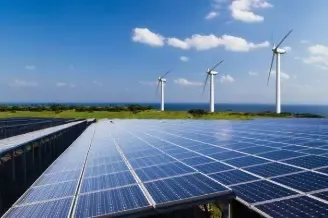
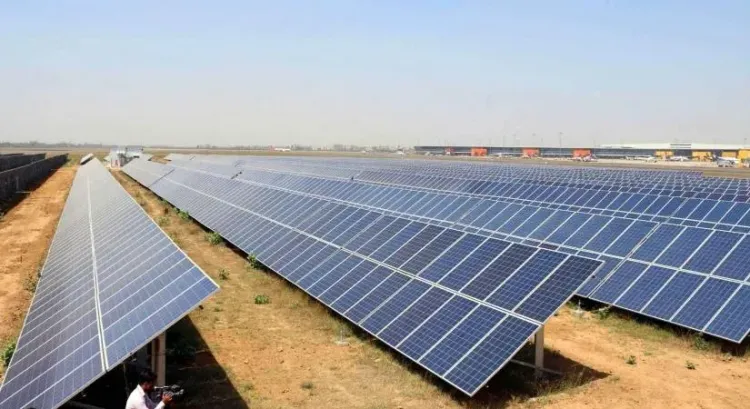
According to the state government, the primary driver is a rapid shift toward solar and wind power, which has progressively displaced coal and other fossil fuels in the electricity mix. Officials stated that 'greater reliance on solar and wind power has reduced dependence on coal and other fossil fuels,' directly linking generation-side changes to the emissions decline.
Three policy frameworks have underpinned this expansion: the Integrated RE Policy 2026, the Green Hydrogen Policy, and the Gujarat Pumped Storage Policy. Implementation has been led by the state's energy agencies — Gujarat Urja Vikas Nigam Limited (GUVNL), the Gujarat Energy Development Agency (GEDA), and Gujarat Power Corporation Limited (GPCL).
Political Attribution and Long-Term Targets
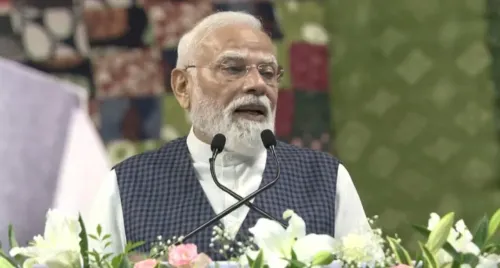
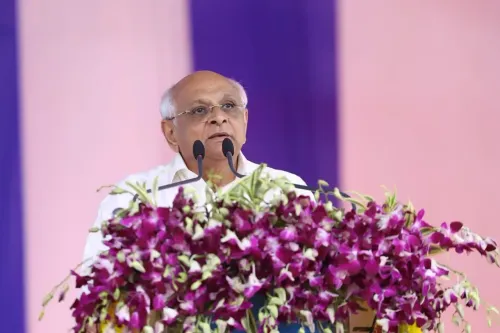
State officials credited the progress to the leadership of Chief Minister Bhupendra Patel and invoked Prime Minister Narendra Modi's broader vision of balancing economic development with environmental conservation. Officials quoted the Prime Minister as describing 'a clean and green India as central to sustainable development.'
Gujarat has set a target of developing 100 GW of renewable energy capacity by 2030, framed as a contribution to Modi's national goal of achieving net-zero emissions by 2070 and India's obligations under the Paris Agreement on Climate Change.
Why It Matters Beyond Energy
The government also highlighted the public-health dimension of the transition, noting that carbon emissions are directly linked to global warming, extreme heat events, irregular rainfall, floods, and droughts — all of which have intensified across Gujarat in recent years. Officials argued that a higher renewable share improves air quality, reduces associated health risks, and strengthens long-term energy security.
Notably, this is the fifth consecutive year Gujarat has reported a year-on-year increase in its annual carbon avoidance figure, suggesting the policy momentum is compounding rather than plateauing. With the 100 GW target still several years away, the trajectory of the next two to three annual cycles will be closely watched by both investors and climate analysts.
Point of View
But the state also emits roughly 442 million tonnes of greenhouse gases annually — meaning even a record 49.79 million tonne reduction offsets barely 11 per cent of its own annual footprint. The 100 GW renewable target by 2030 is ambitious, but the harder question is whether industrial demand growth — driven by petrochemicals, chemicals, and ceramics — will outpace clean-generation additions, leaving net emissions unchanged or higher. The five-year cumulative figure of 179 million tonnes deserves scrutiny too: the methodology for calculating 'avoided emissions' varies across states and is rarely independently verified. Genuine climate leadership requires transparent, third-party-audited baselines — not just government-released avoidance tallies.
NationPress
21 Jul 2026
Frequently Asked Questions
How much carbon did Gujarat avoid in FY2025-26?
Gujarat prevented an estimated 49.79 million tonnes of carbon emissions in FY2025-26, the highest single-year reduction the state has recorded. This was attributed to rapid growth in solar and wind power generation, which reduced dependence on coal and fossil fuels.
What is Gujarat's total renewable energy generation record?
Gujarat generated 67,655 million units of renewable energy in FY2025-26, an all-time high for the state. The growth has been driven by expanding solar and wind capacity under state policies including the Integrated RE Policy 2026.
What is Gujarat's 2030 renewable energy target?
Gujarat has set a target of 100 GW of renewable energy capacity by 2030. The target is framed as a contribution to Prime Minister Narendra Modi's national goal of net-zero emissions by 2070 and India's Paris Agreement commitments.
Which agencies are responsible for Gujarat's renewable energy expansion?
Three state agencies lead the effort: Gujarat Urja Vikas Nigam Limited (GUVNL), the Gujarat Energy Development Agency (GEDA), and Gujarat Power Corporation Limited (GPCL). They operate under the policy framework set by the state's Energy Department.
How does Gujarat's cumulative carbon reduction compare to its annual emissions?
Gujarat has cumulatively avoided 179 million tonnes of carbon emissions over five years, which the state government says is equivalent to nearly 40 per cent of its annual greenhouse gas output of approximately 442 million tonnes.