Gujarat to add rooftop solar on 15,000 govt buildings, 65 MW capacity in 2026-27
Synopsis
Gujarat is set to more than double its government-buildings solar footprint in a single year — targeting 15,000 buildings and 65 MW in 2026-27 alone, backed by a ₹314 crore budget. With a new IIoT monitoring system already live and the state now India's top renewable energy producer at 47,178 MW, this is a concrete execution bet, not just a headline number.
Key Takeaways
Gujarat plans rooftop solar on 15,000 additional government buildings in 2026-27 , adding approximately 65 MW of capacity.
Cumulative installed capacity under the programme will cross 160 MW , up from 95 MW across 6,014 buildings as of March 2026 .
The state has allocated ₹314 crore for the expansion — ₹278 crore for general buildings, ₹33 crore for tribal department buildings, and ₹3 crore for social justice buildings.
A new IIoT-based Renewable Energy Monitoring System captures performance data every 15 minutes and currently monitors 142.5 MW solar and 68.3 MW wind capacity.
Gujarat's total installed renewable energy capacity stands at 47,178 MW , making it India's leading state, ahead of Rajasthan .
The scheme has been run by GEDA under the Climate Change Department since 2011-12 with 100 per cent capital-cost support .
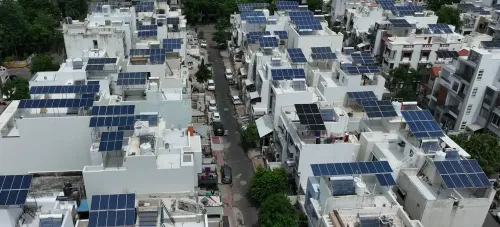
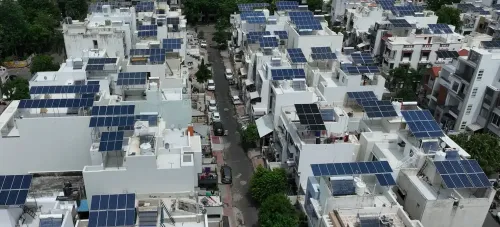
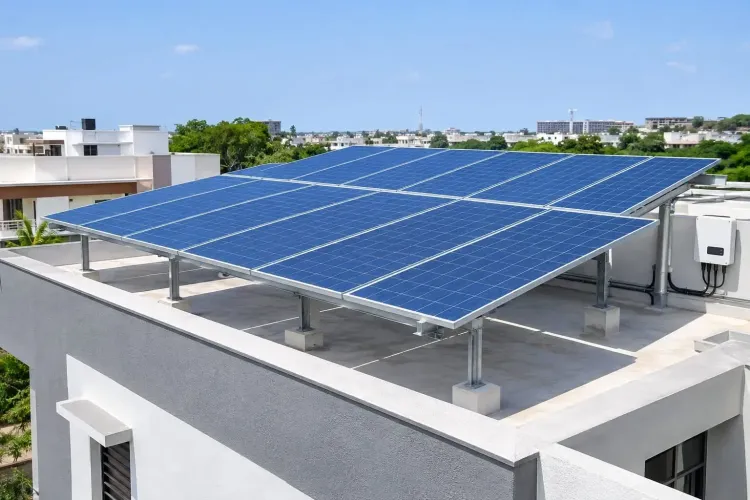
The Gujarat government plans to install rooftop solar systems on 15,000 additional government buildings in 2026-27, a move expected to add approximately 65 MW of renewable capacity and push the programme's cumulative installed base beyond 160 MW. The expansion, announced on 5 October 2026 from Gandhinagar, represents the single largest annual rollout under the state's flagship government-buildings solar scheme.
Scale of the Expansion
The state had already equipped 6,014 government buildings with grid-connected rooftop solar systems carrying a combined capacity of 95 MW by March 2026. Of those, 1,377 buildings accounting for 17.1 MW were added in 2025-26 alone. The new target of 15,000 buildings in a single year dwarfs every previous annual addition.
Climate Change Minister Arjun Modhwadia confirmed the targets. 'The biggest expansion of installation of rooftop solar systems on government buildings is taking place this year, as we plan to install on 15,000 government buildings. The proposed expansion is expected to add around 65 MW of solar capacity, further strengthening the use of renewable energy across the state's public infrastructure,' he said.
Budget Allocation and Departmental Breakdown
The state has earmarked ₹314 crore for the programme in 2026-27. Of this, ₹278 crore is allocated for general government buildings, ₹33 crore for buildings managed by the Tribal Development Department, and ₹3 crore for buildings under the Social Justice and Empowerment Department. All installations receive 100 per cent capital-cost support from the annual budget of the Climate Change Department, removing the upfront burden from individual departments.
The scheme has been operational since 2011-12, implemented by the Gujarat Energy Development Agency (GEDA) under the Climate Change Department, with the twin objectives of increasing renewable energy use and cutting government expenditure on conventional electricity.
Smart Monitoring Through IIoT
In a notable technological upgrade this year, Gujarat has introduced an Industrial Internet of Things (IIoT)-based Renewable Energy Monitoring System to remotely oversee solar and wind installations on government buildings. The system integrates smart meters, sensors, and IoT gateways communicating over GPRS, 4G, and Ethernet networks.
Minister Modhwadia noted that the platform captures performance data every 15 minutes — generating up to 96 daily readings — and currently monitors 142.5 MW of solar capacity and 68.3 MW of wind generation. Automated remote alerts flag operational issues in real time.
Environmental and Economic Benefits
Minister of State for Climate Change Pravin Mali outlined the expected gains: reduced conventional electricity consumption, lower electricity bills for government offices, and a cut in pollution associated with fossil-fuel-based power generation. 'The solar installations are expected to generate multiple environmental and economic benefits, including reduced consumption of conventional electricity, lower electricity expenditure for government offices and a reduction in pollution associated with conventional power generation,' Mali said.
This comes amid Gujarat's broader renewable energy surge. According to data from the Union Ministry of New and Renewable Energy, the state's total installed renewable energy capacity stands at 47,178 MW, having overtaken Rajasthan to become India's leading state in renewable energy capacity. Solar and wind account for the dominant share of that total.
What Comes Next
With sectoral allocations already in place and a monitoring infrastructure now live, the pace of 2026-27 installations will be closely watched as a benchmark for public-sector renewable adoption at scale. If the 15,000-building target is met, Gujarat's government-buildings solar programme will have more than tripled its footprint in a single year.
Point of View
000-building target is an order of magnitude larger than any previous annual rollout — and that ambition cuts both ways. The ₹314 crore budget and the new IIoT monitoring system suggest the state has moved beyond pilot-mode, but executing installations at this pace across departments with uneven capacity is a genuine logistical challenge. What is underreported is the scheme's distributional dimension: the Tribal Development Department's ₹33 crore slice means the rollout is not just concentrated in well-resourced urban offices. If Gujarat actually hits 160 MW cumulative by year-end, it will have built one of India's largest government-owned distributed solar fleets — a model other states have so far found difficult to replicate at scale.
NationPress
5 Oct 2026
Frequently Asked Questions
What is Gujarat's rooftop solar programme for government buildings?
It is a state-run initiative implemented by the Gujarat Energy Development Agency (GEDA) since 2011-12 to install grid-connected rooftop solar systems on government buildings, with 100 per cent capital-cost support from the Climate Change Department's annual budget. By March 2026, the programme had covered 6,014 buildings with a combined capacity of 95 MW.
How many buildings will get rooftop solar in 2026-27 and at what cost?
Gujarat plans to install rooftop solar systems on 15,000 government buildings in 2026-27, adding around 65 MW of capacity. The state has allocated ₹314 crore for the year — ₹278 crore for general buildings, ₹33 crore for tribal department buildings, and ₹3 crore for social justice and empowerment buildings.
How will the solar installations be monitored?
Gujarat has introduced an IIoT-based Renewable Energy Monitoring System that captures performance data every 15 minutes — up to 96 readings a day — and sends automated remote alerts for operational issues. The system uses smart meters, sensors, and IoT gateways over GPRS, 4G, and Ethernet, and currently monitors 142.5 MW of solar and 68.3 MW of wind capacity.
What is Gujarat's total renewable energy capacity and how does it rank nationally?
Gujarat's total installed renewable energy capacity is 47,178 MW, according to data from the Union Ministry of New and Renewable Energy. The state has overtaken Rajasthan to become India's leading state in renewable energy capacity, with solar and wind accounting for the majority share.
What are the expected benefits of the rooftop solar expansion?
The installations are expected to reduce conventional electricity consumption and electricity expenditure for government offices, while also cutting pollution linked to fossil-fuel-based power generation. The programme also contributes to Gujarat's broader renewable energy and climate goals under the Climate Change Department.