How is Gujarat Leading in Rooftop Solar Adoption?
Synopsis
Gujarat's remarkable achievement in rooftop solar energy adoption is transforming lives and reducing electricity costs. With innovative policies and substantial financial support, the state is setting new standards in clean energy and sustainability.
Key Takeaways
Gujarat has installed over 500,000 residential rooftop solar systems.
The total installed capacity stands at 1,879 MW .
Gujarat aims for 1 million rooftop solar systems by March 2027.
Subsidies totaling Rs 3,778 crore have made solar installations affordable.
Exemptions from mandatory net-metering agreements enhance adoption.
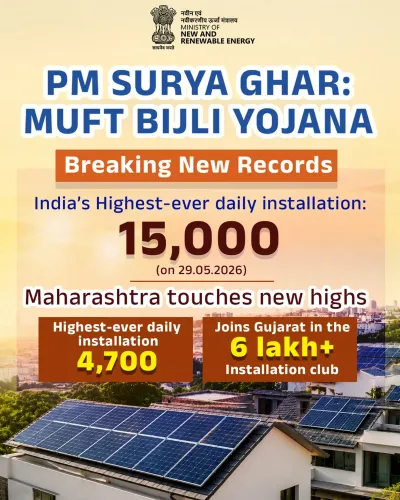
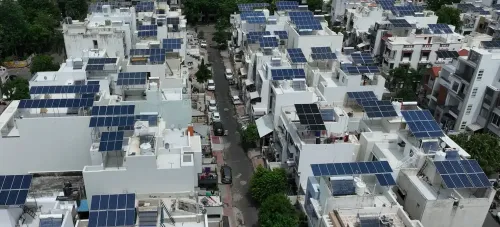
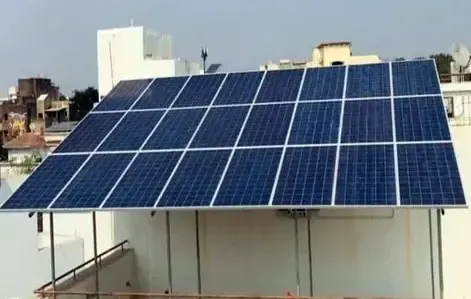
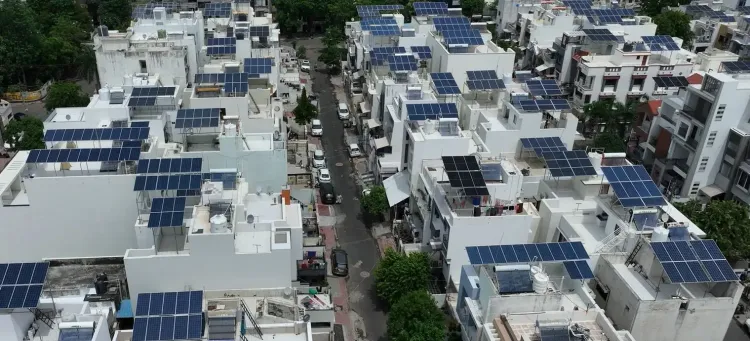
Gandhinagar, Dec 24 (NationPress) Gujarat has marked a significant milestone in the renewable energy domain by installing over 500,000 residential rooftop solar systems, achieving a cumulative capacity of 1,879 MW and maintaining its top rank in rooftop solar adoption nationwide.
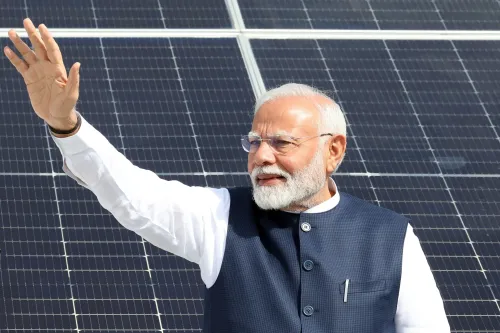
The success, achieved under Prime Minister Narendra Modi’s flagship PM Surya Ghar: Muft Bijli Yojana, underscores Gujarat’s pioneering role in clean energy and its focus on citizen-centric policies.
During the forthcoming Vibrant Gujarat Regional Conference (VGRC) Kutch–Saurashtra, set to take place in Rajkot from January 10, the state will highlight its inspiring rooftop solar success stories.
Official statistics reveal that Gujarat has recorded more than 1.1 million rooftop solar installations across various initiatives, further solidifying its status as a leader in India’s renewable energy sector. With an ambitious goal to install 1 million residential rooftop solar systems by March 2027, the state has already accomplished nearly 50% of its target.
The widespread embrace of rooftop solar has been facilitated by significant financial support, with residential consumers receiving subsidies totaling Rs 3,778 crore to date. This has made rooftop solar systems more affordable and accessible for the average citizen, leading to substantial reductions in household electricity expenses.
The state government has rolled out several user-friendly measures to enhance rooftop solar adoption, including financial aid of Rs 2,950 for regulatory fees for systems up to 6 kW, waivers on network enhancement charges, and exemptions from obligatory net-metering agreements.
There is no limit on load capacity for residential solar installations, and consumers can sell excess electricity back to the grid without incurring banking fees.
An attractive subsidy framework has been instituted to boost participation. Systems up to 2 kW receive Rs 30,000 per kW, installations between 2 and 3 kW qualify for Rs 18,000 per kW, while systems exceeding 3 kW can benefit from subsidies of up to Rs 78,000.
These incentives have been pivotal in popularizing rooftop solar across both urban and rural areas of Gujarat. Chief Minister Bhupendra Patel remarked on this achievement, stating that the current era is characterized by solar, wind, hybrid renewable energy, and green hydrogen growth.
He emphasized that Gujarat had long envisioned this transition and prepared accordingly, leading to the state’s significant contributions to the nation’s renewable energy capacity.
“Gujarat is at the forefront of the rooftop solar sector, establishing new benchmarks for sustainable development. This accomplishment would not have been feasible without the visionary guidance of Prime Minister Narendra Modi,” he stated.
At the VGRC Kutch–Saurashtra, the state will present remarkable case studies from families who have cut their household electricity bills to communities that supply surplus power back to the grid.
These success narratives will illustrate how the PM Surya Ghar: Muft Bijli Yojana is transforming lives by guiding citizens toward clean, affordable, and self-sufficient energy solutions.
Point of View
It's essential to recognize Gujarat's significant strides in renewable energy, particularly in rooftop solar adoption. This progress not only benefits the state but also contributes to India's overall renewable energy goals. The leadership displayed by the state government and the backing from the central government under PM Modi’s initiatives deserve commendation. It reflects a growing commitment to sustainable development, which is vital for a greener future.
NationPress
2 Oct 2026
Frequently Asked Questions
What is the total installed capacity of rooftop solar systems in Gujarat?
Gujarat has achieved a total installed capacity of 1,879 MW from more than 500,000 residential rooftop solar systems.
What subsidies are available for rooftop solar installations?
Residential consumers can receive various subsidies, including Rs 30,000 per kW for systems up to 2 kW, Rs 18,000 per kW for installations between 2 and 3 kW, and up to Rs 78,000 for systems above 3 kW.
When will the Vibrant Gujarat Regional Conference take place?
The VGRC Kutch–Saurashtra is scheduled to be held in Rajkot from January 10.
What role does PM Modi's initiative play in this achievement?
The achievement is realized under PM Modi's flagship PM Surya Ghar: Muft Bijli Yojana, which emphasizes clean energy and citizen-centric implementation.
How can consumers benefit from surplus electricity generation?
Consumers can sell surplus electricity back to the grid without incurring banking fees, promoting a sustainable energy ecosystem.