Gujarat rooftop solar subsidy cuts household share to 10%
Synopsis
Gujarat has cut the household share of rooftop solar cost to 10 per cent — 5 per cent for SC/ST families — for systems up to 2.18 kWp from 22 October 2026. The extra state subsidy is paid via DBT and locks capacity for three years. The state accounts for 18.21 per cent of India's rooftop solar systems.
Key Takeaways
The Gujarat government has added a rooftop solar subsidy for systems up to 2.18 kWp installed on or after 22 October 2026 .
Households pay 10 per cent of installation cost; SC and ST families pay five per cent , with the rest borne by the state via DBT .
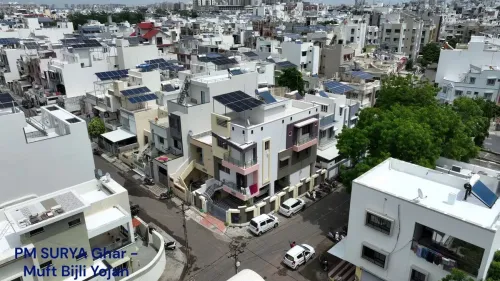
Gujarat accounts for 18.21 per cent of rooftop solar systems under the PM-Surya Ghar Muft Bijli Yojana .
More than nine lakh households in the state have rooftop solar, totalling about 3,408 MW .
Beneficiaries cannot raise installed capacity for three years ; an undertaking is taken at application, said GUVNL ’s I G Katara .
Sheetal Mehta of Mehsana said her bill fell from ₹2,000–₹3,000 a month to zero and she received a ₹78,000 subsidy.
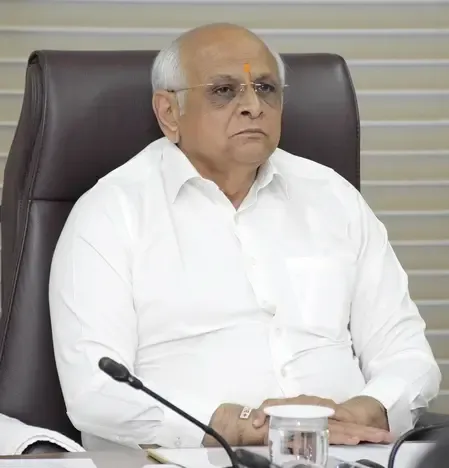
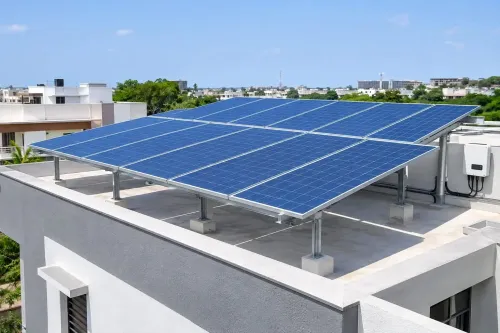
The Gujarat government has introduced an additional subsidy for residential rooftop solar systems of up to 2.18 kilowatt-peak (kWp), reducing the household share of installation cost to 10 per cent for general category consumers and five per cent for Scheduled Caste (SC) and Scheduled Tribe (ST) families. The provision, introduced by the state government led by Chief Minister Bhupendra Patel, applies to systems installed on or after 22 October 2026, with the remaining cost borne by the state and transferred directly to beneficiaries’ bank accounts through Direct Benefit Transfer (DBT).
How the extra subsidy is structured
Under the new arrangement, eligible households pay only the prescribed residual share of the installation cost. The state government covers the balance after that household contribution is accounted for. Officials have framed the move as a way to make rooftop solar more affordable for poor and middle-class families while encouraging greater adoption of solar energy.
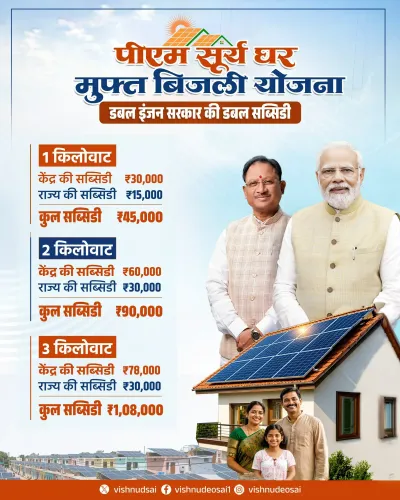
The additional state support sits alongside Central assistance under the PM-Surya Ghar Muft Bijli Yojana. The subsidy is to be credited straight into bank accounts through the DBT mechanism, rather than being left as an informal concession at the point of installation.
Gujarat’s share of India’s rooftop solar
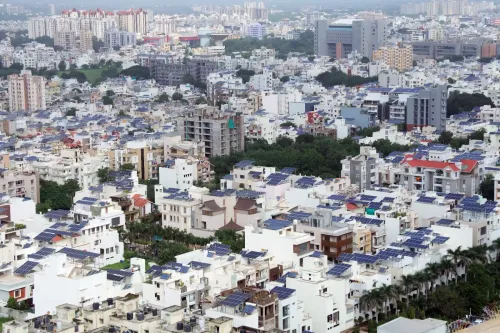
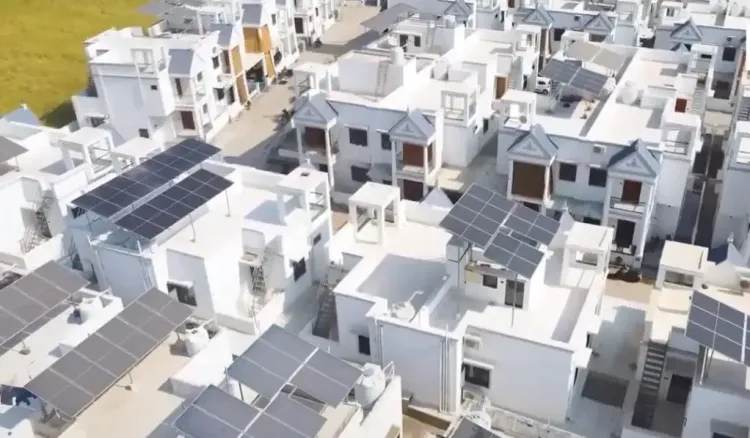
Gujarat already accounts for 18.21 per cent of all rooftop solar systems installed in the country under the PM-Surya Ghar Muft Bijli Yojana. More than nine lakh households in the state have installed rooftop solar systems, with a combined capacity of around 3,408 megawatts.
This comes amid a wider national drive to put solar on household rooftops. Notably, because Gujarat already hosts a large installed base, a lower residual cost for new 2.18 kWp systems can add a significant number of additional plants. The extra subsidy is both an affordability measure for poorer and middle-class homes and an attempt to hold the state’s lead in residential solar.
What Mehsana households reported
Beneficiaries in Mehsana district said the extra state support had made the scheme more accessible and had helped reduce their electricity expenses. Vipul Patel, a beneficiary from Mehsana, said: “Since October 22, the Gujarat Government has also been providing subsidies along with the Central Government. Consumers who install a 2.18 kWp system are eligible for an additional subsidy. I request everyone to take advantage of this government scheme.”
Another beneficiary, Sheetal Mehta, said her monthly electricity bill, which earlier ranged between ₹2,000 and ₹3,000, had come down to zero after she installed a rooftop solar system. She said she had also received a subsidy of ₹78,000 towards the installation. “Since October 22, the Gujarat Government, along with the Central Government, has also been providing us with a subsidy,” she added.
Three-year cap on raising capacity
The additional subsidy comes with a condition: beneficiaries cannot increase their installed solar capacity for three years from the date of installation. The support is applicable only up to 2.18 kWp. Households that already have rooftop solar systems below that capacity can also avail themselves of the additional benefit, provided their total installed capacity does not exceed the prescribed limit.
I G Katara, Additional Chief Engineer, Gujarat Urja Vikas Nigam Limited (GUVNL), Mehsana, said: “This subsidy will be applicable only up to a capacity of 2.18 kWp. Applicants will not be allowed to increase the capacity of their solar systems in any way for three years from the date of installation. An undertaking to this effect is obtained from applicants at the time of submitting their applications.”
Who is affected and what comes next
Residential consumers installing systems of up to 2.18 kWp on or after 22 October 2026 are eligible, with general-category households paying 10 per cent of the installation cost and SC and ST families paying five per cent. Existing owners of smaller plants can also apply if they stay within the cap and sign the three-year undertaking when they submit their applications.
Under the arrangement, the state government’s contribution covers the remaining installation cost after the prescribed household share. The next test is execution — whether applications are processed smoothly and whether DBT credits reach bank accounts without delay. For smaller residential plants, Gujarat has moved the household’s residual share sharply down, while locking capacity at 2.18 kWp for three years.
Point of View
Not a new programme. The 2.18 kWp ceiling and the three-year freeze on raising capacity will keep the fiscal outgo bounded, but they also cap households whose load will grow. The real test is whether DBT credits land on time and whether the residual 10 per cent — five per cent for SC and ST families — is still a barrier for the poorest roofs the scheme claims to target.
NationPress
25 Nov 2026
Frequently Asked Questions
What is Gujarat’s additional rooftop solar subsidy?
It is an extra state subsidy for residential rooftop solar systems of up to 2.18 kWp, cutting the household share of installation cost to 10 per cent for general category consumers and five per cent for SC and ST families. The remaining cost is borne by the Gujarat government and paid through DBT into bank accounts.
From when does the Gujarat rooftop solar subsidy apply?
The additional subsidy applies to rooftop solar systems installed on or after 22 October 2026. It is layered on top of Central support under the PM-Surya Ghar Muft Bijli Yojana.
Who is eligible for the 10 per cent and 5 per cent cost share?
General category residential consumers installing systems of up to 2.18 kWp pay 10 per cent of the installation cost, while SC and ST families pay five per cent. Households that already have rooftop solar below 2.18 kWp can also claim the benefit if total capacity stays within that limit.
Can beneficiaries increase solar capacity after taking the subsidy?
No. Beneficiaries cannot increase installed solar capacity in any way for three years from the date of installation. GUVNL obtains an undertaking to that effect when applications are submitted, Additional Chief Engineer I G Katara said.
How much rooftop solar has Gujarat already installed?
Gujarat accounts for 18.21 per cent of rooftop solar systems installed in India under the PM-Surya Ghar Muft Bijli Yojana. More than nine lakh households in the state have installed systems with a combined capacity of around 3,408 megawatts.