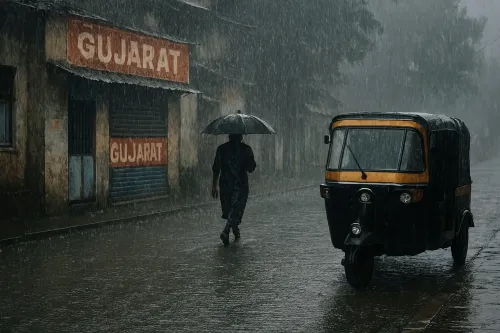
Sardar Sarovar Dam at 96% capacity as Gujarat monsoon hits 88% of seasonal average
Synopsis
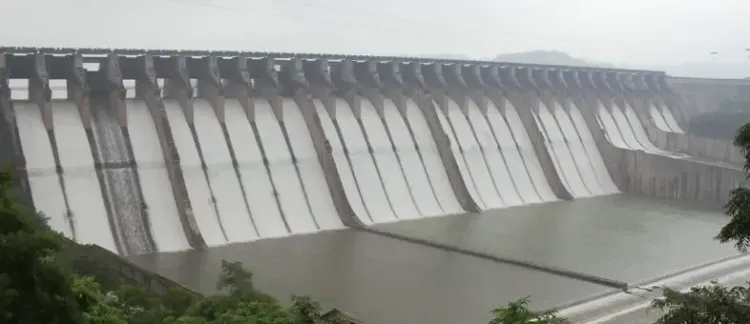
The Sardar Sarovar Dam is nearly full at 96% capacity as Gujarat's monsoon season nears its end, but the picture is uneven — South Gujarat has already crossed 113% of its seasonal rainfall average while Kutch sits at just 57%. With 45 dams on High Alert and over 85,000 people evacuated since June, the state's disaster management machinery remains fully stretched.
Key Takeaways
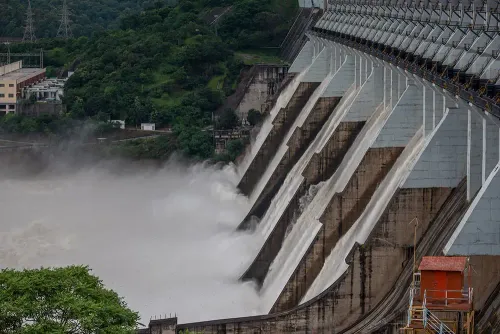
Sardar Sarovar Narmada Dam has reached 96 per cent capacity as of 19 September 2026 .
Gujarat's 206 other reservoirs are collectively at 70.49 per cent of storage capacity; 30 are 100 per cent full.
45 dams are on High Alert , 13 on Alert, and 10 on Warning.
Cumulative statewide rainfall stands at 88 per cent of the seasonal average; South Gujarat leads at 113.52 per cent .
85,456 people evacuated and 9,822 rescued between 1 June and 18 September ; Navsari tops district evacuations at 29,198 .
10 NDRF teams and 28 SDRF platoons deployed across Gujarat, with additional reserve forces on standby.
The Sardar Sarovar Narmada Dam has reached 96 per cent of its full capacity, while Gujarat's other 206 reservoirs have collectively filled to 70.49 per cent of their total storage, according to the state's latest monsoon assessment released on Saturday, 19 September 2026. The figures reflect a robust but uneven monsoon season, with cumulative statewide rainfall standing at 88 per cent of the seasonal average as of 6 am on Saturday.
Reservoir Status Across Gujarat
Of the state's reservoirs, 30 have reached 100 per cent capacity, while 38 are between 70 and 100 per cent full. Another 25 reservoirs have storage between 50 and 70 per cent, 40 are between 25 and 50 per cent, and 73 hold less than 25 per cent of their capacity. Based on current water levels, authorities have placed 45 dams on High Alert, 13 on Alert, and 10 on Warning.
Rainfall Distribution Across Regions
The state recorded a cumulative rainfall of 31 inches through the monsoon season up to Saturday morning. South Gujarat led all regions with 113.52 per cent of its seasonal average, followed by East-Central Gujarat at 88.57 per cent, North Gujarat at 70.33 per cent, Saurashtra at 67.86 per cent, and Kutch at 57.16 per cent — indicating a marked north-south gradient in monsoon intensity this season.
In the 24 hours ending Saturday morning, rainfall was recorded across 224 talukas in 31 districts, with the state averaging 17.20 mm for the period. Meghraj in Aravalli and Gir Gadhada in Gir Somnath recorded the highest single-day rainfall at three inches each. Ahmedabad city received 2.87 inches, Talod in Sabarkantha recorded 2.52 inches, and Dediapada in Narmada received 2.40 inches.
Evacuations and Rescue Operations
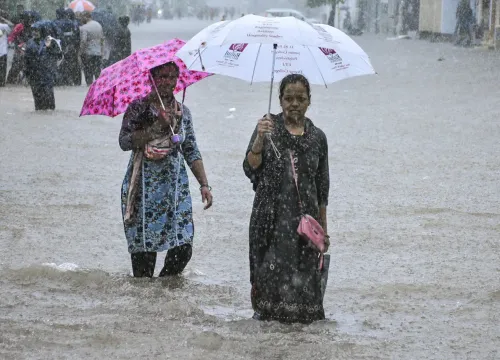
The sustained rainfall has necessitated large-scale evacuation and rescue operations throughout the monsoon period. Between 1 June and 18 September, authorities evacuated 85,456 people to safer locations and conducted 9,822 rescues. Navsari district recorded the highest number of evacuations at 29,198, followed by Valsad with 22,214 and Surat with 17,992.
Disaster Management Deployment
To manage ongoing operations, 10 NDRF teams and 28 SDRF platoons have been deployed across Gujarat, with four NDRF teams and five SDRF teams kept in reserve. This layered deployment reflects the scale of the challenge — South Gujarat in particular continues to bear the brunt of heavy rainfall, consistent with its historical pattern of receiving the highest seasonal totals in the state. With the monsoon season approaching its close, authorities will be monitoring reservoir discharge levels and any further precipitation that could strain the alert-category dams.
Point of View
But the 45 dams on High Alert and over 85,000 evacuations reveal the other face of a heavy monsoon. The sharp regional disparity — South Gujarat at 113% of its seasonal average versus Kutch at just 57% — underscores that Gujarat's water challenge is structural, not simply about total rainfall. A dam that is 96% full is an asset in a dry year and a liability in a wet week; the management of controlled releases in the coming days will test the state's flood-risk protocols as sharply as any seasonal surge.
NationPress
19 Sept 2026
Frequently Asked Questions
What is the current water level of the Sardar Sarovar Narmada Dam?
As of Saturday, 19 September 2026, the Sardar Sarovar Narmada Dam has reached 96 per cent of its full capacity, according to the state's latest monsoon assessment.
How much of Gujarat's seasonal rainfall has been recorded so far?
Gujarat has received 88 per cent of its seasonal average rainfall, amounting to 31 inches, as of 6 am on 19 September 2026. South Gujarat is the wettest region at 113.52 per cent of its seasonal average, while Kutch is the driest at 57.16 per cent.
How many dams in Gujarat are on High Alert?
As of the latest assessment, 45 dams in Gujarat are on High Alert, 13 are on Alert, and 10 are on Warning, based on current water storage levels.
How many people have been evacuated in Gujarat during the 2026 monsoon?
Between 1 June and 18 September 2026, authorities evacuated 85,456 people and conducted 9,822 rescues across Gujarat. Navsari district recorded the highest evacuations at 29,198, followed by Valsad at 22,214 and Surat at 17,992.
What disaster response forces are deployed in Gujarat?
10 NDRF teams and 28 SDRF platoons are currently deployed across Gujarat for disaster management operations, with four NDRF teams and five SDRF teams held in reserve.