Gujarat UCC gets Presidential assent, implementation underway

Synopsis
Gujarat joins Uttarakhand on the UCC map. President Droupadi Murmu's assent to the Gujarat Uniform Civil Code Bill, 2026, on 17 September — followed almost immediately by Assam's assent on 29 September — signals a coordinated BJP push to roll out uniform personal law across states before any federal legislation. The code's live-in relationship registry and equal inheritance provisions are set to reshape civil life for millions.
Key Takeaways
President Droupadi Murmu gave assent to the Gujarat Uniform Civil Code Bill, 2026 on 17 September 2026 .
The Gujarat government has issued a gazette notification , initiating the implementation process.
The code covers marriage, divorce, succession, inheritance, and live-in relationships uniformly across religions.
The code prohibits bigamy and grants equal inheritance rights to sons and daughters.
Scheduled Tribe members and groups protected under Part XXI of the Constitution are exempt from the code.
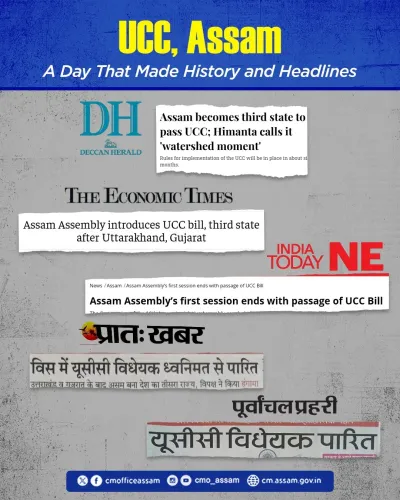
Gujarat follows Uttarakhand (January 2025) and coincides with Assam , which received Presidential assent on 29 September 2026 .
Gujarat's Uniform Civil Code (UCC) has taken a decisive step toward becoming law after President Droupadi Murmu gave her assent to the Gujarat Uniform Civil Code Bill, 2026 on 17 September 2026, according to official records of the Rashtrapati Bhavan. The state government has since issued a gazette notification for the legislation, clearing the path for full implementation.
Key Provisions of the Gujarat UCC
The legislation establishes a common legal framework for personal civil matters — covering marriage, divorce, succession, inheritance, and live-in relationships — applicable irrespective of religion. Among its most significant provisions, the code prohibits bigamy and mandates uniform conditions for marriage and divorce across communities.
The UCC also enshrines equal inheritance rights for sons and daughters and lays down succession rules for individuals who die without a will. The definition of a child under the code has been broadened to include adopted children and children born through surrogacy or assisted reproductive technology.
Live-In Relationships Under the Code
Live-in relationships have been brought within a formal legal framework for the first time in Gujarat. Partners in such relationships are required to register their union by submitting a statement to a designated Registrar, and children born from such relationships will receive legal recognition. However, a live-in relationship cannot be registered if either partner is already married or is in another registered live-in arrangement.
Who Is Excluded
The code does not apply to members of Scheduled Tribes as defined under the Constitution. It also excludes certain groups whose customary rights are protected under Part XXI of the Constitution, preserving existing constitutional safeguards for those communities.
Legislative Journey and Political Context
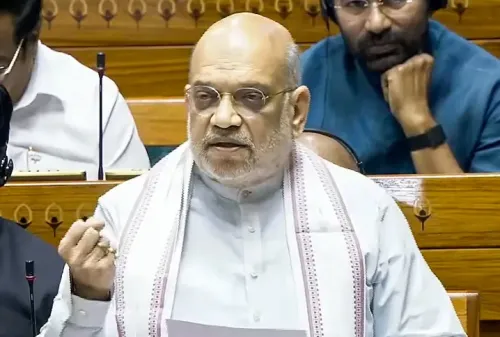
The Gujarat Assembly passed the bill on 24 March 2026 after a debate lasting more than seven hours. Indian National Congress (Congress) members walked out during the discussion and demanded that the legislation be referred to a Select Committee — a request the ruling Bharatiya Janata Party (BJP) government did not concede. The bill was introduced after a government-appointed committee submitted its report recommending the code's framework.
Notably, Gujarat's move follows Uttarakhand, which became the first state in India to bring a UCC into force in January 2025. Assam's UCC Bill, passed earlier in 2026, also received Presidential assent on 29 September 2026, according to Rashtrapati Bhavan records — making Gujarat and Assam near-simultaneous milestones in the BJP's push to expand the UCC across states it governs.
What Happens Next
The Gujarat government will now proceed with the administrative processes required to operationalise the code's provisions. With the gazette notification already in place, officials are expected to set up the registrar infrastructure, train personnel, and notify effective dates for individual provisions. The implementation timeline has not yet been publicly announced.
Point of View
And Gujarat is a far larger and more diverse state. The exclusion of Scheduled Tribes, while constitutionally necessary, also raises a question the code's proponents have not fully answered — if uniform personal law is the goal, what is the principled basis for the carve-out beyond political expediency?
NationPress
2 Oct 2026
Frequently Asked Questions
What is the Gujarat Uniform Civil Code (UCC) Bill, 2026?
The Gujarat Uniform Civil Code Bill, 2026, is a state legislation that establishes a single legal framework for personal civil matters — including marriage, divorce, succession, inheritance, and live-in relationships — applicable to all residents of Gujarat regardless of religion. It received Presidential assent on 17 September 2026.
When did the Gujarat Assembly pass the UCC Bill?
The Gujarat Assembly passed the UCC Bill on 24 March 2026 after a debate of more than seven hours. Congress members walked out and sought referral to a Select Committee, but the BJP government proceeded with the vote.
Who is exempt from the Gujarat UCC?
Members of Scheduled Tribes as defined under the Constitution are exempt from the Gujarat UCC. Additionally, groups whose customary rights are protected under Part XXI of the Constitution are also excluded from its provisions.
How does Gujarat's UCC treat live-in relationships?
Under the Gujarat UCC, partners in a live-in relationship must register their union by submitting a statement to a designated Registrar. Children born from such relationships receive legal recognition, but registration is barred if either partner is already married or is in another registered live-in relationship.
Is Gujarat the first state to enact a UCC?
No. Uttarakhand became the first state in India to bring a UCC into force in January 2025. Gujarat is among the next wave, alongside Assam, whose UCC Bill received Presidential assent on 29 September 2026 — just days after Gujarat's.