Twisha Vyas wins Ustad Bismillah Khan Yuva Puraskar 2025 for Gujarat Garba
Synopsis
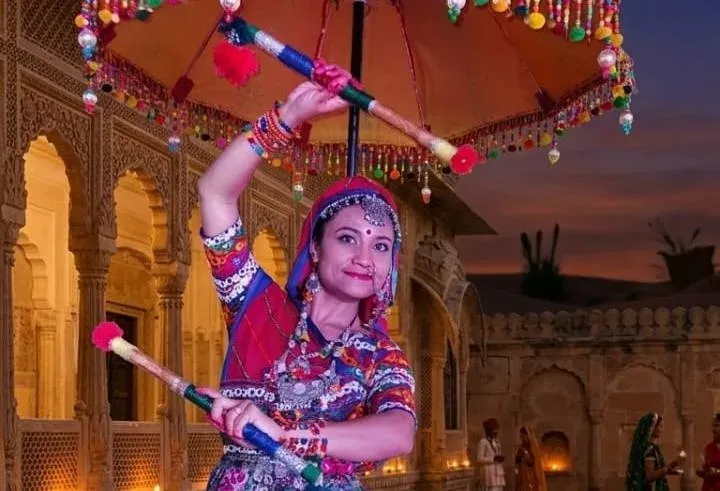
A Bardoli-based Garba practitioner who teaches, performs, and judges — and plays five instruments — has won India's top honour for emerging artists. Twisha Vyas's 2025 Ustad Bismillah Khan Yuva Puraskar arrives as UNESCO-inscribed Garba faces its stiffest challenge yet: staying authentic in an era of commercial entertainment.
Key Takeaways
Twisha Vyas of Bardoli, Gujarat has been selected for the 2025 Ustad Bismillah Khan Yuva Puraskar by the Sangeet Natak Akademi .
The award recognises her contribution to Gujarat's Garba folk dance tradition, which UNESCO has inscribed on its Intangible Cultural Heritage list.
Vyas holds an M.P.A. , an M.A. in Bharatanatyam (Alankar Gold Medallist), and a postgraduate degree in English Literature .
She is a trained violinist and has performed before President Droupadi Murmu and former President Ram Nath Kovind .
Vyas has represented Gujarat's folk culture across 8 states and at major events including the International Tarnetar Fair and G20 events .
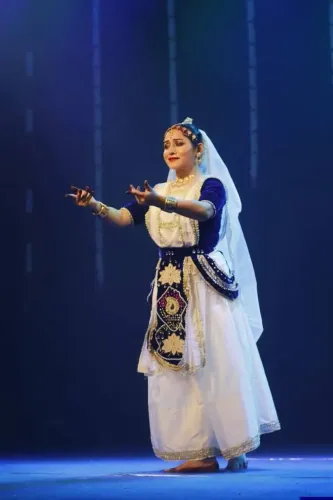
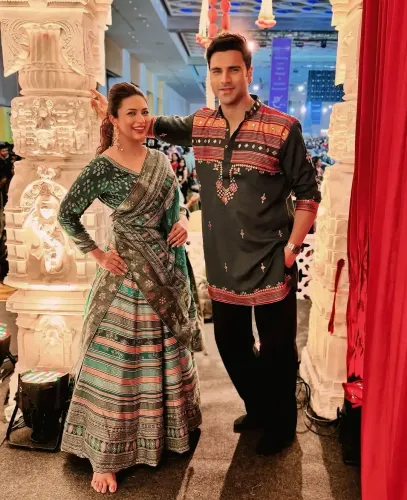
Twisha Vyas, a Bardoli-based folk dancer and musician, has been selected for the 2025 Ustad Bismillah Khan Yuva Puraskar by the Sangeet Natak Akademi, under the Union Ministry of Culture, for her contribution to Gujarat's Garba tradition. The award, one of India's most prestigious honours for emerging performing artists, recognises her sustained work in preserving and promoting the folk dance form at both state and national levels.
Recognition Rooted in Heritage
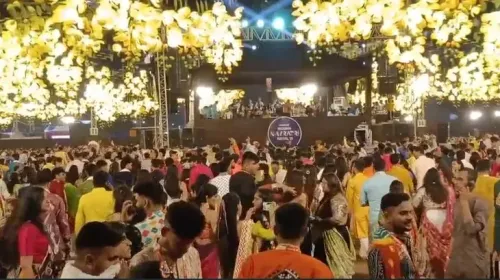
The selection carries added significance given that UNESCO inscribed Gujarat's Garba on its Representative List of the Intangible Cultural Heritage of Humanity in recent years, placing a global spotlight on the tradition. Vyas's award reflects the renewed institutional attention on safeguarding India's living folk arts at a time when their cultural context is evolving rapidly.
Vyas, who runs the V. Killolkumar Group of Music & Dance Academy in Bardoli, described Garba as far more than a performance art. 'Garba is a living expression of faith, culture and collective identity. My artistic journey had been guided by a commitment to understanding not only Garba's performance techniques but also its original form, traditions, spirituality and cultural significance,' she said.
An Artist Trained Across Disciplines
Vyas holds a postgraduate degree in English Literature and has completed a Master of Performing Arts (M.P.A.) and an M.A. in Bharatanatyam, graduating as an Alankar Gold Medallist. Her musical training spans the violin, mandolin, flute, harmonium, and tabla — a cross-disciplinary grounding she credits for deepening her understanding of rhythm, expression, and performance within Garba presentations.
She has performed before President Droupadi Murmu, former President Ram Nath Kovind, and music composer Anandji Kalyanji, underscoring the reach of her artistic profile beyond regional platforms.
A Footprint Across India
Over the years, Vyas has represented Gujarat's folk culture at prominent state events including the International Tarnetar Fair, Chotila Festival, Modhera Festival, Dakor Faganotsav, Vasantotsav, G20 events, Gujarat Gaurav Abhiyan, and Ambaji Mahotsav. Her performances have also extended to Rajasthan, Odisha, Andhra Pradesh, Manipur, Kolkata, Jharkhand, and Madhya Pradesh, carrying the Garba tradition to audiences across the country. She has additionally served as a judge in government competitions such as Kala Mahakumbh and Yuva Utsav.
A Responsibility, Not a Culmination
Reflecting on the national honour, Vyas framed the award not as an endpoint but as the start of a deeper obligation. 'Preserving traditional art forms required sustained commitment, particularly at a time when they coexist with changing lifestyles and commercial entertainment,' she said. She also stressed the need for collective effort to protect Garba's sanctity and traditional character, particularly among younger generations who may encounter the form primarily through its commercial avatar. Her selection signals that India's cultural institutions are increasingly looking to practitioner-scholars — artists who combine performance rigour with academic grounding — to carry living heritage forward.
Point of View
A departure from rewarding performance pedigree alone. But the deeper question her work surfaces is structural: Garba's UNESCO inscription brought global prestige, yet the commercial festival circuit continues to drift from the form's ritual roots. Awards matter less than institutional frameworks — curriculum integration, documentation, and community-led transmission — that can anchor living heritage beyond individual champions.
NationPress
28 Jun 2026
Frequently Asked Questions
Who is Twisha Vyas and why has she won the Ustad Bismillah Khan Yuva Puraskar?
Twisha Vyas is a Bardoli-based folk dancer, musician, and educator who has been selected for the 2025 Ustad Bismillah Khan Yuva Puraskar by the Sangeet Natak Akademi for her contribution to Gujarat's Garba tradition. The award is one of India's highest honours for emerging performing artists, conferred under the Union Ministry of Culture.
What is the Ustad Bismillah Khan Yuva Puraskar?
The Ustad Bismillah Khan Yuva Puraskar is a national award given by the Sangeet Natak Akademi, under the Union Ministry of Culture, to recognise outstanding young performing artists across India. It is named after the legendary shehnai maestro Ustad Bismillah Khan and is considered one of the most prestigious honours for emerging talent in Indian classical and folk arts.
What is the significance of Gujarat's Garba receiving this recognition?
Gujarat's Garba was inscribed by UNESCO on its Representative List of the Intangible Cultural Heritage of Humanity, placing global focus on its preservation. Vyas's award underscores institutional efforts to support practitioners who work to maintain the tradition's authenticity alongside growing commercial interest in the art form.
What is Twisha Vyas's artistic and academic background?
Vyas holds a postgraduate degree in English Literature, a Master of Performing Arts (M.P.A.), and an M.A. in Bharatanatyam, graduating as an Alankar Gold Medallist. She is also a trained violinist, mandolin player, and is proficient in the flute, harmonium, and tabla, and runs the V. Killolkumar Group of Music & Dance Academy in Bardoli.
Where has Twisha Vyas performed and represented Gujarat's folk culture?
Vyas has performed at major Gujarat government events including the International Tarnetar Fair, Modhera Festival, Chotila Festival, G20 events, and Ambaji Mahotsav. Beyond Gujarat, she has represented the state's Garba tradition in Rajasthan, Odisha, Andhra Pradesh, Manipur, Kolkata, Jharkhand, and Madhya Pradesh.