Gwalior Telecom Manufacturing Zone: Scindia, CM Yadav discuss ₹3,600 crore investment push
Synopsis
India's first integrated Telecom Manufacturing Zone is taking shape in Gwalior — and Thursday's investor meet in Bhopal put real money behind the ambition. With 25 LoIs issued and over ₹3,600 crore in proposed investments, the Centre and Madhya Pradesh are betting that a single co-located cluster can wean India off imported telecom gear just as 5G rolls out nationwide.
Key Takeaways
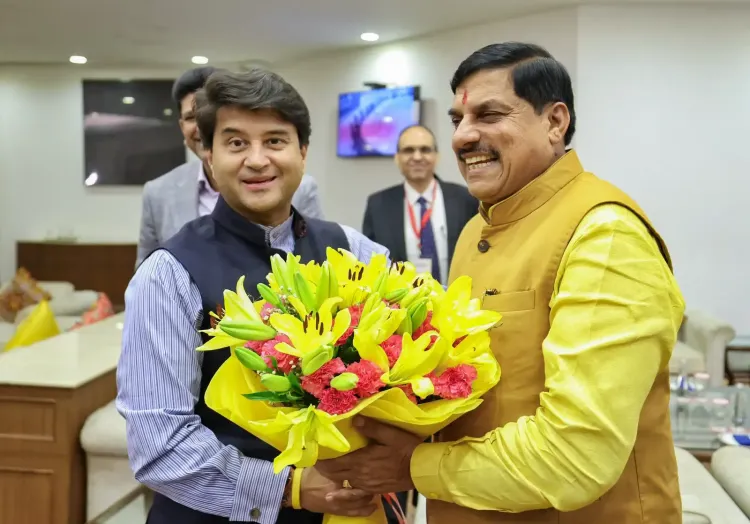
Union Communications Minister Jyotiraditya Scindia met MP CM Mohan Yadav in Bhopal on 19 November 2026 to advance the Gwalior Telecom Manufacturing Zone (TMZ) .
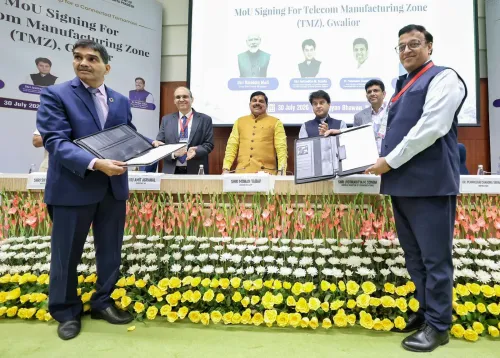
25 Letters of Intent for land allotment were distributed at the Telecom Manufacturing Zone Investor Meet 2026 .
Proposed investments exceed ₹3,600 crore and are projected to create over 15,000 jobs .
The Gwalior TMZ is billed as Asia's first integrated Telecom Manufacturing Zone .
The project is a joint initiative of the Department of Telecommunications and the Madhya Pradesh government , aimed at reducing India's dependence on imported telecom equipment.
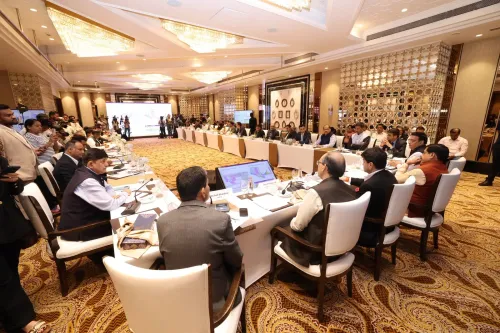
Union Communications Minister Jyotiraditya Scindia on Thursday, 19 November 2026, met Madhya Pradesh Chief Minister Mohan Yadav in Bhopal to deliberate on strategies for attracting investment into the proposed Telecom Manufacturing Zone (TMZ) in Gwalior. The high-level meeting coincided with the Telecom Manufacturing Zone Investor Meet 2026, where Letters of Intent (LoIs) for land allotment were handed to 25 prospective investors, with proposed investments exceeding ₹3,600 crore and a projected creation of over 15,000 jobs.
What Was Discussed
Scindia and Yadav deliberated on investment opportunities, industrial development, and concrete steps to position Madhya Pradesh as a leading destination for telecom equipment manufacturing. The two leaders also reviewed the project's potential to expand industrial activity in the region and generate employment for the state's youth.
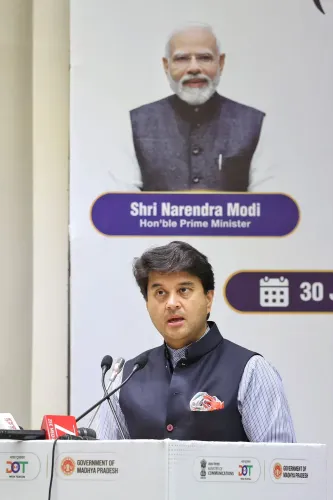
Scindia, who also holds the portfolio of Development of North Eastern Region, underlined that India must build robust domestic telecom manufacturing capabilities and evolve into a global manufacturing hub rather than remain reliant on imported equipment — a vulnerability the country is actively seeking to address as its 5G network scales up.
Asia's First Integrated Telecom Zone
The proposed Gwalior TMZ is being developed as Asia's first integrated Telecom Manufacturing Zone, designed to co-locate telecom equipment manufacturers, technology companies, and ancillary industries at a single industrial cluster. This integrated model is intended to reduce logistics costs, accelerate supply-chain linkages, and create an ecosystem effect that individual facilities cannot replicate.
Notably, the initiative is a joint effort between the Department of Telecommunications and the Madhya Pradesh government, reflecting the Centre's broader push to deepen cooperation with state governments on industrial policy — a template seen in earlier semiconductor and electronics cluster proposals.
Investment and Employment Outlook
At Thursday's investor meet, 25 LoIs were distributed, representing investments of more than ₹3,600 crore. If realised, the project is expected to generate upwards of 15,000 employment opportunities, with opportunities spanning skilled workers, local industries, and young entrepreneurs. This comes amid India's intensifying effort to reduce dependence on imported telecom gear — particularly Chinese-origin equipment — as the country prepares for next-generation communication technologies.
Broader Policy Context
The Gwalior TMZ fits into the Centre's wider manufacturing strategy, which includes Production-Linked Incentive (PLI) schemes for telecom and networking products announced in earlier years. India's telecom equipment import bill has remained a persistent concern for policymakers, and dedicated manufacturing clusters are seen as a structural remedy rather than a short-term fix. This is among the first fully integrated zones dedicated exclusively to telecom hardware, distinguishing it from broader electronics parks.
With LoIs now in hand, the next critical milestone will be ground-breaking and construction timelines, which both governments are yet to formally announce.
Point of View
And India's industrial cluster history is littered with announced zones that never reached full capacity. The real test will be how quickly the Centre converts these 25 letters into ground-level investment, and whether the PLI framework backing this zone has the teeth to hold investors to their commitments. With China's telecom equipment dominance as the unspoken backdrop, the geopolitical stakes are as high as the economic ones.
NationPress
19 Nov 2026
Frequently Asked Questions
What is the Gwalior Telecom Manufacturing Zone (TMZ)?
The Gwalior TMZ is a proposed industrial cluster in Gwalior, Madhya Pradesh, being developed as Asia's first integrated Telecom Manufacturing Zone. It aims to co-locate telecom equipment manufacturers, technology companies, and related industries to build a self-sufficient domestic manufacturing ecosystem.
How much investment has been committed to the Gwalior TMZ so far?
At the Telecom Manufacturing Zone Investor Meet 2026 in Bhopal on 19 November, Letters of Intent covering proposed investments of more than ₹3,600 crore were distributed to 25 prospective investors. These are LoIs, not final agreements, so actual disbursement depends on subsequent approvals.
How many jobs is the Gwalior TMZ expected to create?
The proposed investments are expected to generate over 15,000 employment opportunities, targeting skilled workers, local industries, and young entrepreneurs in Madhya Pradesh.
Who is overseeing the development of the Gwalior TMZ?
The project is a joint initiative between the Union government's Department of Telecommunications and the Madhya Pradesh government. Union Communications Minister Jyotiraditya Scindia and Chief Minister Mohan Yadav are the key figures driving the initiative.
Why is India developing a dedicated telecom manufacturing zone?
India is seeking to reduce its dependence on imported telecom equipment, particularly as the country scales its 5G network and prepares for next-generation communication technologies. A dedicated, integrated zone is intended to build domestic supply chains and position India as a global telecom hardware hub.