Haryana Expands Air Monitoring: 23 New NCR Stations by July
Synopsis
Haryana will add 23 new air quality monitoring stations in NCR by July 2025, taking the total to 52. The state is also phasing out diesel autos by December, launching an aggregator transport policy, and targeting full legacy waste elimination in 11 months — marking one of its most aggressive anti-pollution pushes yet.
Key Takeaways
23 new air quality monitoring stations will be added in the NCR , taking Haryana's total to 52 by July 2025 .
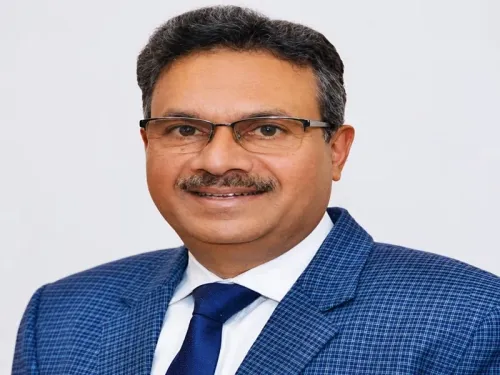
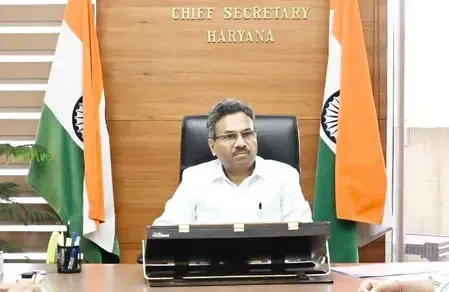
Chief Secretary Anurag Rastogi chaired the comprehensive review and directed all departments to strictly follow prescribed timelines.
An aggregator policy will soon be introduced to regulate cab and ride-sharing services and ensure emission compliance across Haryana's NCR transport fleet.
Diesel auto-rickshaws will be fully phased out from all remaining NCR areas by December 31, 2025 , per CAQM directives.
The Naya Safar Yojana will replace approximately 1.9 lakh old trucks and 16,000 buses with BS-VI, CNG, and electric vehicles through financial incentives.
Legacy solid waste across NCR areas is targeted for complete elimination within 11 months to reduce particulate matter pollution.
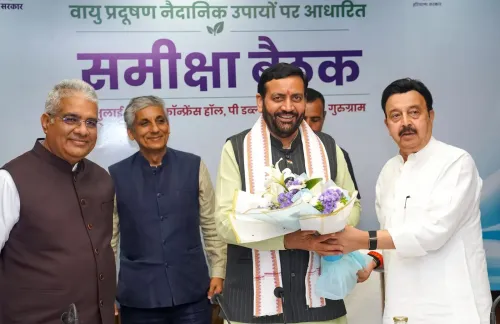
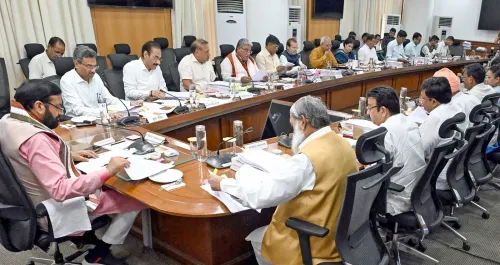
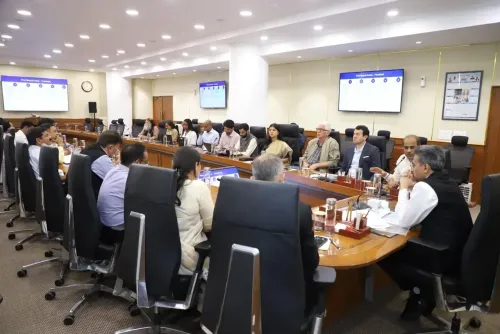
Chandigarh, April 24: The Haryana government is set to significantly bolster its air pollution surveillance infrastructure by establishing 23 new air quality monitoring stations across the National Capital Region (NCR), bringing the total count to 52 by July 2025. The decision emerged from a high-level comprehensive review meeting on NCR air quality management, chaired by Chief Secretary Anurag Rastogi in Chandigarh. Alongside this, the state is preparing to launch an aggregator policy for transport regulation and has set an 11-month deadline to fully eliminate legacy solid waste.
Key Decisions from the High-Level Review Meeting
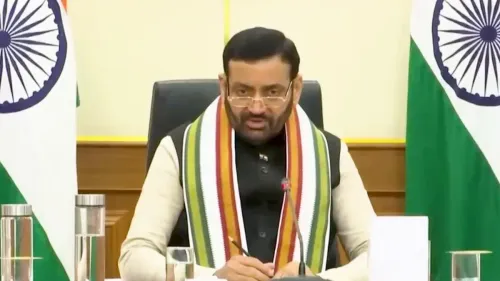
Chief Secretary Anurag Rastogi directed all departments to strictly adhere to prescribed timelines, underscoring that sustained inter-departmental coordination is non-negotiable for achieving lasting improvements in air quality across the NCR. The meeting brought together senior officials from environment, transport, and municipal bodies.
Rastogi specifically directed Commissioners of Municipal Corporations in NCR zones — along with the Gurugram, Faridabad, and Sonipat Metropolitan Development Authorities — to identify a minimum of five key roads in each jurisdiction for development or redevelopment as model dust-free stretches. Authorities were asked to prepare comprehensive plans with clear milestones, covering everything from Detailed Project Report (DPR) preparation to final project completion within this year.
He stressed that pollution from transport, construction and demolition activities, and industrial operations must be addressed through precise, time-bound action plans rather than ad hoc measures.
Crackdown on Vehicular Pollution Across NCR
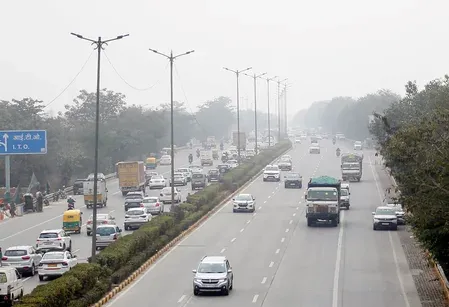
Additional Chief Secretary (Environment) Sudhir Raj Pal highlighted the urgent need to intensify checks on vehicular pollution, particularly along heavily trafficked corridors. He called for stronger enforcement of existing pollution norms and more frequent checking drives to identify and penalise grossly polluting vehicles.
Pal also advocated the adoption of cutting-edge technology to monitor emissions from moving vehicles in real time and issue challans accordingly — a step that could modernise Haryana's enforcement mechanism significantly.
Chief Secretary Rastogi directed the Transport Department to consolidate data from Pollution Under Control (PUC) centres, including statistics on rejected certificate cases and vehicles found exceeding prescribed emission norms. This data-driven approach is intended to plug systemic loopholes in the existing PUC framework.
Aggregator Policy and Phase-Out of Diesel Vehicles
Principal Secretary (Transport) Raja Shekhar Vundru announced that the department will soon introduce an aggregator policy to bring cab and ride-sharing services operating in Haryana under a structured regulatory framework. The policy is designed to ensure fleet-wide compliance with emission standards, directly contributing to a reduction in transport-related air pollution.
Vundru confirmed that in compliance with directives from the Commission for Air Quality Management (CAQM), diesel auto-rickshaws have been nearly completely phased out from major NCR districts. In remaining NCR areas, the phase-out is scheduled for completion by December 31, 2025.
He also briefed the meeting on the Naya Safar Yojana, under which approximately 1.9 lakh old trucks and 16,000 buses will be phased out and replaced with cleaner BS-VI, CNG, and electric vehicles through targeted financial incentives — one of the most ambitious fleet-modernisation drives in the state's history.
Legacy Waste and Dust Control: The Ground-Level Challenge
The state has set an aggressive 11-month timeline for the complete elimination of legacy solid waste — a long-standing contributor to particulate matter pollution in urban NCR areas. Legacy waste dumping sites have historically been hotspots for uncontrolled burning, releasing toxic particulates that significantly worsen the region's air quality index (AQI).
The push for model dust-free roads is equally significant. Construction dust and road dust together account for a substantial share of PM2.5 and PM10 levels in NCR cities, particularly in Gurugram, Faridabad, and Sonipat, which frequently record hazardous AQI levels during winter months.
Why This Matters: Broader Context and Impact
This initiative comes amid escalating pressure on NCR states from the Supreme Court of India and the CAQM, which have repeatedly pulled up governments for failing to meet air quality targets. Delhi-NCR consistently ranks among the most polluted urban regions globally, and Haryana's industrial and transport corridors are identified as major contributors.
Notably, the expansion from 29 to 52 monitoring stations will provide far more granular, real-time data — enabling targeted enforcement rather than blanket restrictions. Critics have long argued that insufficient monitoring infrastructure allows polluters to go undetected between sparse station networks.
With July 2025 set as the deadline for the new monitoring stations and December 31, 2025 for diesel auto-rickshaw phase-out, the coming months will be a critical test of whether Haryana's administrative machinery can translate policy commitments into measurable improvements in ground-level air quality across the NCR.
Point of View
But the real test lies in execution — a domain where NCR states have historically stumbled. Expanding monitoring stations is meaningless without enforcement muscle, and the state's own data on PUC certificate refusals — which officials have now been asked to compile — may reveal uncomfortable truths about systemic laxity. The aggregator policy and Naya Safar Yojana signal a welcome shift toward structural reform over seasonal emergency measures, but with Supreme Court scrutiny intensifying and winter pollution cycles returning in months, Haryana has little room for the deadline slippages that have plagued previous clean-air commitments.
NationPress
20 Sept 2026
Frequently Asked Questions
How many air quality monitoring stations will Haryana have in NCR by July 2025?
Haryana will have a total of 52 air quality monitoring stations in the NCR by July 2025, after adding 23 new stations to the existing network. This expansion is aimed at providing more granular, real-time pollution data across the region.
What is the Naya Safar Yojana in Haryana?
The Naya Safar Yojana is a Haryana government scheme under which approximately 1.9 lakh old trucks and 16,000 buses will be phased out and replaced with cleaner BS-VI, CNG, and electric vehicles through financial incentives. The scheme aims to reduce transport-related air pollution in the NCR.
When will diesel auto-rickshaws be completely phased out from NCR areas in Haryana?
Diesel auto-rickshaws have already been nearly phased out from major NCR districts in Haryana. In the remaining NCR areas, the phase-out is scheduled for completion by December 31, 2025, in compliance with CAQM directives.
What is Haryana's aggregator policy for transport?
Haryana's upcoming aggregator policy will regulate cab and ride-sharing services operating in the state by bringing them under a structured regulatory framework. The policy will mandate compliance with emission standards to help reduce transport-related pollution in the NCR.
What steps is Haryana taking to control dust pollution in NCR cities?
Haryana has directed Municipal Corporations and Metropolitan Development Authorities in Gurugram, Faridabad, and Sonipat to identify at least five key roads each for development as model dust-free stretches. Authorities must prepare comprehensive plans with clear timelines from DPR stage to final completion within 2025.